Hound Group
Poitevin
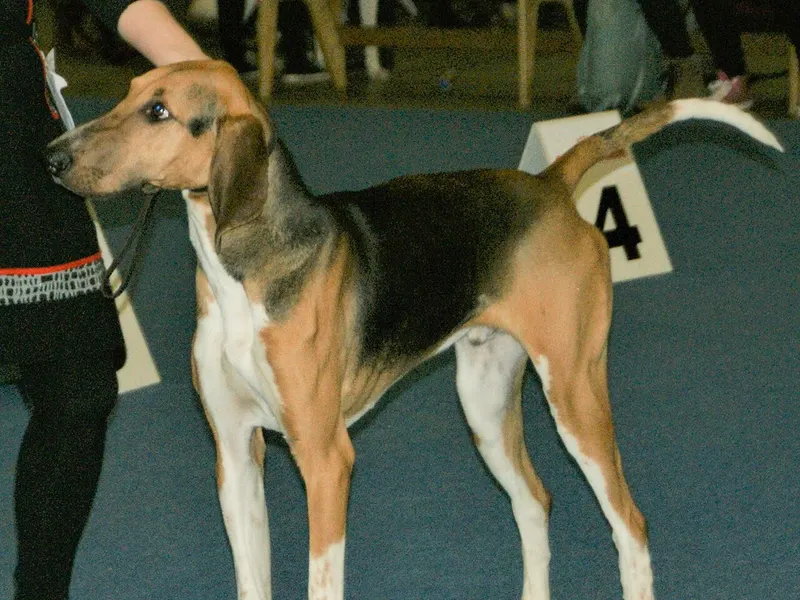
French hunters in the Poitou region developed this large scenthound over centuries specifically for pack-hunting wolves and later large deer, and the breed's history includes a genuinely dramatic near-total loss during a rabies outbreak that swept through the original Poitevin pack in the 19th century, killing most of the founding bloodline and forcing breeders to rebuild the type using related French hound stock. That near-catastrophic setback is a genuinely central part of the Poitevin's history, and the breed's slow, careful postwar recovery through the 20th century reflects the real dedication of a small number of French breeders committed to preserving a distinctly regional hunting type rather than letting it disappear or blend into more common French scenthound lines. The Poitevin remains almost entirely a working pack-hunting breed in France even today, genuinely uncommon as a companion dog anywhere, including in its home country, and it stays essentially unknown in the US outside a small circle of dedicated scenthound historians and enthusiasts.
Common health predispositions
- Hip dysplasia (uncommon)
- Generally hardy pack-hound breed
Temperament
Independent, genuinely driven, and built for sustained pack work, the Poitevin carries real large-game hunting instincts shaped by centuries of pursuing wolves and deer across demanding French terrain, a working intensity that shows up as intense focus once on a scent trail and comparatively less interest in typical companion-dog activities. Devotion within its own hunting pack runs deep, and the breed's cooperative, group-oriented temperament reflects its traditional use hunting in genuinely large coordinated packs rather than as a solitary hunting dog. Real independence and strong prey drive mean the Poitevin generally isn't suited to typical household pet life the way some other French hounds have adapted to become, and most individuals still live and work as part of active hunting kennels rather than single-family homes. French hunting clubs maintaining the breed today treat it explicitly as a working pack hound rather than pursuing any broader companion-breed development.
Living with a Poitevin
This is fundamentally a working pack hound, and its real exercise needs reflect that — a genuine 90 minutes counts as the low end here, not an aspiration, and skipping an actual hunting or extensive scent-work outlet leaves this dog visibly unsatisfied. The short, dense tricolor coat needs only minimal grooming. Formal health-registry data stays genuinely limited given the breed's small population and largely working-kennel existence outside conventional companion-breed structures, though hip dysplasia is uncommon enough not to dominate the conversation, and the Poitevin is otherwise considered a genuinely hardy pack-hound breed. Real independence and intense pack-hunting drive mean this breed is essentially unsuited to typical single-family pet ownership, and in practice it's found almost nowhere outside working French hunting kennels. US availability is effectively nonexistent, and genuinely interested owners would need direct contact with French hunting clubs maintaining the breed. This is a specialist working breed rather than a realistic companion-dog option for most households.
FAQ
What happened to the original Poitevin bloodline?
A rabies outbreak swept through the original Poitevin hunting pack in the 19th century, killing most of the founding bloodline, and French breeders subsequently rebuilt the type using related French hound stock, making that near-total loss a central part of the breed's history.
What did the Poitevin hunt?
Wolves originally, and later large deer, across demanding terrain in France's Poitou region, work that shaped the breed's genuinely large size, stamina, and cooperative pack-oriented temperament suited to coordinated group hunting rather than solo work.
Is the Poitevin a good pet?
Generally not for a typical household — real independence and intense pack-hunting drive mean the breed is essentially unsuited to single-family pet life, and most individuals still live and work within active French hunting kennels rather than homes.
Is the Poitevin available in the US?
Essentially not through any conventional channel — the breed remains almost entirely a working pack-hunting breed in France, genuinely uncommon even there as a companion dog, and truly interested owners would need direct contact with French hunting clubs.
Is the Poitevin a rare breed?
Yes, genuinely — the breed's small population, largely working-kennel existence, and dramatic 19th-century near-loss to a rabies outbreak all contribute to it remaining one of the rarer and less internationally known French scenthound breeds today.
How big does a Poitevin get?
A genuinely large scenthound, typically 55 to 70 pounds and 24 to 28 inches at the shoulder, tall and rangy enough to keep pace with mounted hunters over long distances during traditional pack pursuits of wolves and later large deer.
What does a Poitevin look like?
A short, dense tricolor coat in black, white, and tan, long drop ears, and a lean, athletic frame give the Poitevin a build closer to an English Foxhound than to France's shorter, heavier-boned basset breeds — a silhouette built entirely for sustained pack speed over rough terrain.
Related on FetchBreed
Lists this breed appears in
Whichever breed fits your life, consider adoption or breed-specific rescue first — many purebred and mixed-breed dogs and cats are already waiting for homes.
General breed information, not veterinary advice — consult a vet for your pet's specific health, diet, and behavior needs.