Foundation Stock Group
Podengo Português
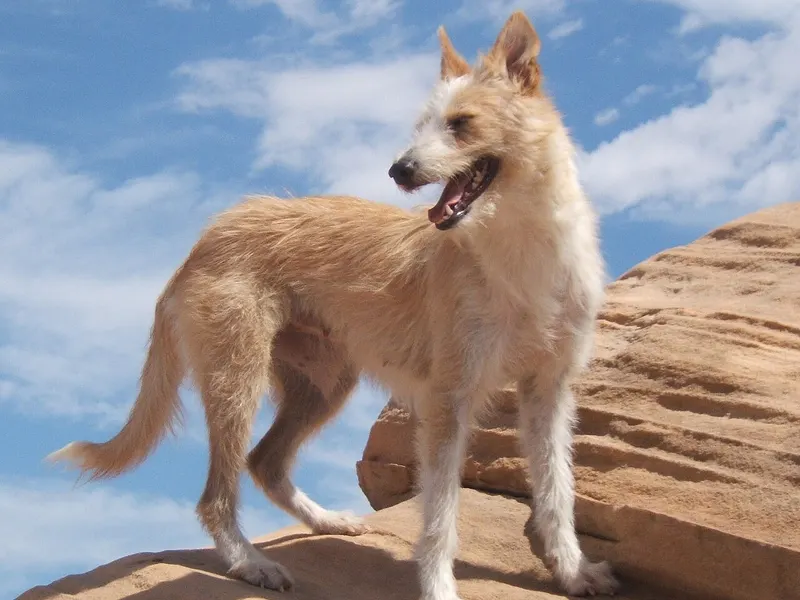
Portuguese hunters bred this breed for centuries as an efficient rabbit-hunter across the country's varied terrain, and the Podengo actually comes in three distinct sizes — Pequeno (small), Médio (medium), and Grande (large) — that Portuguese and FCI standards treat as size varieties of one broader breed rather than fully separate breeds, though the AKC has taken the separate approach of recognizing the Portuguese Podengo Pequeno on its own. Phoenician and later North African traders are widely believed to have brought the original sighthound-type stock to the Iberian Peninsula many centuries ago, stock that Portuguese breeders then developed regionally into the distinctly built, prick-eared hunting dog recognizable today. Two coat varieties exist across all three sizes — smooth and wire-haired — adding further real variation within what's already a broad size range for a single breed designation. The Podengo remains a working hunting dog first in Portugal even now, prized there for genuine stamina and a sharp nose, while in the US it stays a niche breed known mainly to owners specifically drawn to primitive Mediterranean hunting types.
Common health predispositions
- Generally hardy landrace/sighthound-type breed
- Progressive retinal atrophy
- Patellar luxation
Temperament
Independent and genuinely alert, the Podengo Português carries real hunting instincts across all its size varieties, a working drive that shows up as sharp attentiveness to movement and sound regardless of whether an individual dog ever actually hunts. Most puppies grow into affectionate, home-loving adults, though a genuine prey drive toward small animals means introductions to cats or other pets need to be handled carefully and deliberately rather than assumed to go smoothly. Its independent streak, inherited from centuries spent working somewhat apart from close human direction, makes for a dog that learns better through patient repetition than quick-fix commands. In Portugal, hunters still send this breed out after rabbit exactly as their ancestors did, and that ongoing field use keeps its instincts sharp rather than purely decorative.
Living with a Podengo Português
Between 60 and 75 minutes of activity a day suits the Podengo's field-bred stamina, and a real outlet for that hunting drive pays off far more than exercise for its own sake. Coat care splits by variety — the smooth coat needs only occasional brushing, while the wire-haired coat asks for a bit more regular attention to stay tidy. This landrace-adjacent hunting breed is widely considered genuinely hardy; progressive retinal atrophy and patellar luxation are worth a direct check-in with the breeder, but neither dominates the conversation the way health issues do for many purebreds. Real prey drive and genuine independence suit an owner who wants an engaged, active hunting-type companion and is prepared for careful management around smaller pets. US breeders remain few, and most interested owners work directly with a specialist or import from Portugal rather than expecting a nearby rescue placement. Ongoing expenses stay unremarkable for a dog this hardy — food and routine checkups dominate the budget, with no real grooming line item to speak of.
FAQ
How many sizes of Podengo Português are there?
Three — Pequeno (small), Médio (medium), and Grande (large) — which Portuguese and FCI standards treat as size varieties within one broader breed, though the AKC has taken the separate route of recognizing the Portuguese Podengo Pequeno as its own distinct breed.
What's the difference between the three Podengo sizes?
Pequeno, Médio, and Grande aren't simply scaled versions of the same dog — Portuguese hunters traditionally used the different sizes for different game and terrain, with the small Pequeno favored for rabbit hunting in dense scrub where a bigger dog couldn't maneuver, the Médio used more for hare, and the Grande historically employed for larger game in some regions. The AKC currently recognizes only the Pequeno as a standalone breed, leaving the Médio and Grande varieties without full American kennel-club status.
Is a Podengo Português good with cats?
Not by default — chasing small, fast-moving animals comes bred into every size variety of this rabbit-hunting breed, so a careful, deliberate introduction period matters considerably in any household that already keeps cats or other small pets.
What coat types does a Podengo Português have?
Two — smooth and wire-haired — and this variation exists across all three of the breed's size varieties, adding further real diversity within what's already a broad range for a single breed designation.
How much exercise does a Podengo Português need?
A solid hour to 75 minutes most days, ideally built around actual hunting-style or scent-based activity — this breed visibly does better with a purpose to its exercise than with a plain walk around the block.
Which Podengo size is most common outside Portugal?
The Pequeno, the smallest of the three varieties, dominates international interest and is the only size the AKC currently recognizes as its own standalone breed; the larger Médio and Grande sizes remain considerably harder to find outside Portugal, where all three continue working alongside each other in the field.
Does the Podengo Português have any unusual physical traits?
Its notably upright, wedge-shaped ears and slightly arched, almost triangular skull profile give it a distinctive silhouette among European hunting breeds, features widely believed to trace back to its ancient Mediterranean sighthound ancestry rather than any later crossbreeding with more typical scenthound types.
Related on FetchBreed
Lists this breed appears in
Whichever breed fits your life, consider adoption or breed-specific rescue first — many purebred and mixed-breed dogs and cats are already waiting for homes.
General breed information, not veterinary advice — consult a vet for your pet's specific health, diet, and behavior needs.