Hound Group
Plott Hound
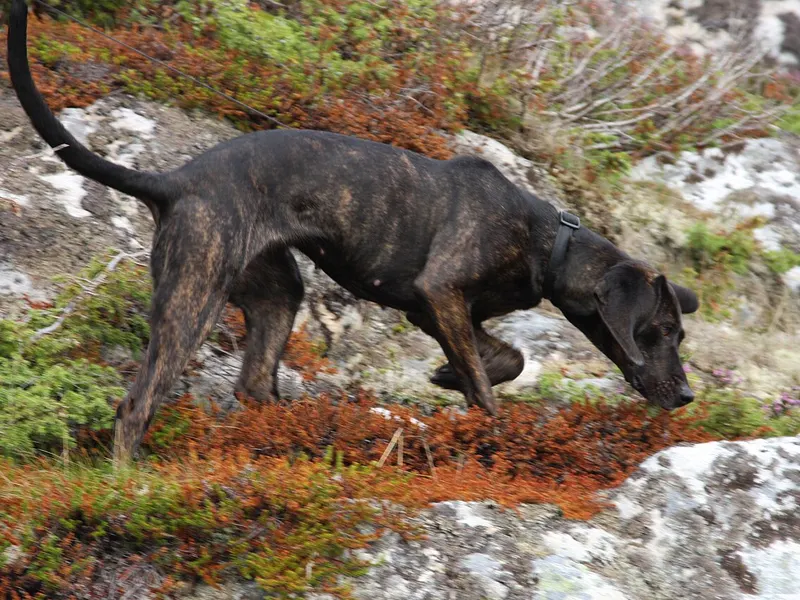
North Carolina's official state dog carries a genuinely distinct ancestry among American coonhounds — while most other coonhound breeds trace back substantially to English Foxhound stock, the Plott Hound descends instead from German Hanoverian Hound lines that the Plott family brought with them when they emigrated from Germany to North Carolina in the 1750s, and the family maintained and refined that bloodline largely independently for generations rather than crossing in Foxhound blood the way most other American coonhounds did. That distinct German ancestry is why the Plott Hound's brindle coat pattern and overall build genuinely differ from the more common tricolor look of Foxhound-descended coonhounds, and breed historians treat this as one of the more clearly documented, unusually well-preserved family breeding lineages in American dog history. Originally developed to hunt boar and later adapted for bear hunting in the rugged mountain terrain of western North Carolina, the Plott Hound earned a genuine reputation among hunters for real courage and tenacity against dangerous large game, a working history distinct from the raccoon-focused purpose most other American coonhounds were bred for. AKC recognition came in 2006, and North Carolina had already designated it the official state dog years earlier, in 1989, formal recognition of a breed with a genuinely unbroken family lineage stretching back over two centuries in the same region.
Common health predispositions
- Hip dysplasia
- Gastric dilatation-volvulus (bloat)
- Ear infections
Temperament
Bold, tenacious, and genuinely fearless given its history hunting dangerous large game like bear and boar, the Plott Hound carries a working intensity distinct from the more purely raccoon-focused coonhound breeds it's sometimes grouped alongside informally. Family loyalty runs deep, and most individuals do reasonably well with children in an active household, though the breed's real courage and drive mean it isn't a purely mellow companion breed the way some other hounds are. That same tenacity that made the Plott Hound valuable against large, dangerous game shows up at home as a dog that doesn't back down easily and needs an owner genuinely comfortable managing a confident, strong-willed working breed.
Living with a Plott Hound
This is among the more demanding coonhounds exercise-wise — 90 minutes of real, vigorous daily activity suits the Plott's genuine working stamina, and one still actively hunting large game needs even more than that. The short, smooth brindle coat is low-maintenance, needing just occasional brushing. Hip dysplasia deserves standard screening, and bloat is a genuine concern given the breed's deep chest, alongside chronic ear infections common to hounds with this ear shape. A rural or otherwise spacious household, ideally with hunting or serious working-dog experience given the breed's real intensity and drive, is the best match for a Plott Hound; a first-time owner hoping for a laid-back companion breed should look elsewhere. Rescue availability concentrates heavily in North Carolina and the wider Southern Appalachian region where the breed's family lineage and hunting culture run deepest. Monthly costs run moderate for a large working hound, with substantial food needs the primary ongoing expense given this breed's genuine athleticism and drive.
FAQ
Why is the Plott Hound different from other coonhounds?
Most American coonhounds descend substantially from English Foxhound stock, but the Plott Hound traces instead to German Hanoverian Hound lines the Plott family brought from Germany to North Carolina in the 1750s, maintaining that bloodline largely independently rather than crossing in Foxhound blood.
What was the Plott Hound originally bred to hunt?
Originally developed to hunt wild boar and later adapted for bear hunting in the rugged mountain terrain of western North Carolina, the breed earned a genuine reputation among hunters for real courage against dangerous large game rather than the raccoon-focused work most coonhounds were bred for.
Is the Plott Hound North Carolina's state dog?
Yes — North Carolina designated it the official state dog in 1989, years before it gained full AKC recognition in 2006, reflecting the breed's genuinely unbroken family lineage stretching back over two centuries in the same region.
Is a Plott Hound a good first dog?
Generally not the easiest choice — the breed's real intensity and confidence, shaped by generations of hunting dangerous large game, suit an experienced owner comfortable managing a strong-willed working dog better than someone new to dog ownership.
How much exercise does a Plott Hound need?
A serious amount — 90 minutes of vigorous daily activity is the realistic baseline for this genuinely athletic working breed, and a dog actually used for hunting typically needs considerably more to stay satisfied.
How does the Plott Hound differ from other American coonhound breeds?
Unlike most American coonhounds, which trace largely to English Foxhound stock, the Plott Hound descends from German Hanoverian hounds brought to North Carolina in the 1750s by the Plott family, who bred them specifically for big-game trailing, including wild boar and bear, giving the breed a notably bolder, more aggressive trailing style than lighter-game coonhound breeds.
Related on FetchBreed
Lists this breed appears in
Whichever breed fits your life, consider adoption or breed-specific rescue first — many purebred and mixed-breed dogs and cats are already waiting for homes.
General breed information, not veterinary advice — consult a vet for your pet's specific health, diet, and behavior needs.