Herding Group
Pembroke Welsh Corgi
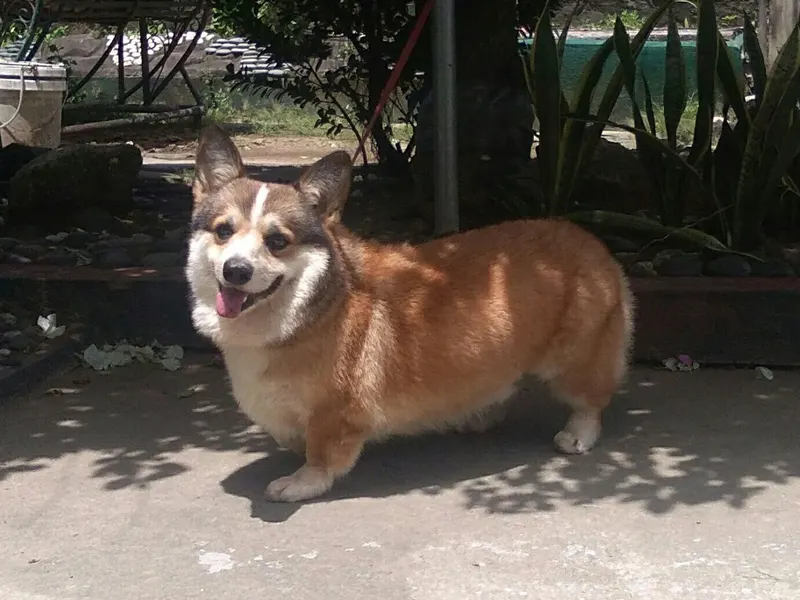
The Pembroke Welsh Corgi developed in the Pembrokeshire region of Wales, likely brought by Flemish weavers who settled in the area in the 12th century, and was used as an all-purpose farm dog for herding cattle by nipping at their heels — a low-to-the-ground build let the Corgi dodge a cow's defensive kick more easily than a taller herding dog could. The breed gained enormous visibility through Queen Elizabeth II, who owned Pembroke Welsh Corgis for most of her seven-decade reign starting in 1933, a royal association that remains closely tied to the breed's public image today. The AKC recognized the Pembroke as a breed formally separate from the Cardigan Welsh Corgi in 1934, and unlike the Cardigan, most Pembrokes are born with naturally short or docked tails, a distinguishing trait between the two otherwise similar-looking breeds.
Common health predispositions
- Intervertebral disc disease
- Hip dysplasia
- Obesity
Temperament
Pembroke Welsh Corgis carry real herding-dog drive in a small package — high energy and strong trainability reflect a working breed's intelligence, and the breed's heel-nipping herding instinct is a genuine, functional trait that shows up in play as gentle nipping at running children or other pets if not given an appropriate outlet. They're generally good with kids and other pets when that instinct is understood and managed, and the breed's high vocalization rating reflects a real watchdog tendency inherited from its farm-guarding role.
Living with a Pembroke Welsh Corgi
Corgis do well on roughly 45 minutes of daily activity, though mental engagement through herding-style games or training matters just as much given the breed's working intelligence. Grooming is a moderate, ongoing commitment given the medium double coat, which sheds heavily, especially during seasonal blowouts. The breed's most serious documented health concern is intervertebral disc disease, a spinal condition made more likely by the Corgi's elongated body and short legs, similar in mechanism to the Dachshund's well-known vulnerability — vets generally advise keeping a Corgi trim and blocking access to furniture heights it might jump from as the two most effective things an owner can control. Obesity is also a genuinely common issue in the breed given its hearty appetite relative to its exercise needs, and hip dysplasia is documented as well. Because the breed's exercise needs are moderate relative to its herding-group classification, Corgis are frequently recommended as one of the more apartment-adaptable herding breeds, provided owners commit to genuine mental engagement rather than assuming the compact size alone means low overall needs.
FAQ
Why do Corgis nip at heels?
It's a functional herding instinct rather than misbehavior — bred to move cattle by nipping at their heels while staying low enough to dodge a kick, a Corgi without structured herding games or training to channel that drive into will often redirect it toward running kids or other pets instead.
Are Corgis prone to back problems?
Genuinely yes — the long body and short legs raise the odds of intervertebral disc disease considerably, the same spinal vulnerability the Dachshund is famous for, and vets typically recommend a trim weight plus blocking jumps from furniture as the standard defense.
Why is the Corgi associated with the British royal family?
Queen Elizabeth II owned Pembroke Welsh Corgis for most of her seven-decade reign starting in 1933, a sustained, highly visible royal association that significantly boosted the breed's public profile and popularity well beyond its original working-farm-dog role in Wales.
Do Pembroke and Cardigan Welsh Corgis have the same origin?
No — despite the shared name and similar appearance, they're considered separate breeds with somewhat different ancestry; the Pembroke likely traces to Flemish weaver-brought Spitz-type dogs, while the Cardigan is generally considered older and more closely related to dachshund-type or teckel breeds, and the two were only formally split into distinct AKC breeds in 1934.
Is the Corgi a good apartment dog?
Reasonably, yes, more so than most herding breeds — its moderate 45-minute daily exercise need and compact size make it comparatively apartment-adaptable, though owners still need to provide genuine mental engagement given the breed's real working intelligence, not just physical space.
Why do most Pembroke Welsh Corgis have naturally short tails?
Historically many were born naturally bobtailed or had tails docked shortly after birth, a practice tied partly to old British tax law that once exempted working dogs, including docked herding and guard dogs, from a dog tax, and while that specific law is long gone, the short-tail look remained the breed standard even as docking itself faces growing restriction in parts of Europe.
Related on FetchBreed
Comparisons
- Pembroke Welsh Corgi vs Australian Cattle Dog
- Pembroke Welsh Corgi vs Australian Shepherd
- Pembroke Welsh Corgi vs Beagle
- Pembroke Welsh Corgi vs Belgian Malinois
- Pembroke Welsh Corgi vs Border Collie
- Pembroke Welsh Corgi vs Cavapoo
- Pembroke Welsh Corgi vs Cockapoo
- Pembroke Welsh Corgi vs Collie
- Pembroke Welsh Corgi vs Dachshund
- Pembroke Welsh Corgi vs French Bulldog
- Pembroke Welsh Corgi vs German Shepherd Dog
- Pembroke Welsh Corgi vs Shetland Sheepdog
Lists this breed appears in
Care equipment for a Pembroke Welsh Corgi
As an Amazon Associate we earn from qualifying purchases made through these links, at no extra cost to you.
- De-shedding tool
The medium double coat sheds heavily, especially during the seasonal blowouts this page describes.
- Pet steps
This page's own advice on the breed's disc-disease risk is to block access to furniture heights a Corgi might jump from — steps make the descent controlled rather than a drop.
Whichever breed fits your life, consider adoption or breed-specific rescue first — many purebred and mixed-breed dogs and cats are already waiting for homes.
General breed information, not veterinary advice — consult a vet for your pet's specific health, diet, and behavior needs.