Toy Group
Papillon
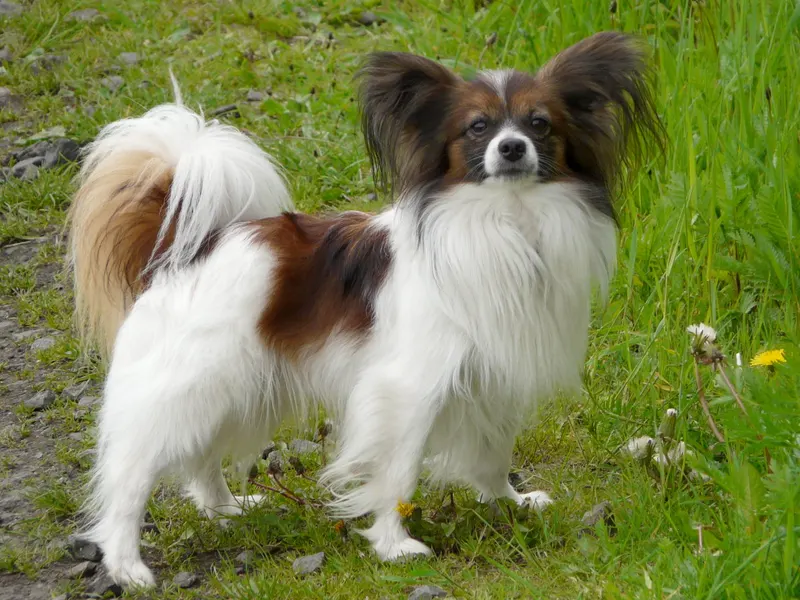
The Papillon's name is French for "butterfly," a direct reference to the breed's large, fringed, wing-like ears, and toy spaniels resembling the modern erect-eared Papillon appear in European court portraiture going back to the Renaissance — paintings by artists including Titian feature small spaniel-type lapdogs strongly resembling the breed's ancestors. A drop-eared variety called the Phalene (French for "moth," evoking a butterfly at rest) represents the older, historically dominant ear type, and both forms are still recognized as coat/ear variants of the same breed today rather than separate breeds. The AKC recognized the Papillon in 1915, and the breed has long carried a reputation among fanciers as one of the most trainable toy dogs in the registry.
Common health predispositions
- Patellar luxation
- Progressive retinal atrophy
- Open fontanel
Temperament
That reputation holds up in the data: Papillons carry a maxed-out trainability rating, unusual among toy breeds and closer to what's typical of sporting or herding dogs, and the breed regularly competes and places well in AKC agility and obedience despite its small size. Papillons are alert, energetic, and generally confident rather than the more timid disposition sometimes associated with toy breeds, though that same energy and intelligence mean an under-stimulated Papillon can become a persistent barker or develop small-dog behavioral quirks like resource guarding if not addressed early. GoodWithKids ratings run more moderate given the breed's small size and the injury risk from rough handling, similar to other toy breeds, but a well-socialized Papillon generally does fine in a careful, gentle household.
Living with a Papillon
Forty-five minutes of daily activity, including some genuine mental engagement like training games or puzzle toys, keeps a Papillon satisfied — this is a surprisingly athletic small breed that does poorly on pure confinement. The long, fine, single-layer coat is moderate-maintenance: it doesn't mat as readily as a Maltese's or Yorkshire Terrier's, but regular brushing a few times a week keeps it looking its best, and shedding runs light for a long-coated breed. Patellar luxation and progressive retinal atrophy are both documented in the breed, and open fontanel — a soft spot in the skull that fails to close normally, similar to what's seen in human infants — occurs at a rate specific enough to toy breeds like the Papillon and Chihuahua that responsible breeders watch for it in puppies. Because of the breed's small size, dental crowding is common enough that many Papillons need more frequent professional cleanings than larger dogs, and owners are generally advised to start home dental care early. The breed's genuine trainability and enthusiasm for structured activity make dog sports a particularly good outlet, and Papillons are disproportionately represented relative to their popularity in AKC agility rankings among toy breeds.
FAQ
Where does the name Papillon come from?
It's French for "butterfly," a reference to the breed's large, fringed, upright ears, which fan out from the head in a shape fanciers have long compared to butterfly wings. The drop-eared variety of the same breed, called the Phalene, takes its name from the French word for moth.
Are Papillons easy to train?
Yes, notably so — the breed carries one of the higher trainability ratings among toy dogs, and Papillons are frequent, successful competitors in AKC agility and obedience despite their small size, a reflection of genuine intelligence and eagerness to work with their handler.
Is a Phalene the same breed as a Papillon?
Yes — the Phalene is the drop-eared variant of the same breed, historically the older and more common ear type, and both are shown and registered under the Papillon standard rather than as separate breeds.
How much grooming does a Papillon need?
Moderate — the long, fine single coat doesn't mat as easily as some other long-coated toy breeds, but regular brushing several times a week keeps it in good condition, and shedding is relatively light for a breed with this much hair.
Are Papillons good with small children?
With supervision, generally — a toddler's idea of play can genuinely hurt a dog this small, so goodWithKids compatibility for the Papillon works best in households where adults actively manage interactions rather than leaving a young child and the dog to sort it out alone.
How long do Papillons typically live?
Commonly 14 to 16 years, among the longer lifespans of any breed in this database, a pattern broadly consistent with toy breeds generally trading larger size for extra years compared with giant breeds.
Do Papillons make good watchdogs?
Reasonably — the breed is alert and quick to notice unfamiliar sounds or visitors, and while its small size means it can't back up a warning with any real deterrent, many owners appreciate the early-alert behavior on its own merits.
What dog sports do Papillons excel at?
Agility and obedience above all — the breed's combination of genuine athleticism, food motivation, and high trainability makes it a disproportionately strong competitor relative to its size, regularly outperforming much larger, more traditionally 'sporty' breeds in speed-based agility classes.
How big does a Papillon get?
Small — typically 5 to 10 pounds and 8 to 11 inches at the shoulder, light enough that the breed's large ears and plumed tail can look disproportionately dramatic against its petite frame.
Do Papillons do well in cold weather?
Not especially — the fine, single-layer coat offers little insulation, so owners in colder climates often use a sweater or coat for the breed during winter walks rather than relying on natural coat protection.
Is a Papillon a good first dog?
Often yes — the breed's high trainability and eagerness to work with a handler make it more approachable for first-time owners than many other toy breeds, provided the household commits to genuine daily mental engagement.
Related on FetchBreed
Lists this breed appears in
Care equipment for a Papillon
As an Amazon Associate we earn from qualifying purchases made through these links, at no extra cost to you.
- Puzzle toys
The page asks for genuine mental engagement like training games or puzzle toys, for a small breed that does poorly on pure confinement.
- Pin brush
The long single coat does not mat as readily as a Maltese's, the page says, but regular brushing a few times a week keeps it right.
- Dog toothbrush and paste
Owners are generally advised to start home dental care early, given the breed's documented dental crowding.
Whichever breed fits your life, consider adoption or breed-specific rescue first — many purebred and mixed-breed dogs and cats are already waiting for homes.
General breed information, not veterinary advice — consult a vet for your pet's specific health, diet, and behavior needs.