Hound Group
Otterhound
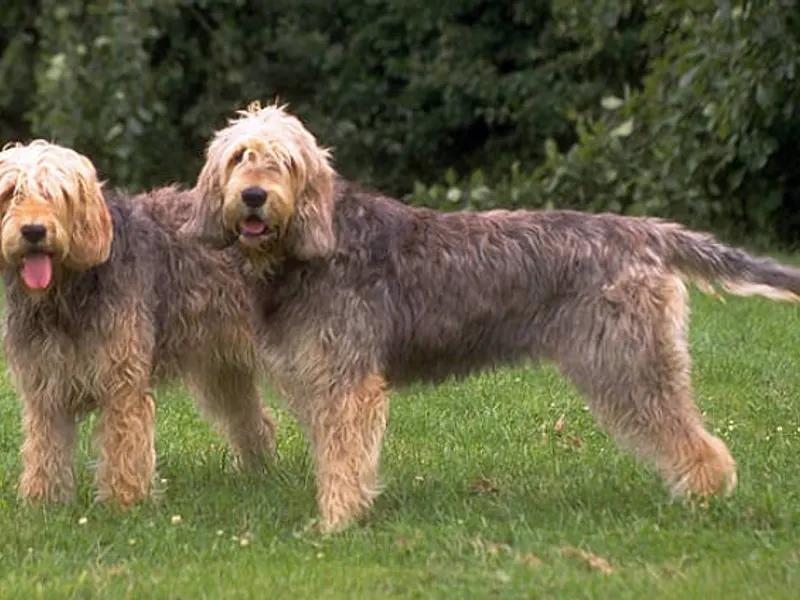
Bred in England for centuries to hunt otters preying on fish stocks in rivers and streams, the Otterhound developed a rough, water-resistant double coat and webbed feet specifically suited to swimming and working in cold water for extended periods, a genuinely distinctive combination among scenthound breeds most of which were built for dry-land work. Otter hunts historically ran as social, multi-day countryside events in England, with packs of Otterhounds working rivers over considerable distances, a tradition that shaped the breed's genuine stamina and cold-water tolerance more than any single physical trait alone could. Otter hunting was formally banned in England in 1978 as otter populations declined sharply, effectively eliminating the breed's entire original purpose almost overnight and contributing directly to the Otterhound's current status as one of the rarest purebred dogs in the world, with the UK Kennel Club periodically listing it among its most vulnerable native breeds. AKC recognition came in 1909, well before the breed's original function disappeared. Today's global Otterhound population is estimated in the low hundreds, a genuinely precarious number for a purebred dog that makes the breed considerably rarer than most people realize, including many dedicated dog enthusiasts who have simply never encountered one in person.
Common health predispositions
- Hip dysplasia
- Bloat
- Elbow dysplasia
Temperament
Otterhounds are famously good-natured and boisterous, a breed that tends to greet the world with genuine friendliness rather than reserve, a trait that likely served the pack-hunting otter-hound tradition well when dogs needed to cooperate closely with each other and with human hunters in the water. Most individuals are excellent with children and other dogs, and the breed's booming bay carries considerable volume, a scenthound trait inherited from its working role tracking scent along riverbanks. This is a breed that matures slowly and retains real puppyish enthusiasm well into adulthood, similar to some other historically working scenthounds. Drool is a genuine practical consideration too — the breed's loose lips and jowls mean an Otterhound tends to leave more slobber around the house than most owners expect going in, a minor but real day-to-day fact of living with the breed. Because so few Otterhounds exist, most puppies grow up meeting far fewer of their own breed than is typical, and dedicated breeders and owner clubs put real effort into arranging breed-specific meetups so dogs and new owners alike get a genuine sense of typical Otterhound temperament before committing.
Living with a Otterhound
An hour of daily activity, ideally including access to water given the breed's genuine swimming ability and enthusiasm, suits the Otterhound well. The rough, dense double coat sheds water effectively but needs regular brushing to prevent matting, particularly given its thickness. Given the breed's large size, hip dysplasia and bloat both warrant real attention, and elbow dysplasia rounds out the conditions worth screening for with any breeder, though given how few Otterhounds exist worldwide, finding an established breeder with a deep health-testing history takes real effort. A family with space, water access, and genuine patience for a slow-maturing large breed will likely find a warm, friendly companion in the Otterhound, though the breed's near-total rarity means most prospective owners face a long wait rather than easy availability. Given the breed's tiny worldwide numbers, dedicated Otterhound rescue in the US barely exists, so a genuinely interested prospective owner is better off reaching out to an active US or UK breeder directly. Because the gene pool is so limited, US and UK fanciers actively coordinate breeding decisions with each other to preserve what genetic diversity remains, a level of organized cooperative management uncommon even among other rare purebred dogs.
FAQ
Why is the Otterhound so rare?
England's 1978 ban on otter hunting eliminated the breed's entire original working purpose almost overnight, and the Otterhound never developed a strong alternative role at scale, leaving today's global population estimated in the low hundreds — genuinely one of the rarest purebred dogs in the world.
Does an Otterhound like water?
Very much so — the breed's rough, water-resistant double coat and webbed feet were specifically developed for extended swimming and cold-water work, and most individuals retain a genuine enthusiasm for water access today.
Is an Otterhound good with children?
For the most part — the breed's famously good-natured, boisterous temperament tends to translate into patience with kids, though its considerable size means an adult should still supervise interactions with very young children.
How many Otterhounds exist in the world?
Estimates put the global population in the low hundreds, a genuinely precarious number that makes the Otterhound considerably rarer than most people, including experienced dog owners, tend to assume.
Is it easy to adopt an Otterhound from rescue?
No — dedicated Otterhound rescue in the US is essentially nonexistent given how few dogs exist worldwide; anyone drawn to the breed is better off reaching out to an active breeder rather than searching shelter listings.
Related on FetchBreed
Lists this breed appears in
Whichever breed fits your life, consider adoption or breed-specific rescue first — many purebred and mixed-breed dogs and cats are already waiting for homes.
General breed information, not veterinary advice — consult a vet for your pet's specific health, diet, and behavior needs.