Terrier Group
Norwich Terrier
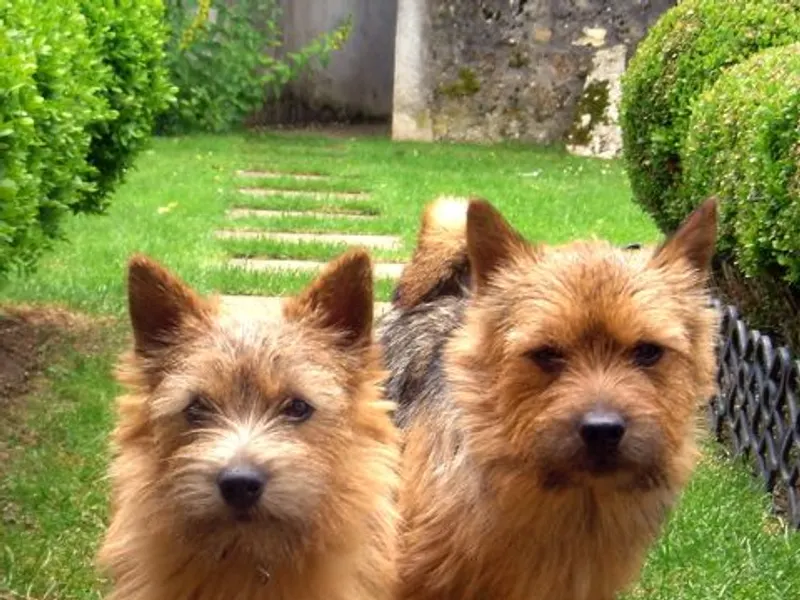
Cambridge University students in the late 1800s kept small, scrappy terriers as ratters and mascots, and breeders around Norwich, England later formalized the type into what's now among the smallest working terriers ever bred for the field. For decades Norwich and Norwich-related Norfolk Terriers were shown as a single breed distinguished only by ear carriage — prick ears on the Norwich, folded ears on what became the Norfolk — until the Kennel Club split them into two separate breeds in 1964, a division the AKC followed in 1979. Small as they are, both varieties were genuinely used to bolt foxes and rats from dens well into the 20th century. Frank "Roughrider" Jones, a well-known dealer in small terriers around Norwich in the late 19th century, is frequently credited with popularizing the type that eventually became the breed, selling dogs to Cambridge students who kept them as ratting companions and unofficial college mascots. The breed's American following grew substantially in the mid-20th century thanks to dedicated East Coast breeders, and it remains one of the rarer AKC Terrier Group breeds by annual registration numbers even today.
Common health predispositions
- Upper airway syndrome
- Hip dysplasia
- Epilepsy
Temperament
Big-dog confidence in a small-dog body describes the Norwich well — this is a terrier that doesn't seem to register its own size when confronting something larger. Affectionate and people-oriented at home, Norwich Terriers tend to be less independent than many terrier breeds and genuinely enjoy being included in daily activity rather than off doing their own thing. That said, the digging and chasing instincts from their ratting background are still present, and a securely fenced yard matters more than the breed's small stature might suggest. Digging remains one of the more persistent behavioral traits carried over from the breed's ratting background, and owners with gardens often find fencing off flower beds a more practical solution than trying to train the instinct away entirely, since it's genuinely hardwired rather than a correctable bad habit.
Living with a Norwich Terrier
This breed's exercise needs are modest by terrier standards but not negligible — a brisk 45-minute daily walk plus some active play generally does it. Coat maintenance is a genuine part of ownership: hand-stripping a couple of times a year keeps the wiry coat's harsh texture, supplemented by regular brushing in between, though clipping instead will soften the texture and dull the color over time. The low-shedding coat means many allergy-sensitive households manage better with a Norwich than a heavy-shedding breed, worth confirming by spending time with the specific dog first. Upper airway syndrome, hip dysplasia, and epilepsy round out what's worth discussing with a breeder about a litter's family health history. This breed suits an owner who wants genuine terrier spirit in a compact, apartment-friendly package and is willing to commit to the coat-stripping routine rather than defaulting to clipping. Because the breed's overall population stays fairly small, most Norwich Terriers available for adoption surface through breed-club referral networks rather than general shelter systems, and occasionally through terrier-focused rescues instead.
FAQ
What's the difference between a Norwich and a Norfolk Terrier?
Ear carriage is the defining visible difference — the Norwich has prick (upright) ears while the Norfolk's fold forward — and the two were shown as one breed until 1964, so their temperaments and working history remain very similar.
Do Norwich Terriers need professional grooming?
Hand-stripping a couple of times a year is the traditional method for keeping the coat's harsh wiry texture, and while some owners learn to do it themselves, many rely on a groomer experienced with terrier coats.
Are Norwich Terriers prone to digging?
Yes — the instinct to dig after burrowing prey is still very much intact from their ratting background, so a securely fenced yard and supervised outdoor time matter more than the breed's small size suggests.
Are Norwich Terriers rare?
Relatively, yes — annual AKC registration numbers for the Norwich sit well below more popular terrier breeds like the Jack Russell or Miniature Schnauzer, making both puppies and rescue dogs somewhat harder to find and often requiring a waitlist with a reputable breeder.
Can a Norwich Terrier's coat be clipped instead of hand-stripped?
Yes, though clipping softens the coat's harsh texture and dulls its natural color over successive clips, which is why owners planning to show the dog stick with hand-stripping while pet owners often opt for the easier clipped routine.
How does a Norwich Terrier do in a multi-pet household?
Reasonably well with other dogs given early socialization, though smaller pets like hamsters or rabbits are a poor match given the breed's ratting instincts, which remain genuinely active even in a companion dog raised entirely indoors.
Related on FetchBreed
Lists this breed appears in
Whichever breed fits your life, consider adoption or breed-specific rescue first — many purebred and mixed-breed dogs and cats are already waiting for homes.
General breed information, not veterinary advice — consult a vet for your pet's specific health, diet, and behavior needs.