Herding Group
Norwegian Buhund
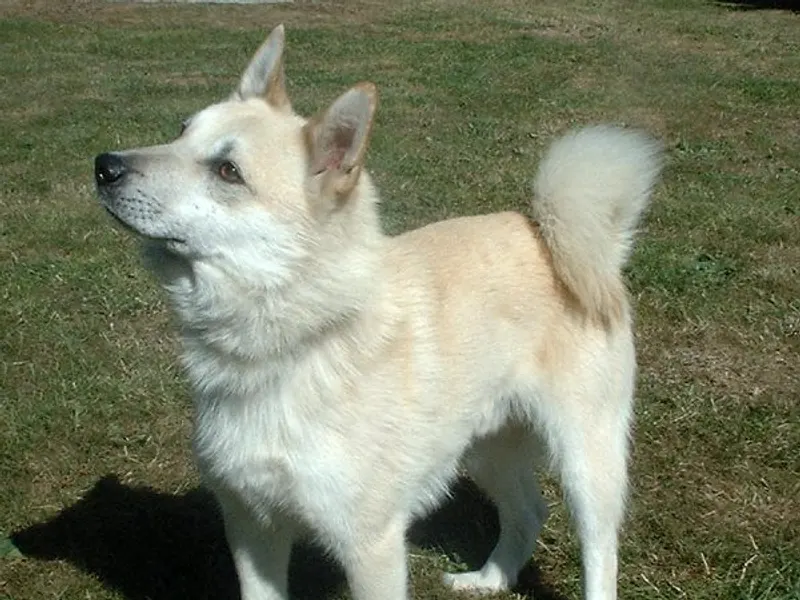
Norse farmers and Viking-age settlers in Norway kept small spitz-type dogs functioning as farm all-rounders — herding sheep and cattle, guarding property, and hunting small game — and archaeological evidence, including dog remains found in Viking ship burials, points to the Buhund's ancestors having accompanied Norse seafarers well over a thousand years ago. The breed's actual name comes directly from the Norwegian words for farm ("bu") and dog ("hund"), a plainly descriptive label rather than any romanticized breed name, reflecting how thoroughly practical this dog's original role really was. Formal breed standardization didn't happen until the 20th century, when Norwegian breed clubs organized to write a written standard and stabilize the type that had existed informally on farms for centuries beforehand. The Norwegian Buhund reached the AKC's Herding Group relatively recently, and it remains a fairly uncommon sight in the US today, known mostly among spitz-breed and Scandinavian-dog enthusiasts rather than the wider dog-owning public.
Common health predispositions
- Hip dysplasia
- Progressive retinal atrophy
- Hereditary cataracts
Temperament
Bright, biddable, and genuinely eager to please, the Norwegian Buhund carries a farm-dog versatility that shows up as real enthusiasm for almost any task an owner sets it — herding instinct, watchdog alertness, and companionable affection all coexist comfortably in the same dog. Families generally find the Buhund gets along well with children and tends toward a cheerful, outgoing baseline rather than the wariness some spitz breeds show strangers. That same alertness makes the breed a naturally vocal watchdog, quick to announce visitors or anything unusual, a trait direct from its centuries-long farm-guardian role. Scandinavian and North American Buhund clubs remain small but active, running herding trials and companion events that keep the breed's working instincts genuinely exercised rather than purely ornamental.
Living with a Norwegian Buhund
A working farm dog's stamina doesn't disappear just because the job did — figure on a full hour of real daily activity to keep a Buhund content. That thick double coat sheds substantially, especially during seasonal blowouts, so brushing needs to happen consistently rather than occasionally. Hip dysplasia is the main structural concern worth screening for, and progressive retinal atrophy plus hereditary cataracts round out the eye-health conversation a responsible breeder should be ready to have. Vocal by nature and happiest with a job to do, the Buhund suits a household that wants an alert, engaged companion and doesn't mind a dog that announces things loudly. US breeders remain few enough that patience is the realistic expectation, and rescue-specific placements for this breed are close to nonexistent given how small the domestic population is. Food and routine veterinary care make up most of the ongoing budget, with grooming supplies for the seasonal blowout the one extra line item a spitz owner should plan for.
FAQ
Did Vikings really have Norwegian Buhunds?
The evidence strongly suggests something close to it — archaeologists have found small spitz-type dog remains in Viking ship burials, and the Buhund's ancestors are widely believed to have accompanied Norse settlers and seafarers well over a thousand years ago, though exact lineage that far back is impossible to trace with certainty.
What does 'Buhund' mean?
It comes directly from the Norwegian words for farm ('bu') and dog ('hund'), a plainly practical name reflecting the breed's original role as a general-purpose Norwegian farm dog handling herding, guarding, and small-game hunting all at once.
Is a Norwegian Buhund a good watchdog?
Yes, reliably — generations of guarding Norwegian farms left this breed with a hair-trigger bark at anything out of the ordinary, an effective early-warning system that households sensitive to a vocal dog should weigh honestly before committing.
How much grooming does a Norwegian Buhund need?
The thick double coat sheds substantially, particularly during seasonal blowouts, so it needs consistent brushing rather than occasional attention, though there's no professional trimming or clipping required the way some other breeds demand.
How hard is it to find a Norwegian Buhund breeder in the US?
Genuinely hard — the domestic population stays small enough that a short list of established American breeders is where the search realistically ends, rather than a quick rescue placement.
Does the Norwegian Buhund still work on farms in Norway today?
Some do, though mechanized farming has shrunk the breed's traditional herding and guarding role considerably since the mid-20th century — most modern Buhunds in both Norway and the US live as companions and competition dogs, with herding-instinct tests and Nordic-breed showcases keeping the working heritage visible rather than actual daily farm labor.
How big does a Norwegian Buhund get?
A genuinely mid-sized spitz, typically landing around 26 to 40 pounds and roughly 16 to 18 inches at the shoulder — sturdy enough for real farm work but compact enough to have adapted comfortably to modern companion life in smaller households.
Related on FetchBreed
Whichever breed fits your life, consider adoption or breed-specific rescue first — many purebred and mixed-breed dogs and cats are already waiting for homes.
General breed information, not veterinary advice — consult a vet for your pet's specific health, diet, and behavior needs.