Foundation Stock Group
Mudi
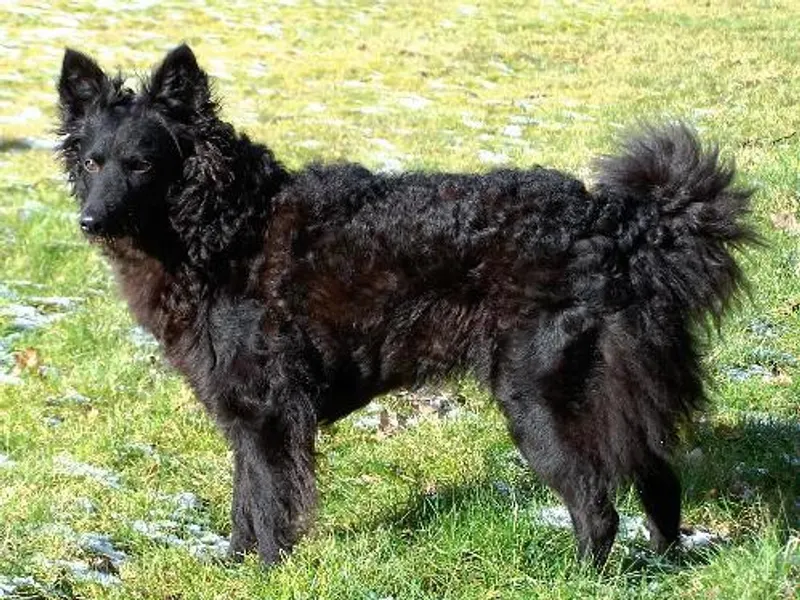
Hungarian shepherds developed the Mudi over centuries as a genuinely versatile farm dog, herding livestock while also controlling vermin and guarding property, a broader working role than some of Hungary's more specialized herding breeds like the Puli or Pumi took on. Breed historians generally consider the Mudi to have emerged from a natural crossing of older Hungarian herding stock rather than any single deliberate breeding program, and it remained an informal farm dog type for a remarkably long time — Hungarian cynologist Dezső Fényes only gave it a formal name and written description in the 1930s, the first real attempt to draw a clean line between the Mudi and its close cousins. Hungary's traditional rural dog-breeding world took a battering from World War II and the Communist-era farm collectivization that followed, and the Mudi's numbers sank low enough that dedicated postwar breeders had to nurse the population back over decades rather than years. AKC recognition came only in 2022, making the Mudi one of the most recently formalized breeds in the American Herding Group despite centuries of real working history in Hungary.
Common health predispositions
- Hip dysplasia
- Patellar luxation
- Congenital deafness
Temperament
Sharp, genuinely versatile, and almost constantly alert, the Mudi carries real all-purpose farm-dog instincts across herding, vermin control, and guarding all at once, a broader working background than many more specialized herding breeds share. It bonds closely with its own household, sometimes to the point of real wariness toward strangers it hasn't been properly introduced to. That same sharp intelligence and versatility translate into fast learning too — agility, herding, and obedience handlers who've put a Mudi through its paces routinely rate the breed among the quicker studies in the whole Herding Group. Real vocal tendencies come standard too, a trait bred directly into a dog that historically needed to alert its farm family to anything unusual across several different working roles at once.
Living with a Mudi
Sharp and versatile as it is, the Mudi needs a genuine 75 minutes of real activity daily, and actual mental work matters just as much as the physical side. The wavy-to-curly, medium-length double coat sheds moderately; regular brushing without any heavy grooming routine keeps it in order. A breeder conversation should cover both hip dysplasia and patellar luxation, plus congenital deafness, which ties in part to the breed's coat-color genetics. This dog's real versatility and constant alertness fit best with an owner who can offer herding, agility, or some other structured outlet for all that working drive — a purely sedentary household will struggle to keep a Mudi satisfied. Litters stay genuinely scarce stateside even now, years after 2022 AKC recognition, a lingering echo of how far the population had to be rebuilt after the breed's wartime and Communist-era losses, so a real wait should be expected rather than a quick placement. Day-to-day expenses land in typical territory for a small-to-medium working herding breed, with routine screening the main planned veterinary cost.
FAQ
How is the Mudi different from the Puli and Pumi?
All three are Hungarian herding breeds that likely share overlapping ancestry, but the Mudi's coat is wavy to curly rather than the Puli's signature corded dreadlocks or the Pumi's tightly curled, springy coat, and the Mudi is generally considered the most all-purpose of the three, historically used for vermin control and guarding in addition to herding. The Mudi was also the last of the three to receive formal breed recognition, trailing the better-known Puli and Pumi by decades.
Did the Mudi almost go extinct?
Close to it — World War II and the Communist-era farm collectivization that followed hit Hungary's rural dog-breeding world hard, and the Mudi's numbers dropped low enough that dedicated postwar breeders spent decades nursing the population back rather than a few quick years.
When did the AKC recognize the Mudi?
Only in 2022, making it one of the most recently formalized breeds in the American Herding Group despite the Mudi having a genuine working history in Hungary stretching back centuries as an all-purpose farm dog.
Is the Mudi a versatile working breed?
Very much so — unlike some of Hungary's more specialized herding breeds, the Mudi historically handled herding, vermin control, and property guarding all at once, a genuinely broader working role reflected today in its real versatility and trainability.
Does the Mudi bark a lot?
Yes, typically — a farm dog once expected to sound off about anything out of place across several different jobs at once doesn't lose that habit just because the jobs went away, so a genuinely chatty companion is the realistic expectation.
How big does a Mudi get?
A compact, athletic dog, typically 18 to 29 pounds and 15 to 20 inches at the shoulder, small enough to move quickly and dodge livestock but sturdy enough to handle the sheer physical variety of the herding, guarding, and vermin-control roles Hungarian farmers historically expected of it.
Related on FetchBreed
Whichever breed fits your life, consider adoption or breed-specific rescue first — many purebred and mixed-breed dogs and cats are already waiting for homes.
General breed information, not veterinary advice — consult a vet for your pet's specific health, diet, and behavior needs.