Terrier Group
Miniature Bull Terrier
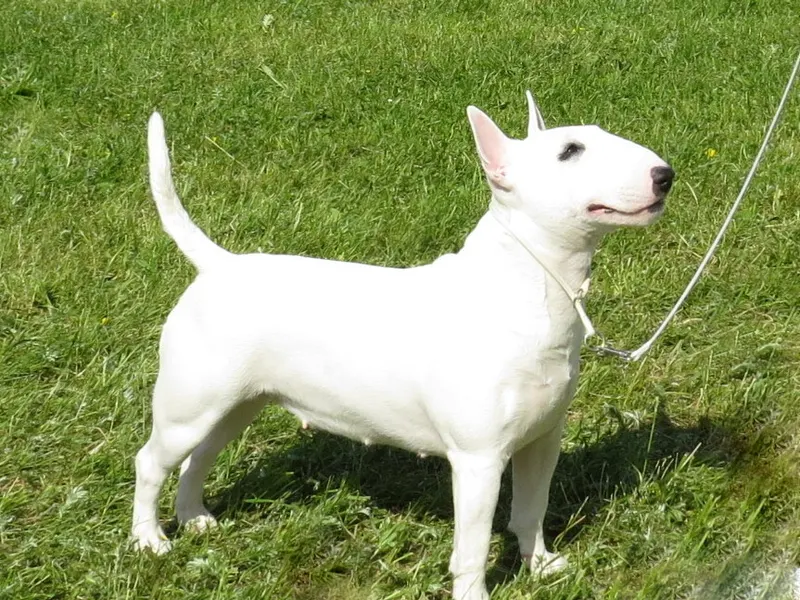
Breeders scaled down the standard Bull Terrier through the 19th and 20th centuries to produce this smaller version, retaining the parent breed's unmistakable egg-shaped head and muscular build in a genuinely more compact package, rather than developing an entirely separate breed type the way some other miniaturized breeds evolved. English breeders formally worked to stabilize the smaller size as a distinct variety, and the Miniature Bull Terrier gained recognition as its own breed separate from the standard Bull Terrier, a distinction the AKC also maintains today by recognizing the two as genuinely separate breeds rather than simple size variants of one standard. That egg-shaped head, one of the most instantly recognizable silhouettes in the entire dog world, carries over faithfully at the smaller scale, giving the Miniature Bull Terrier a genuinely unmistakable look despite its reduced size. AKC recognition for the Miniature variety came in 1991, considerably later than the standard Bull Terrier's own recognition, reflecting the additional decades of selective breeding needed to stabilize a smaller, healthy version of the original type.
Common health predispositions
- Deafness (especially in white dogs)
- Patellar luxation
- Hereditary nephritis
- Heart defects
Temperament
Playful, mischievous, and genuinely full of personality, the Miniature Bull Terrier packs real Bull Terrier stubbornness and comic energy into a smaller frame, retaining much of the parent breed's clownish enthusiasm for life. Family bonds run deep, and most individuals are affectionate and entertaining companions, though genuine terrier-style willfulness means training benefits considerably from patience and consistency over repetition alone. That same strong-willed streak, combined with real prey drive toward smaller animals, means early socialization and secure fencing both matter for this breed more than they might for a more naturally biddable companion breed. Longtime Bull Terrier fanciers often describe the Miniature as carrying essentially the full parent breed's personality in a smaller footprint, right down to the same food-obsessed enthusiasm and theatrical reaction to minor disappointments. American and British clubs alike continue holding conformation and companion events specifically for the Miniature variety, keeping it visible as its own distinct breed rather than letting it fade into the shadow of the standard Bull Terrier's greater popularity.
Living with a Miniature Bull Terrier
A muscular, mischievous little terrier like this genuinely wants a full hour of activity plus real mental work to match, or the boredom shows up as trouble fast. Brushing the short, flat, glossy coat every so often is about the extent of the grooming ask. White-coated individuals in particular carry an elevated deafness risk worth testing for early, and hereditary nephritis — a kidney condition documented specifically in this breed — along with patellar luxation and heart defects round out what a breeder should be able to speak to directly. Playful stubbornness is part of the deal here, so households need genuine follow-through on training consistency plus fencing solid enough to handle the breed's real prey drive. Dedicated Bull Terrier clubs in the US typically run rescue for both the standard and miniature varieties together, a workable option given how the two communities overlap. This breed's genuine appetite and steady energy needs push food costs a bit higher than the minimal grooming bill might suggest.
FAQ
Is a Miniature Bull Terrier just a small Bull Terrier?
Essentially a scaled-down version of the same breed type, retaining the parent breed's unmistakable egg-shaped head and muscular build, but the AKC and other kennel clubs recognize the Miniature Bull Terrier as a genuinely separate breed rather than simply a size variant.
Does a Miniature Bull Terrier go deaf?
Deafness is a real, documented concern in the breed, particularly though not exclusively in predominantly white-coated individuals, and responsible breeders test hearing in puppies before placement.
Is a Miniature Bull Terrier easy to train?
Not automatically — genuine terrier-style stubbornness means training rewards patience and consistency far more than repetition, and an owner expecting reflexive obedience is likely to find the breed's strong-willed streak surprising.
When was the Miniature Bull Terrier recognized by the AKC?
British breeders had stabilized and shown the smaller variety for decades before American recognition caught up, reflecting how much longer UK fanciers had been actively working to fix a structurally sound miniature type. Today's AKC breed standard sets a specific height ceiling — no taller than 14 inches at the shoulder — that keeps the Miniature legally and structurally distinct from a simply small or runted standard Bull Terrier, which has no matching size cap.
What health issues affect the Miniature Bull Terrier?
Deafness, patellar luxation, heart defects, and hereditary nephritis — a kidney condition documented specifically in the breed — round out the list a prospective buyer should raise with the breeder ahead of time.
Is the Miniature Bull Terrier simply a smaller Bull Terrier?
Essentially yes, though the AKC treats them as separate breed entries sharing one standard aside from size: the Miniature tops out around 14 inches at the shoulder while the standard Bull Terrier has no height limit, and both share the same distinctive egg-shaped head profile and similarly high-energy, determined terrier temperament despite the size difference.
Related on FetchBreed
Lists this breed appears in
Whichever breed fits your life, consider adoption or breed-specific rescue first — many purebred and mixed-breed dogs and cats are already waiting for homes.
General breed information, not veterinary advice — consult a vet for your pet's specific health, diet, and behavior needs.