Foundation Stock Group
Lapponian Herder
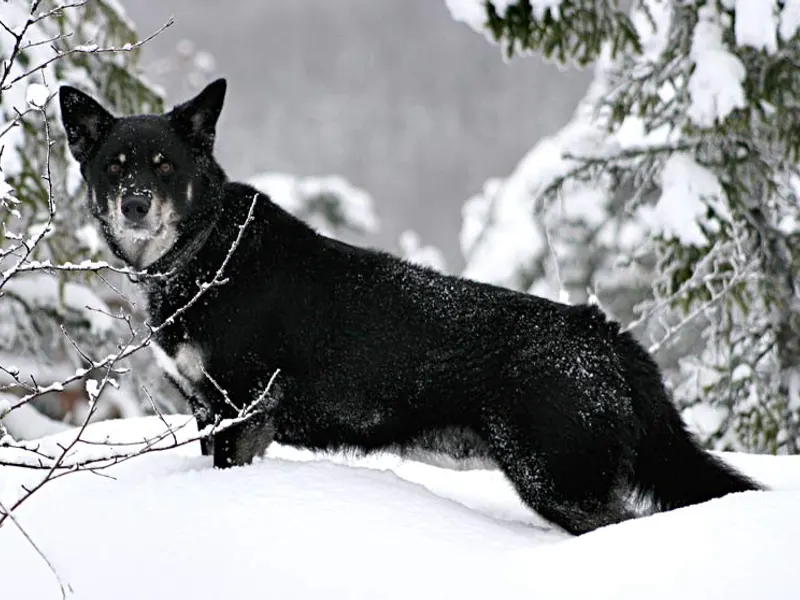
The Sámi people of northern Finland and Scandinavia's Lapland region developed this breed over centuries originally as a reindeer-herding dog, working alongside semi-nomadic reindeer herds across genuinely harsh Arctic and subarctic terrain long before formal breed standards existed anywhere in the region. As Sámi reindeer husbandry practices modernized through the 20th century and herders increasingly relied on snowmobiles and other mechanized methods to manage their herds, the Lapponian Herder's original working role declined substantially, prompting Finnish breed clubs to formally standardize and actively promote the breed specifically to prevent it from disappearing along with its traditional job. Finland recognizes the Lapponian Herder as a genuine national heritage breed today, distinct from its close relative the Finnish Lapphund, with breed clubs there drawing a clear historical line between the herding-focused Lapponian Herder and the more all-purpose Sámi camp dog that became the Finnish Lapphund. Beyond Scandinavia the breed stays a genuine rarity, and most American owners only ever hear of it through Nordic-breed enthusiast networks in the first place.
Common health predispositions
- Hip dysplasia
- Progressive retinal atrophy
- Generally hardy breed
Temperament
Calm, genuinely biddable, and notably good-natured, the Lapponian Herder carries real herding instincts, the product of generations working hand-in-hand with Sámi herders rather than the more independent style some other herding breeds developed. Kids tend to get along famously with this breed, whose patient, easygoing manner at home is as much a defining trait as its herding drive. That same cooperative working history translates directly into strong trainability, and the Lapponian Herder consistently ranks among the more responsive and eager-to-please herding breeds according to owners who've worked with it directly. Finnish breed clubs continue actively promoting the Lapponian Herder specifically as a distinct heritage breed, running herding demonstrations and companion events to keep its genuine working character visible even as its original reindeer-herding role has largely faded.
Living with a Lapponian Herder
A solid hour of real daily activity suits this working-bred Arctic herder well, and it genuinely appreciates having a task or structured activity to engage with. Winter and summer coats differ dramatically on this dense, weather-resistant double coat, and the transition between them means a real spike in shedding twice a year that regular brushing has to keep pace with. A responsible breeder should be able to speak directly to both hip dysplasia and progressive retinal atrophy risk, though outside that pair the Lapponian Herder is widely considered a genuinely hardy Nordic working breed. Real cooperativeness and a naturally good-natured temperament suit an active family household especially well, particularly one prepared for the substantial coat-care commitment that comes with true Arctic-bred fur. US breeders remain genuinely few, and most interested owners work through Nordic-breed enthusiast networks or import contacts rather than expecting a nearby domestic litter. Food and vet care make up the bulk of an otherwise ordinary medium-dog budget, plus a modest outlay on brushes and deshedding tools for the seasonal blow.
FAQ
What's the difference between a Lapponian Herder and a Finnish Lapphund?
Both descend from Sámi dogs of Scandinavia's Lapland region, but Finnish breed clubs draw a clear historical line between them — the Lapponian Herder developed specifically for reindeer herding, while the Finnish Lapphund traces more directly to the all-purpose Sámi camp dog.
Is the Lapponian Herder still used to herd reindeer?
Less than it once was — as Sámi reindeer husbandry modernized through the 20th century and herders increasingly relied on snowmobiles, the breed's original working role declined substantially, prompting Finnish breed clubs to formally standardize and promote it to prevent its disappearance.
Is a Lapponian Herder good with kids?
Yes, notably so — its patient, easygoing manner at home traces directly back to centuries of close cooperative work alongside Sámi herders, a very different temperament base than the more independent style some other herding breeds carry.
How much grooming does a Lapponian Herder need?
A genuine seasonal commitment — twice-yearly coat blows on this true Arctic double coat call for noticeably more frequent brushing during those windows than the rest of the year requires.
Is the Lapponian Herder easy to find outside Scandinavia?
Not especially — the breed remains genuinely rare outside its native region, and most American owners learn about it and source puppies specifically through Nordic-breed enthusiast networks rather than conventional channels.
How big does a Lapponian Herder get?
This medium-sized, sturdy dog usually weighs 33 to 55 pounds, its compact and well-muscled build suited to trotting alongside a reindeer herd for long stretches across open tundra rather than sprinting or working in tight, confined spaces.
What colors does a Lapponian Herder come in?
Mostly solid black or brown, sometimes with white or tan markings on the chest, feet, and face — a limited palette compared with some other Nordic herding breeds, reflecting the Finnish standard's focus on working soundness over decorative coat variety.
Related on FetchBreed
Whichever breed fits your life, consider adoption or breed-specific rescue first — many purebred and mixed-breed dogs and cats are already waiting for homes.
General breed information, not veterinary advice — consult a vet for your pet's specific health, diet, and behavior needs.