Terrier Group
Kerry Blue Terrier
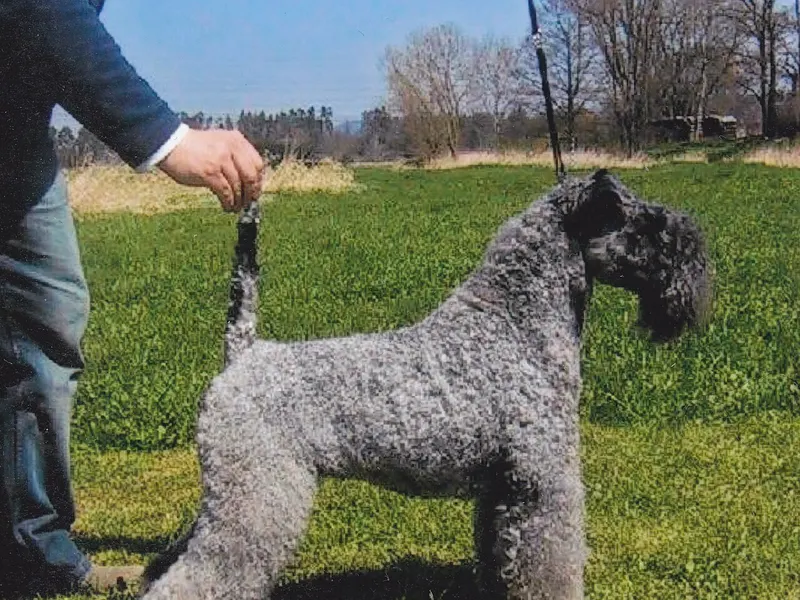
Ireland's County Kerry gave this breed its name and, by most accounts, its origin story — a working farm terrier developed to handle everything from vermin control to herding and guarding, versatile enough that it became something of an all-purpose Irish farm dog before anyone formalized a breed standard. The distinctive blue-gray coat, which puppies are actually born black and lighten into over roughly the first two years of life, became a defining feature once dog shows took interest in the breed in the early 20th century. AKC recognition came in 1922, and the Kerry Blue has since served in less expected roles too, including as a police and military dog in Ireland. Irish nationalist and political figure Michael Collins reportedly favored the breed, and the Kerry Blue became something of an unofficial symbol of Irish identity in the early 20th century, a status that helped drive its adoption by Irish police and military units beyond its original farm role. The Irish Kerry Blue Terrier Club, founded in 1920, worked to formalize the breed standard shortly before its AKC recognition two years later.
Common health predispositions
- Hip dysplasia
- Progressive retinal atrophy
- Cerebellar abiotrophy
Temperament
Kerry Blues carry real terrier grit combined with a genuinely versatile working background, which shows up as a dog that's confident, alert, and often willing to take the initiative rather than wait for direction. Same-sex dog aggression is a documented tendency in the breed, a holdover from its farm-guardian role, making early and ongoing socialization a real priority rather than a nice-to-have. With their own people, most Kerry Blues are affectionate and notably loyal, often forming a particularly strong bond with one household member. The breed's police and military service in Ireland during the early 20th century drew directly on its natural alertness and physical courage, traits that remain evident in the modern companion dog even though most Kerry Blues today live purely as family pets rather than working animals.
Living with a Kerry Blue Terrier
A bored Kerry Blue tends to find its own outlets, which owners rarely appreciate, so about an hour of daily exercise with some mental challenge built in suits this active, intelligent breed well. That soft, wavy, dense coat is a genuine time commitment of its own — it doesn't shed conventionally but grows nonstop, tangling into mats within days of neglect and needing a groomer's attention roughly every six to eight weeks on top of home brushing; the reward is a coat many allergy-sensitive households tolerate reasonably well, though no breed is fully allergen-free. Hip dysplasia and progressive retinal atrophy both appear in the breed's health literature, alongside cerebellar abiotrophy, a neurological disorder affecting balance and coordination — reason enough to prioritize a breeder who actively tests for it. This breed suits an experienced owner willing to manage same-sex dog tension carefully and commit to real coat maintenance; a household already keeping multiple same-sex dogs, or an owner unwilling to budget for regular grooming, should think twice. Kerry Blue Terrier rescue groups operate in several regions, often coordinated through national breed clubs, and typically place a strong emphasis on matching adopters who understand the breed's grooming and socialization needs.
FAQ
Do Kerry Blue Terrier puppies stay blue their whole life?
No — puppies are actually born black and gradually lighten to the breed's signature blue-gray color over roughly their first two years, a genuinely distinctive trait among AKC breeds.
Are Kerry Blue Terriers aggressive toward other dogs?
Same-sex aggression, particularly between two males or two females, is a documented tendency rooted in the breed's farm-guardian history, which makes consistent socialization from puppyhood a real priority rather than optional.
How often does a Kerry Blue Terrier need grooming?
Expect to brush the continuously growing coat at home multiple times a week, with a groomer's visit every six to eight weeks or so on top of that to keep it from felting into a solid mass — a recurring budget line, not a one-off expense.
Why is the Kerry Blue Terrier considered an Irish national symbol?
Its association with Irish nationalist figures including Michael Collins during the early 20th century, combined with its status as one of the few terrier breeds developed specifically in Ireland, gave it a cultural significance beyond its working farm-dog origins.
Do Kerry Blue Terriers do well with cats?
Not reliably — the breed's farm-guardian and vermin-hunting background gives it a real prey drive toward small animals, and same-household cats generally do better when raised alongside the dog from puppyhood rather than introduced later.
Do Kerry Blue Terriers need a job or outlet beyond exercise?
Mental engagement genuinely helps — the breed's working intelligence responds well to obedience training, earthdog trials, or other structured activities, and a Kerry Blue given only physical exercise without mental stimulation can become genuinely bored and harder to manage.
Related on FetchBreed
Lists this breed appears in
Whichever breed fits your life, consider adoption or breed-specific rescue first — many purebred and mixed-breed dogs and cats are already waiting for homes.
General breed information, not veterinary advice — consult a vet for your pet's specific health, diet, and behavior needs.