Non-Sporting Group
Keeshond
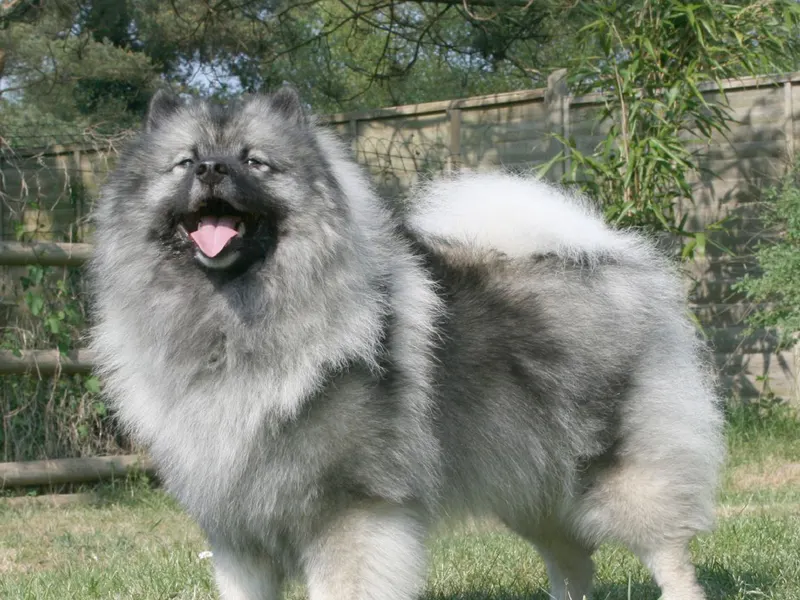
The Keeshond was originally a Dutch barge dog, closely related to the Schipperke and other Spitz-type breeds kept on canal boats, but the breed's real historical claim to fame is political: in the 18th century, the Keeshond became the living symbol of the Dutch Patriot political faction, taking its name directly from Patriot leader Cornelis ("Kees") de Gyselaer, whose own barge dog became the faction's mascot. The rival House of Orange favored the Pug as their symbolic dog at the same time, meaning two toy-to-medium breeds ended up representing opposite sides of an actual Dutch political rivalry — a genuinely unusual origin story among dog breeds. The AKC recognized the Keeshond in 1930, well over a century after its political heyday in the Netherlands had passed.
Common health predispositions
- Hip dysplasia
- Patellar luxation
- Hypothyroidism
Temperament
Whatever its political symbolism, the working Keeshond's temperament reflects a companionable barge dog rather than a specialized herder or guardian: the breed is friendly, sociable, and consistently rated near the top of the scale for compatibility with both children and other pets. Trainability runs solidly good, and Keeshonden are generally eager to please, making them one of the more approachable Spitz-type breeds for first-time owners of a northern-type dog. The breed is notably vocal, a trait consistent with its barge-watchdog history, and Keeshonden tend to alert-bark at unfamiliar sounds or visitors even though the breed's overall temperament is far too friendly to function as a real deterrent.
Living with a Keeshond
Forty-five minutes of daily activity suits most Keeshonden well, a moderate requirement that makes the breed reasonably adaptable to different household activity levels. The thick, standoff double coat is the real ongoing commitment: it sheds heavily year-round and dramatically during the breed's twice-yearly blowouts, and skipping brushing for even a few days lets loose undercoat start felting into the topcoat. Hip dysplasia, patellar luxation, and hypothyroidism are the most commonly documented health concerns in the breed. The Keeshond's distinctive facial markings — a scowling-looking pattern of shading around the eyes sometimes called "spectacles" — are a genuine, deliberately preserved breed trait rather than a natural coloring accident, and they're specifically called out in the breed standard. Because of the coat's volume and density, many Keeshond owners invest in a proper undercoat rake in addition to a standard brush, and skipping regular brushing for even a couple of weeks can result in matting that's genuinely difficult to work out afterward.
FAQ
Why is the Keeshond linked to Dutch politics?
In the 18th century, the Keeshond became the living symbol of the Dutch Patriot political faction, named directly after Patriot leader Cornelis 'Kees' de Gyselaer, whose barge dog became the faction's mascot — a genuinely unusual origin for a dog breed's name and identity.
Are Keeshonden good family dogs?
Yes, generally — the breed's friendly, sociable temperament produces strong compatibility ratings with both children and other pets, and Keeshonden are typically eager to please, making them approachable even for owners new to Spitz-type breeds.
How much does a Keeshond shed?
Substantially — the thick, standoff double coat sheds heavily year-round and blows out dramatically twice a year, requiring several brushing sessions a week to prevent matting, especially during those seasonal transitions.
What are the 'spectacles' on a Keeshond's face?
A distinctive shading pattern around the eyes that gives the breed a scowling or spectacled expression — it's a genuine, deliberately preserved trait specifically described in the breed standard rather than a random coloring accident.
Do Keeshonden bark a lot?
Often, yes — the breed's history as a barge watchdog left it with a strong tendency to alert-bark at unfamiliar sounds or visitors, even though its overall temperament is far too friendly to function as an actual deterrent.
How much exercise does a Keeshond need?
About 45 minutes daily, a moderate requirement that makes the breed reasonably adaptable — Keeshonden enjoy activity but aren't as relentlessly high-drive as some other Spitz-type breeds.
How long do Keeshonden live?
This medium breed commonly reaches 12 to 15 years, and dogs whose hip and thyroid health get proactive monitoring rather than reactive treatment tend to hold up well across that stretch.
Is a Keeshond a good breed for a first-time dog owner?
Yes, often recommended — the breed's friendly, trainable temperament and moderate exercise needs make it one of the more approachable northern-type breeds, though the demanding coat care is worth planning for realistically.
How big does a Keeshond get?
Medium, typically 35 to 45 pounds and 17 to 18 inches at the shoulder, a build substantial enough for real barge-watchdog work but manageable enough for companion life in most households.
Do Keeshonden do well with other pets?
Generally yes — the breed's sociable, friendly temperament extends well to other dogs and pets, making it one of the more consistently compatible Spitz-type breeds in multi-pet households.
Is the Keeshond related to the Pomeranian?
Both are German/Dutch Spitz-type breeds descended from similar northern stock, but they were developed at different sizes for different roles — the Keeshond as a substantial barge dog, the Pomeranian as a much smaller companion breed.
Is a Keeshond a good watchdog?
Reasonably alert, yes — the breed's barge-watchdog heritage left it quick to bark at anything unfamiliar, though its overwhelmingly friendly temperament means it functions better as an alarm than as an actual deterrent.
What does the word 'Keeshond' mean?
It's Dutch, roughly translating to 'Kees's dog,' a direct reference to Patriot leader Cornelis 'Kees' de Gyselaer, whose own barge dog gave the breed both its name and its unusual political symbolism.
Related on FetchBreed
Care equipment for a Keeshond
As an Amazon Associate we earn from qualifying purchases made through these links, at no extra cost to you.
- Undercoat rake
Stated outright here: many Keeshond owners invest in a proper undercoat rake in addition to a standard brush.
- Pin brush
The standard-brush half of that same pair, for the standoff topcoat that loose undercoat felts into.
Whichever breed fits your life, consider adoption or breed-specific rescue first — many purebred and mixed-breed dogs and cats are already waiting for homes.
General breed information, not veterinary advice — consult a vet for your pet's specific health, diet, and behavior needs.