Terrier Group
Jack Russell Terrier
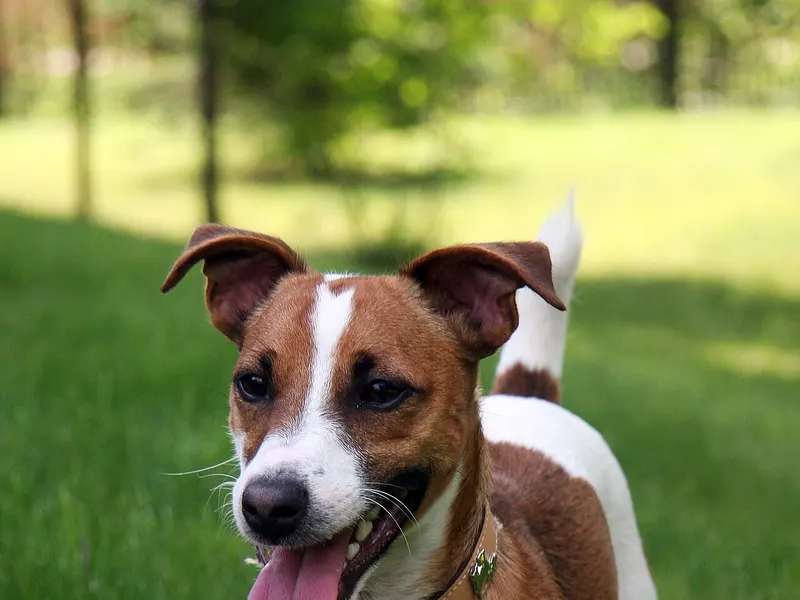
The Reverend John Russell developed the breed in 1800s England specifically for fox hunting, breeding for a small, tenacious terrier that could go to ground into a fox's den and either flush or hold the fox until the hunt's terrier-man dug it out — the breed's size was deliberately kept small enough to fit into a fox's burrow while its legs stayed long enough for genuine stamina keeping pace with mounted hunters and hounds across open country, a combination that produced one of the most relentlessly high-energy small breeds in existence. The breed name is a matter of some confusion in kennel-club circles, since the Parson Russell Terrier and Russell Terrier are separately recognized breeds descended from the same original Russell stock but bred toward slightly different size standards, while 'Jack Russell Terrier' itself is not currently AKC-recognized as a distinct breed name, though it remains the far more common informal term. Fox hunting itself has declined sharply and is restricted or banned in much of the UK today, but the breed's popularity as a companion has, if anything, grown in the decades since, largely detached from its original working purpose.
Common health predispositions
- Patellar luxation
- Lens luxation
- Legg-Calvé-Perthes disease
Temperament
Jack Russell Terriers carry maxed-out energy and a fearless, independent temperament that consistently surprises owners who assume small size means low demands — this is a working terrier bred for genuine physical and mental toughness, and an under-stimulated Jack Russell is notorious among trainers for destructive digging, escape attempts, and relentless barking. Both young-kids and other-pets compatibility rate on the low side for this breed, a fair reflection of a dog that's intensely prey-driven toward small animals while not being especially tolerant of rough handling itself.
Living with a Jack Russell Terrier
Pound for pound, few small breeds demand more daily exercise than this one — treat 75 minutes of genuinely vigorous activity as a floor, not a ceiling, and lean on structured outlets like earthdog trials, a sport built directly around the breed's original job, rather than expecting passive yard time to cut it. Grooming is minimal for the short, smooth or broken coat. Patellar luxation, lens luxation (a hereditary eye condition), and Legg-Calvé-Perthes disease, a degenerative hip condition more common in small breeds, are documented health concerns. Secure fencing is close to essential, since the breed's digging and jumping ability is genuinely exceptional for its size, and a Jack Russell that catches an interesting scent or sight target will pursue it with real determination. Many trainers specifically recommend flyball, agility, or earthdog work as structured, breed-appropriate outlets, since these sports engage the same problem-solving drive and physical stamina the breed was originally bred for. The breed's coat comes in smooth, broken (a slightly longer, wiry texture), and rough varieties, all requiring only modest grooming despite the coat-type variation.
FAQ
Are Jack Russell Terriers good first dogs?
Not usually a good starting point — the combination of relentless energy, strong prey drive, and genuine independence challenges even seasoned owners, and a Jack Russell left without enough physical and mental outlet reliably turns to serious digging, escaping, or other destructive habits.
What is earthdog trialing?
A dog sport built directly around terrier breeds' original job of going to ground after quarry, using a tunnel system with a caged, scent-only target the dog tracks and 'works' at rather than physically reaching — it's widely considered an excellent, breed-appropriate outlet for a Jack Russell's natural digging and hunting drive.
Do Jack Russell Terriers get along with cats?
Often not well without careful, early introduction — the breed's strong hunting-derived prey drive toward small, fast-moving animals is a genuine and well-documented trait, and many Jack Russells are simply not safe with cats or small pets regardless of training.
How much exercise does a Jack Russell Terrier need?
Small dog, big appetite for activity — roughly 75 minutes daily is the realistic minimum, and this breed's hard-wired working-terrier drive makes structured outlets like earthdog trials far more satisfying to it than idle time in a fenced yard.
Is a Jack Russell Terrier the same as a Parson Russell Terrier?
Closely related but not identical in kennel-club terms — both descend from the same original Reverend Russell breeding stock, but the Parson Russell Terrier and Russell Terrier are separately AKC-recognized breeds bred to slightly different size standards, while 'Jack Russell Terrier' remains the far more common informal name without current AKC breed status of its own.
Do Jack Russell Terriers have different coat types?
Yes — the breed comes in smooth, broken, and rough coat varieties, differing mainly in texture and slight length rather than grooming demands, since all three require only modest, occasional brushing regardless of type.
Related on FetchBreed
Lists this breed appears in
Care equipment for a Jack Russell Terrier
As an Amazon Associate we earn from qualifying purchases made through these links, at no extra cost to you.
- Flirt pole
Seventy-five minutes of vigorous activity is called a floor here, with structured outlets preferred over passive yard time.
- Agility starter set
Many trainers specifically recommend flyball, agility or earthdog work as breed-appropriate outlets, this page says.
Whichever breed fits your life, consider adoption or breed-specific rescue first — many purebred and mixed-breed dogs and cats are already waiting for homes.
General breed information, not veterinary advice — consult a vet for your pet's specific health, diet, and behavior needs.