Herding Group
Icelandic Sheepdog
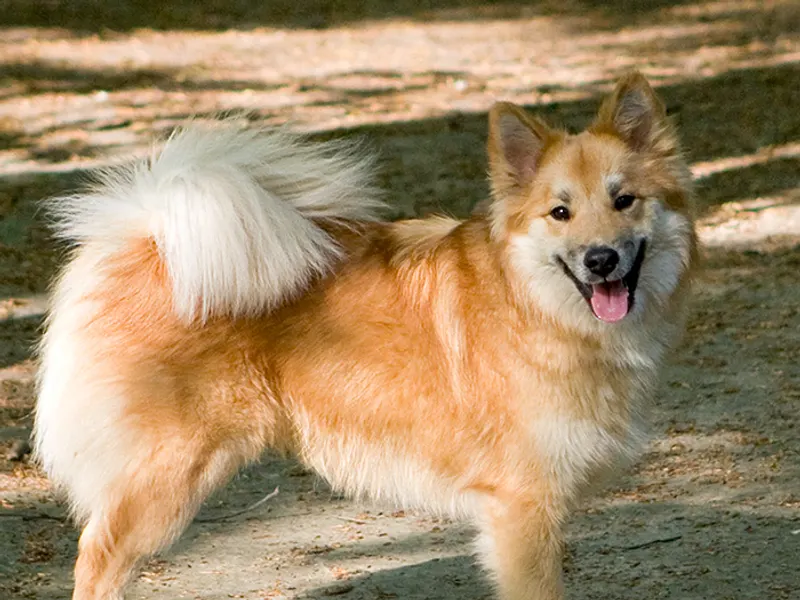
Norse settlers brought the ancestors of this breed to Iceland over a thousand years ago, and the isolated island environment allowed the Icelandic Sheepdog to develop with minimal outside breed influence for centuries, working as a genuine all-purpose farm dog that herded sheep, guarded the homestead, and helped locate lost livestock across Iceland's difficult terrain. Distemper epidemics in the 19th and 20th centuries devastated the breed's population more than once, pushing it close to extinction, and dedicated conservation efforts, including international breeding programs, rebuilt the population from a genuinely small founder base. The AKC recognized the breed in 2010, among its more recent additions. Iceland's isolation, which allowed the breed to develop with minimal outside influence, also made it acutely vulnerable to imported disease, and a particularly severe distemper outbreak in the 1900s combined with an earlier one is documented as having reduced the breed's population to genuinely critical levels more than once. Iceland's parliament eventually passed protective legislation restricting the import of foreign dogs specifically to safeguard the Icelandic Sheepdog's population and genetic integrity, a rare legal step taken specifically for a single breed's preservation.
Common health predispositions
- Hip dysplasia
- Patellar luxation
- Generally hardy landrace breed
Temperament
Friendly, alert, and genuinely good-natured describes most Icelandic Sheepdogs — unlike some guardian-leaning herding breeds, this one was selected more for cooperative herding and general farm usefulness than territorial protection, which shows up as a breed that's notably sociable with people and other animals rather than reserved. Vocal by nature, Icelandic Sheepdogs bark readily, a trait that was actually useful for alerting farmers to loose or approaching livestock and still shows up strongly in the modern companion dog. They're eager to please and generally straightforward to train. Iceland's relatively small, historically isolated dog population means the Icelandic Sheepdog's gene pool remains genuinely narrower than many internationally established breeds, a factor that international breed clubs actively manage through careful pairing to maintain genetic diversity while preserving the breed's characteristic friendly, cooperative temperament.
Living with a Icelandic Sheepdog
An active family suits the Icelandic Sheepdog far better than a sedentary one, and roughly an hour of daily exercise generally covers this medium-sized, energetic breed's needs. Both the short and long coat varieties carry a full double coat, and seasonal shedding periods call for markedly more frequent brushing than the rest of the year. Given how vocal the breed tends to be, apartment living or noise-sensitive neighbors are genuinely worth factoring into the decision. Hip dysplasia and patellar luxation are documented concerns, though the breed is generally considered hardy given its relatively unaltered landrace history. A genuinely friendly, cooperative herding dog with real vocal tendencies suits an active family well here — it's a poor fit for noise-sensitive apartment living. Finding an Icelandic Sheepdog through rescue takes real patience in the US, given how few exist here overall; most adopters end up working directly with the national breed club or one of a small handful of established US breeders instead.
FAQ
Are Icelandic Sheepdogs good with kids and other pets?
Very much so — this breed's kid- and other-pet-compatibility ratings sit among the best of any herding breed, a direct result of being bred for cooperative farm work rather than solitary guarding.
Do Icelandic Sheepdogs bark a lot?
Yes, quite a bit — vocalizing to alert farmers to livestock movement was historically a useful trait for the breed, and that tendency remains strong, worth considering for apartment living or noise-sensitive situations.
Is the Icelandic Sheepdog rare?
It's uncommon outside Iceland and parts of Scandinavia, having survived multiple near-extinction events from disease epidemics historically, though international conservation breeding has slowly grown the population and AKC recognition in 2010 has increased its visibility.
Did Iceland pass laws to protect the Icelandic Sheepdog?
Yes — Iceland's parliament restricted the import of foreign dogs specifically to protect the breed's population and genetic integrity after repeated disease outbreaks devastated its numbers historically, a rare legislative step taken for a single breed's preservation.
Why did the Icelandic Sheepdog population crash historically?
Severe distemper epidemics in the 19th and 20th centuries hit the breed especially hard, since its geographic isolation meant minimal prior disease exposure and correspondingly little natural immunity built up within the population.
Do Icelandic Sheepdogs need a job to be happy?
They benefit genuinely from one, though the breed's cooperative, adaptable temperament means structured exercise, training, or even regular hiking can substitute for actual herding work, unlike some more intensely driven herding breeds that struggle without livestock access specifically.
How isolated has the Icelandic Sheepdog's gene pool historically been?
Extremely — the breed developed in near-total isolation after Norse settlers brought spitz-type dogs to Iceland over a thousand years ago, and strict Icelandic import laws limiting new dogs onto the island have kept outside bloodlines from significantly diluting the breed for centuries.
Related on FetchBreed
Whichever breed fits your life, consider adoption or breed-specific rescue first — many purebred and mixed-breed dogs and cats are already waiting for homes.
General breed information, not veterinary advice — consult a vet for your pet's specific health, diet, and behavior needs.