Hound Group
Ibizan Hound
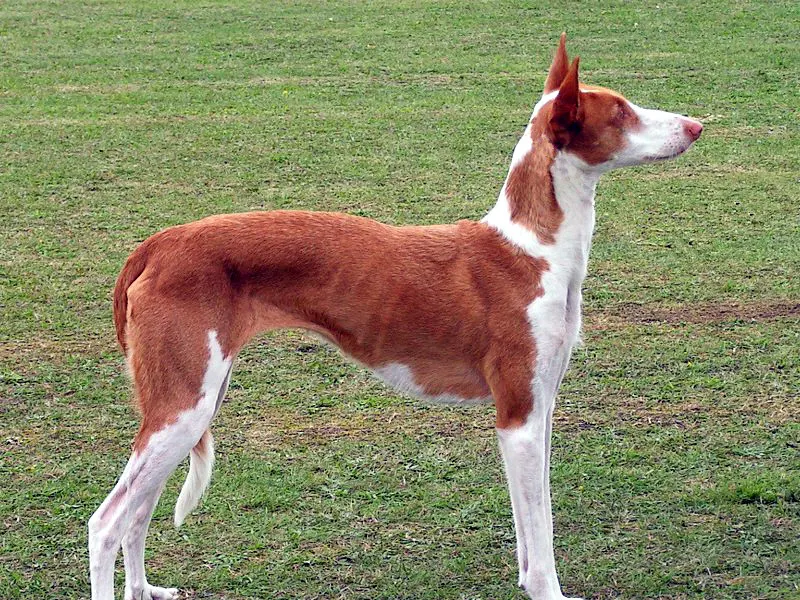
The Balearic island of Ibiza gave this ancient sighthound its modern name, though the breed's actual origins likely trace much further back, with some historians linking its distinctive appearance to dogs depicted in Egyptian art thousands of years old, brought to the Mediterranean islands by Phoenician traders. Regardless of the exact ancient lineage, the breed took shape on Ibiza and its neighboring islands as a hunter of rabbits across rough terrain, prized above all for a standing jump capable of clearing a fence outright rather than going around it — a genuinely distinctive athletic trait among sighthounds. AKC recognition came relatively recently, in 1978. The breed's exceptional hearing and eyesight, prized by Ibizan hunters working the island's rocky, scrub-covered terrain, are sometimes attributed to the breed's distinctive large, upright ears, which some breed historians believe were selected for partly because of an actual functional advantage in detecting prey moving through dense brush rather than purely for appearance. The Ibizan Hound Club of America, founded in the 1970s, played a central role in establishing US breeding programs and pushing for the AKC recognition that eventually arrived in 1978.
Common health predispositions
- Seizure disorders
- Deafness
- Allergies
Temperament
Ibizan Hounds carry real sighthound independence combined with a notably playful, sometimes clownish streak at home, a personality that surprises people expecting a purely reserved hunting dog. Intelligent and quick, the breed can be a genuine challenge to contain given its exceptional jumping ability — a bored Ibizan Hound treats an ordinary fence as a minor inconvenience rather than a real barrier. With family, most individuals are affectionate and often quite goofy, though generations spent chasing rabbits across the islands left behind a prey drive strong enough that small pets need careful, gradual introduction. The breed's playful, sometimes clownish personality at home stands in real contrast to its serious, focused demeanor while actively hunting, a duality that reflects centuries of selective breeding for a dog capable of both intense working drive and genuine companionship within the same household.
Living with a Ibizan Hound
Real running room matters enormously for this athletic hound — 90 minutes of vigorous daily exercise, including off-leash time in a securely and tall-fenced area given the Ibizan's exceptional jumping ability, is closer to what it genuinely needs than a casual walk. Coat care, on the other hand, is close to effortless: a light brushing now and then covers the short, smooth coat. Seizure disorders and deafness both appear at somewhat elevated rates in the breed's veterinary literature, and allergies are fairly common too, making a breeder's health-testing history worth asking about directly rather than assuming a clean bill of health. This breed suits an active owner with a tall, secure fence and genuine appreciation for the breed's athletic, independent nature — it's a poor fit for anyone underestimating the jumping ability or hoping for a highly biddable companion. US sighthound rescue organizations do occasionally place Ibizan Hounds, though the breed's modest population means an adopter should expect a genuine wait rather than immediate availability.
FAQ
How high can Ibizan Hounds jump?
Remarkably high for a dog of its size, capable of clearing standard fences from a standing start — a trait specifically selected for during the breed's development chasing rabbits across the varied terrain of Ibiza, and one that makes standard fencing genuinely insufficient for containment.
Are Ibizan Hounds good with small pets?
Not reliably without careful, gradual introduction — the breed's strong instinct to chase small, fast-moving prey developed specifically for rabbit hunting and doesn't disappear just because a household includes a smaller pet.
Is the Ibizan Hound an ancient breed?
Its exact origins are debated among historians, with some connecting the breed's distinctive appearance to dogs depicted in ancient Egyptian art, though the breed as it exists today developed specifically on the Balearic Islands over many centuries.
Why does the Ibizan Hound have such large ears?
Some breed historians believe the large, upright ears were selected for partly because of a real functional advantage detecting prey moving through Ibiza's dense scrub terrain, giving the breed's already-strong hearing an extra edge, rather than for appearance alone.
When was the Ibizan Hound Club of America founded?
In the 1970s, and the club played a central role in establishing organized US breeding programs and successfully petitioning for the AKC recognition that arrived in 1978.
Is an Ibizan Hound good for apartment living?
Not ideally — despite adapting reasonably well indoors once properly exercised, the breed's exceptional jumping ability and genuine need for real off-leash running space make a house with a securely and tall-fenced yard a considerably better fit than an apartment.
Related on FetchBreed
Lists this breed appears in
Whichever breed fits your life, consider adoption or breed-specific rescue first — many purebred and mixed-breed dogs and cats are already waiting for homes.
General breed information, not veterinary advice — consult a vet for your pet's specific health, diet, and behavior needs.