Working Group
German Pinscher
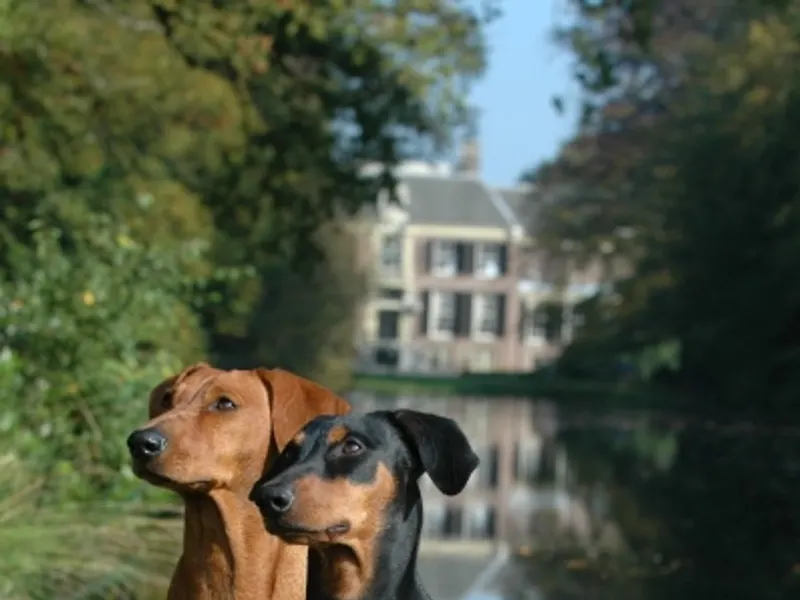
The German Pinscher is a foundational breed in its own right, developed in Germany as an all-purpose farm and stable ratter and guard dog well before it became one of the root ancestor breeds behind both the Doberman Pinscher and the Miniature Pinscher — a genealogical relationship that runs the opposite direction from what the breed's smaller, more famous descendants might suggest. The breed nearly disappeared in Germany following World War II, and its modern survival is credited largely to German breeder Werner Jung, who spent the 1950s actively searching out and gathering the small number of remaining German Pinschers to rebuild a stable breeding population from what was left. Full AKC recognition didn't arrive until 2003 — a comparatively recent formalization given how genuinely old the breed's working history actually is.
Common health predispositions
- Hip dysplasia
- Von Willebrand's disease
- Cardiac issues
Temperament
As the working root stock behind the Doberman, the German Pinscher carries a similarly alert, confident, high-energy temperament in a considerably smaller package, with a maxed-out energy level and solidly good trainability that reflects genuine working intelligence rather than pure companion breeding. GoodWithKids runs more moderate, and the breed retains real watchdog instincts and a tendency toward wariness with strangers, consistent with its farm-guarding history. Other pets are a reasonable match in many cases, though the breed's ratting background means genuine prey drive toward small animals is worth managing with early, careful introduction.
Living with a German Pinscher
Restlessness and persistent vocal alerting are what an under-exercised German Pinscher looks like, so treat an hour of vigorous daily activity as the baseline this genuinely energetic breed needs to settle. Coat upkeep, at least, asks very little — a quick brush now and then is enough for the short, smooth coat. Hip dysplasia, Von Willebrand's disease, and cardiac issues top the list of documented concerns, and because the breed's post-war founding population was so small, responsible breeders keep a close eye on genetic diversity within what's still a fairly narrow worldwide gene pool. Puppies aren't easy to come by, either — demand for the far more famous Doberman descendant means German Pinscher litters are less frequent, and prospective owners should expect a real wait.
FAQ
Is the German Pinscher related to the Doberman Pinscher?
Yes, and in the opposite direction from what many people assume — the German Pinscher is actually one of the foundational root breeds behind the Doberman, developed earlier as an all-purpose farm ratter and guard dog, rather than being a smaller version created from the Doberman.
How did the German Pinscher almost go extinct?
Germany's post-World War II upheaval left the breed's numbers devastated, and it took one determined breeder, Werner Jung, actively tracking down the handful of surviving dogs throughout the 1950s, to rebuild a stable population from almost nothing.
How much exercise does a German Pinscher need?
A genuine daily commitment — around an hour of vigorous activity reflects the breed's real working energy, and an under-exercised German Pinscher tends toward restlessness and persistent vocal alerting rather than settling down.
Is the German Pinscher a rare breed?
Relatively, yes — its far more famous descendant, the Doberman Pinscher, dominates demand and breeding numbers, leaving German Pinscher litters genuinely scarce and prospective buyers looking at a longer wait than they'd face with more common working breeds.
Are German Pinschers good with small pets?
It varies — the breed's history as a working ratter gave it genuine prey drive toward small animals, so early, careful introduction matters for households with cats or other small pets.
How big does a German Pinscher get?
Medium — typically 25 to 45 pounds and 17 to 20 inches at the shoulder, a build that sits between the smaller Miniature Pinscher and the larger Doberman it helped give rise to.
How long do German Pinschers live?
This medium working breed commonly reaches 12 to 14 years, and responsible breeders routinely advise screening for hip health and Von Willebrand's disease as part of getting there comfortably.
Are German Pinschers good family dogs?
Yes, for active households — the breed is loyal and trainable, though its real watchdog instincts and high energy mean it suits families prepared for consistent exercise and training over a more sedentary companion breed.
Do German Pinschers bark a lot?
Genuine watchdog instincts mean this breed rarely lets an unfamiliar noise pass without comment, and that habit responds far better to deliberate training than to simply waiting it out.
Is a German Pinscher a good apartment dog?
Reasonably, provided the exercise gets done — medium size and manageable grooming needs suit compact living, but this breed's real energy level means the daily activity matters far more than the square footage.
What colors do German Pinschers come in?
Solid red, black-and-tan, and blue-and-tan are all recognized within the breed standard, cosmetic variations that carry no established link to temperament or health differences.
Do German Pinschers get along with other dogs?
A confident working-dog temperament adapts reasonably well to sharing a home with other dogs, provided introductions happen early — this isn't a breed that does well being sprung on an unfamiliar dog as an adult.
Is the German Pinscher good with cats?
It varies — the breed's ratting heritage gave it real prey drive toward small animals, so early, careful introduction generally produces better results than expecting an adult German Pinscher to accept an unfamiliar cat.
What is the German Pinscher's role in Doberman history?
Karl Friedrich Louis Dobermann, the tax collector credited with developing the Doberman Pinscher in the late 1800s, drew on German Pinscher stock among the breeds he combined, making the older breed a genuine ancestral contributor rather than a later derivative.
Related on FetchBreed
Lists this breed appears in
Whichever breed fits your life, consider adoption or breed-specific rescue first — many purebred and mixed-breed dogs and cats are already waiting for homes.
General breed information, not veterinary advice — consult a vet for your pet's specific health, diet, and behavior needs.