Herding Group
Dutch Shepherd
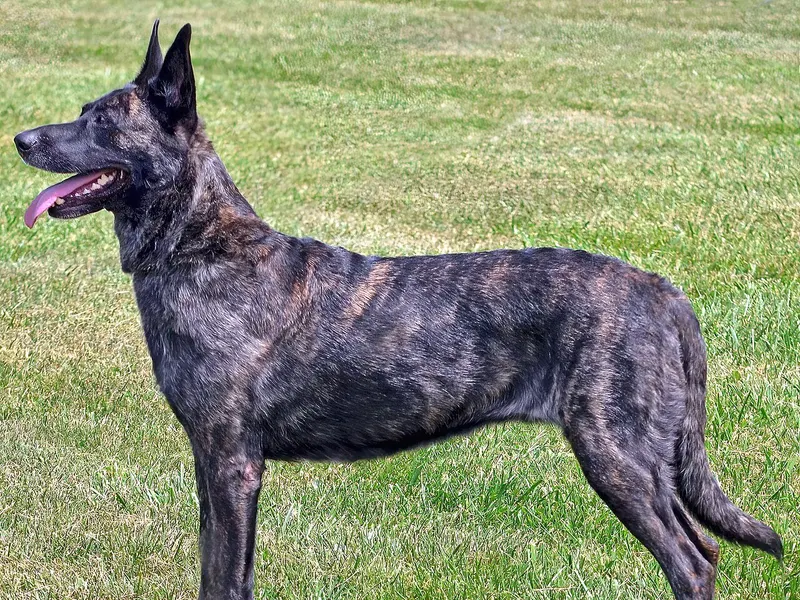
The Netherlands developed the Dutch Shepherd as a genuinely versatile farm dog in the 19th century, used for herding sheep, guarding chicken coops, pulling small carts, and even helping pull looms in home weaving operations — a dog expected to handle whatever job a small Dutch farm required rather than one specialized task. The breed's brindle coat coloring, distinctive among the three related coat varieties, is thought to have been selected deliberately to distinguish Dutch Shepherds visually from wolves and other predator-colored dogs in the field. Modernization of Dutch agriculture in the 20th century nearly ended the breed's working role, and it survived mainly through dedicated breed clubs shifting focus to police, military, and service-dog work, roles the breed still fills today. Dutch farmers historically valued the breed's brindle coloring specifically because it made the dogs harder for livestock thieves to spot at a distance compared to the solid tan or black coats common in related shepherd breeds, a practical camouflage function rather than a purely aesthetic trait. The Nederlandse Herdershonden Club, founded in 1898, was among the earliest breed clubs in continental Europe to formalize a working-dog standard, predating many of the more famous German and Belgian shepherd breed clubs.
Common health predispositions
- Hip dysplasia
- Elbow dysplasia
- Goniodysgenesis
Temperament
High intelligence paired with genuine working drive defines the Dutch Shepherd, a breed that thrives with a job and can become genuinely difficult without one — this isn't a dog suited to a sedentary household. Loyal and protective with family, most individuals are also notably biddable compared to some independent herding breeds, a trait that has made the Dutch Shepherd increasingly popular in police, military, and service-dog programs internationally. Early socialization and consistent structure matter given the breed's intensity and drive. The three coat varieties — short, long, and rough — don't just differ in grooming needs; some breeders and owners report subtle temperament tendencies associated with each variety, though these observations remain more anecdotal than formally documented, and any individual dog's temperament ultimately depends far more on socialization and breeding than coat type alone.
Living with a Dutch Shepherd
Ninety minutes of vigorous daily exercise combined with real training work suits this breed's genuine working needs, and an under-exercised Dutch Shepherd tends to become anxious or destructive rather than simply mellow. The breed comes in three coat varieties — short, long, and rough — each with different grooming demands, though all shed moderately and benefit from regular brushing, more during seasonal changes for the longer-coated versions. Hip and elbow dysplasia, along with goniodysgenesis, an eye drainage condition linked to glaucoma risk, round out the breed's known health profile — worth raising directly with a breeder who actively tests for them. This breed suits an experienced handler wanting a genuine working partner for structured activities like protection sport, herding trials, or serious obedience work — a household wanting a passive companion dog with no real job or outlet to offer would find this breed a genuine mismatch. Outside police and military programs, the US Dutch Shepherd population stays fairly small, so dedicated rescue is a rarer path — most available dogs surface through breed-club referrals and the wider working-dog community rather than general shelters.
FAQ
Is a Dutch Shepherd a good family pet?
For an active family willing to provide real training and exercise, yes — but this is a high-drive working breed that needs a genuine job or outlet, and a sedentary household is likely to struggle with an under-stimulated dog.
How is a Dutch Shepherd different from a Belgian Malinois?
The two breeds share similar working roles and drive levels, but the Dutch Shepherd is distinguished by its brindle coat coloring, a trait not found in the solid-colored Malinois, and the breeds developed independently in neighboring countries.
Do Dutch Shepherds come in different coat types?
Yes — the breed has three recognized coat varieties, short, long, and rough, each requiring somewhat different grooming, though all three share the same underlying temperament and working ability.
Are Dutch Shepherds the same as German Shepherds?
No, though they're related — both descend from similar Continental herding stock, but the Dutch Shepherd is generally more compact, carries that distinctive brindle coat rather than the German Shepherd's typical black-and-tan or sable pattern, and tends to run somewhat higher-energy and more independently minded. Working-dog handlers sometimes cross the two deliberately, particularly in police and military programs, to combine the Dutch Shepherd's intensity with traits bred into certain German Shepherd lines, though purebred lines of each remain distinct.
Is the Dutch Shepherd used in police or military work?
Yes, increasingly — the breed's high trainability and biddable temperament have made it popular in police, military, and service-dog programs internationally, a role that has grown substantially in recent decades.
Is the Dutch Shepherd good for a first-time owner?
Generally not a good match without prior working-breed experience — the combination of high drive, sharp intelligence, and a genuine need for structured activity calls for handling skills that take time to build, and a Dutch Shepherd left under-stimulated tends to become genuinely hard to live with.
Related on FetchBreed
Whichever breed fits your life, consider adoption or breed-specific rescue first — many purebred and mixed-breed dogs and cats are already waiting for homes.
General breed information, not veterinary advice — consult a vet for your pet's specific health, diet, and behavior needs.