Hound Group
Drever
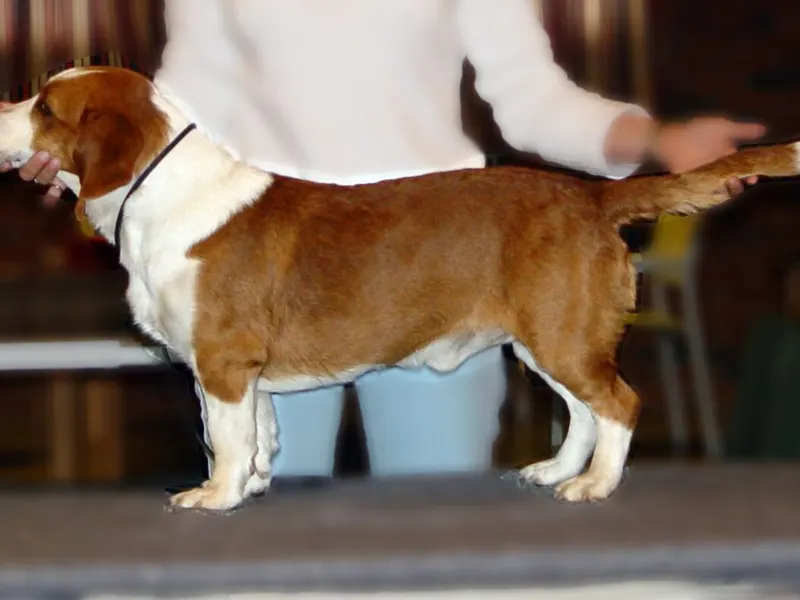
Sweden's own low-slung scenthound, the Drever developed in the early 20th century from the German Westphalian Dachsbracke, imported into southern Sweden and crossed with local hound stock to produce a dog specifically suited to the Swedish hunting method of driving hare and deer toward a stationary hunter rather than chasing prey down directly. That driving-hunt style, distinct from the direct-pursuit method common with faster sighthounds, rewards a moderate, steady pace and real scenting persistence over raw speed, and the Drever's short legs and elongated body reflect that deliberate functional design rather than any coincidental resemblance to breeds like the Dachshund. The name "Drever" itself derives from the Swedish word for someone who drives game, a direct reference to the breed's specific hunting role. Sweden formally recognized the Drever as a distinct breed in the mid-20th century, separating it definitively from its Westphalian Dachsbracke ancestor stock, and the breed now ranks among Sweden's most-used hunting dogs domestically, even though it remains genuinely obscure outside Scandinavia, where American kennel-club status has stalled well short of full breed recognition.
Common health predispositions
- Intervertebral disc disease
- Hip dysplasia
- Ear infections
Temperament
Steady, good-natured, and genuinely reliable, the Drever carries a calm working temperament suited to its methodical driving-hunt role, showing real patience and persistence rather than the higher-strung intensity of faster chase-oriented hounds. This breed does well with children too, settling comfortably into an active Scandinavian-style household that treats real outdoor time as a given rather than an occasional treat. Swedish hunters still actively use the Drever today for driven hunts of hare and roe deer, and that continued working role means most lines, even pet-focused ones, still carry genuine field drive rather than a purely companion-bred temperament. That same steady disposition makes the Drever a genuinely trainable, cooperative breed, responding well to consistent instruction from an owner willing to put in regular structured time.
Living with a Drever
A solid hour of daily activity suits this moderately paced but genuinely persistent hunting breed well. The short, dense coat needs only a periodic brush to stay tidy. A low-slung, long-backed build like this one brings a real risk of intervertebral disc disease, the same structural vulnerability that makes Dachshunds prone to spinal injury, so keeping weight lean and limiting jumps from height matter as genuine preventive habits, alongside standard hip and ear-infection screening. A household genuinely drawn to a calm, steady, moderately active scent hound with real Scandinavian hunting roots, and willing to manage the spinal-health precautions that come with the breed's elongated build, tends to do well with a Drever. Finding one stateside is genuinely difficult — this breed's obscurity outside Scandinavia plus its Foundation Stock Service standing mean nearly every American owner ends up dealing directly with a breeder in Sweden or elsewhere in Northern Europe. Monthly costs, where the breed is available at all, run fairly typical for a small-to-medium hound, with minimal grooming expense offset by the genuine difficulty of sourcing a puppy in North America.
FAQ
Is the Drever related to the Dachshund?
Not directly — despite the similar body shape, the Drever descends from the German Westphalian Dachsbracke crossed with Swedish hound stock rather than from the Dachshund line, though both breeds independently arrived at a low, elongated build because that structure works well for a scenthound moving through dense underbrush close to the ground. The two also hunt differently: the Dachshund traditionally went to ground after burrowing prey, while the Drever was built to drive game across open terrain toward a waiting hunter.
Is the Drever related to the Dachshund?
Not directly — the Drever descends from the German Westphalian Dachsbracke, crossed with local Swedish hound stock, and its short-legged, elongated build reflects a similar functional design for working through cover rather than a shared genetic lineage with the Dachshund.
Is the Drever popular in the US?
No, genuinely rare — the AKC has never taken the breed past its Foundation Stock Service program, so most prospective owners would need to work with breeders in Sweden or elsewhere in Northern Europe directly to find a puppy.
Does a Drever have back problems like a Dachshund?
The elongated body and short legs bring a comparable spinal vulnerability to the Dachshund's well-documented one, and keeping the dog lean while limiting jumps from height is the main way owners manage that disc-disease risk.
How was the Drever traditionally used for hunting?
Swedish hunters used the breed specifically for driving hare and deer toward a stationary hunter, a method that rewards a moderate, steady pace and real scenting persistence rather than the raw speed prioritized by direct-pursuit hunting breeds.
How is the Drever related to the Dachshund?
The Drever descends from the Westphalian Dachsbracke, a short-legged German scenthound, which was imported to Sweden in the early 20th century and bred larger and sturdier for Swedish terrain and hunting style, giving the Drever a similar low-to-the-ground silhouette to the Dachshund's without the two breeds sharing a direct line of descent from one another.
Related on FetchBreed
Whichever breed fits your life, consider adoption or breed-specific rescue first — many purebred and mixed-breed dogs and cats are already waiting for homes.
General breed information, not veterinary advice — consult a vet for your pet's specific health, diet, and behavior needs.