Working Group
Dogo Argentino
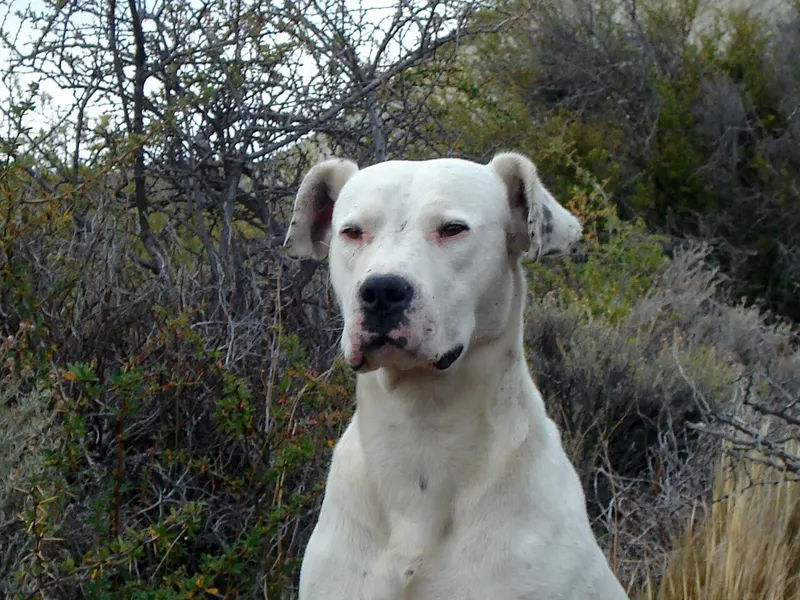
Argentine physician and hunter Antonio Nores Martínez set out in the 1920s to build a big-game hunting dog capable of taking down wild boar and puma in packs, crossing the now-extinct fighting Cordoba Fighting Dog with breeds including Great Dane, Boxer, Pointer, and Bull Terrier to combine strength, stamina, and a temperament stable enough to work cooperatively in a pack rather than fight other dogs. The Argentine Kennel Club recognized the breed in 1964, and its distinctive all-white coat was itself a deliberate breeding choice — easier to spot at a distance during a hunt when multiple large dogs and dangerous game are moving through brush together. Antonio Nores Martínez died relatively young in a hunting accident in 1956, and it was his brother Agustín who continued refining and promoting the breed afterward, eventually seeing it achieve official Argentine Kennel Club recognition in 1973. The breed's use expanded well beyond hunting in the following decades, and Dogos have since been employed in search-and-rescue, police, and service-dog roles in several countries, a versatility that reflects the trainability bred into the line from the start.
Common health predispositions
- Deafness (linked to white coat pigment gene)
- Hip dysplasia
- Laryngeal paralysis
Temperament
Bred specifically to hunt cooperatively rather than fight, Dogos are typically loyal, confident, and notably affectionate with their own family, a somewhat different profile than their imposing size suggests. That said, this is a large, powerful, strong-willed breed with real guarding instincts, and an undersocialized or inconsistently trained Dogo can become genuinely difficult to manage. Several countries and US jurisdictions restrict or ban the breed outright, a fact worth researching thoroughly before committing, independent of any individual dog's actual temperament. The breed's pack-hunting heritage means most well-socialized Dogos genuinely enjoy the company of other dogs they've grown up with, a somewhat different profile than some other guardian breeds bred more for solitary territorial work, though introductions to unfamiliar dogs still deserve careful, gradual management given the breed's size and strength.
Living with a Dogo Argentino
Seventy-five minutes of vigorous daily exercise is closer to what this athletic breed actually needs than a casual walk — Dogos were built for sustained pursuit over rough terrain and carry real physical stamina. Beyond occasional brushing, the short, smooth white coat asks little of an owner in grooming terms, but that same coat carries a genuinely elevated deafness risk tied to the underlying pigment genetics, and responsible breeders BAER-test puppies before placement rather than leaving it to chance. Hip dysplasia and laryngeal paralysis round out documented health concerns, and given both the breed's size and the legal restrictions some regions place on it, thorough research into local ownership laws matters as much as researching the breed itself. This breed rewards an experienced owner with real time for training, socialization, and exercise, located somewhere ownership is actually legal — a first-time owner, or anyone who hasn't verified local legal status first, should look elsewhere. Breed-specific rescue is limited given ownership restrictions in many areas, and prospective adopters should verify both the rescue organization's legitimacy and local legality before proceeding.
FAQ
Are Dogo Argentinos banned anywhere?
Yes — several countries and some US cities and states restrict or prohibit ownership of the breed by name, so checking local and state regulations before acquiring one is a genuinely necessary step, not optional.
Why are Dogo Argentinos white?
The all-white coat was a deliberate breeding choice by the breed's founder, making the dogs easier to visually distinguish from wild boar and other game during a hunt in dense brush.
Are Dogo Argentinos deaf more often than other breeds?
The breed's white coat pigment genetics carry an elevated risk of congenital deafness, which is why reputable breeders BAER-test entire litters before placing puppies.
What other jobs do Dogo Argentinos do besides hunting?
Beyond their original big-game hunting role, Dogos have been used in search-and-rescue, police work, and as service dogs in several countries, reflecting real trainability alongside the physical capability the breed was originally bred for.
Who founded the Dogo Argentino breed?
Argentine physician Antonio Nores Martínez developed the breed in the 1920s; after his death in 1956, his brother Agustín continued the breeding program and saw it through to official Argentine Kennel Club recognition in 1973.
Is the Dogo Argentino good with children in its own family?
Given proper socialization and supervision, a Dogo is frequently gentle and affectionate toward the children in its own household, a disposition rooted in the breed's cooperative pack-hunting background rather than a fluke, though the dog's sheer size and strength mean adult oversight during play remains genuinely important regardless of temperament.
Who developed the Dogo Argentino, and from what breeds?
Dr. Antonio Nores Martinez, an Argentine physician, began developing the breed in the 1920s, crossing the now-extinct fighting Cordoba Fighting Dog with breeds including the Great Dane, Boxer, and Pointer to produce a big-game hunting dog capable of tracking puma and wild boar.
Related on FetchBreed
Lists this breed appears in
Whichever breed fits your life, consider adoption or breed-specific rescue first — many purebred and mixed-breed dogs and cats are already waiting for homes.
General breed information, not veterinary advice — consult a vet for your pet's specific health, diet, and behavior needs.