Working Group
Cane Corso
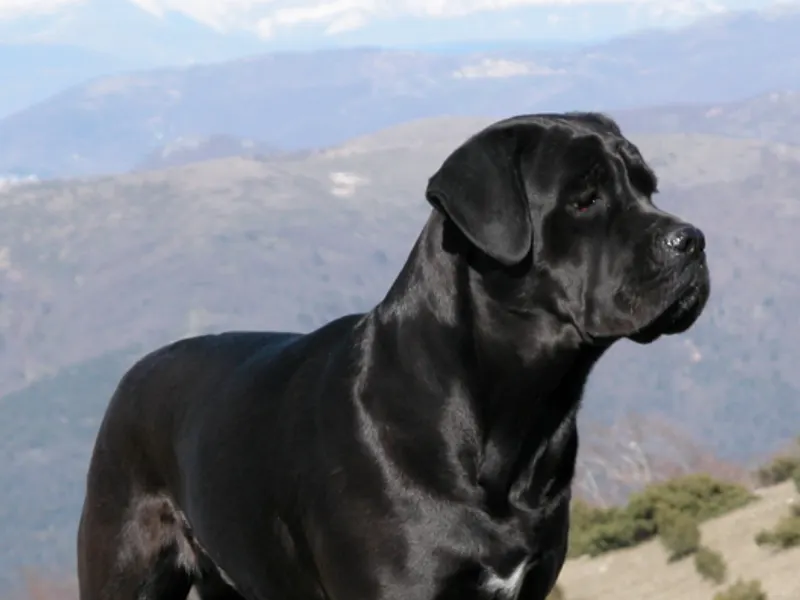
The Cane Corso descends from ancient Roman war and guardian dogs, a mastiff-type lineage that continued working on southern Italian farms for centuries as an all-purpose guardian and big-game hunting dog — the name derives from the Latin 'cohors,' meaning guardian or protector. The breed nearly disappeared by the mid-20th century as rural Italian farming modernized and the need for a working farm guardian declined, and it was actively rescued from near-extinction by a small group of Italian enthusiasts starting in the 1970s who tracked down and bred the last remaining working-type dogs. The AKC granted the breed full recognition only in 2010, making it one of the more recently formalized breeds in the registry despite its ancient Roman-derived lineage, and its surging popularity in the U.S. since then has occasionally outpaced the supply of breeders prioritizing sound temperament over the breed's imposing looks. The breed's coat comes in black, gray, fawn, red, and brindle, and while color carries no health significance on its own, some regions have separately restricted certain guarding-breed types regardless of coat.
Common health predispositions
- Hip/elbow dysplasia
- Bloat
- Entropion
Temperament
Cane Corsos are confident, watchful, and genuinely protective, a temperament that reflects centuries of selection for guarding livestock and property rather than for casual companionship — moderate scores around children and a low score around other pets tell the honest story of a dog that needs serious, consistent socialization rather than an assumed easygoing nature. Well-bred, well-socialized Corsos are typically calm and self-assured rather than reactive, but this is not a breed suited to inexperienced owners given its size, strength, and genuine guarding instinct.
Living with a Cane Corso
An hour of daily exercise is generally enough for a Cane Corso, and the short, stiff coat asks almost nothing of an owner in grooming time. The breed's size and strength mean the practical stakes of inadequate training and socialization are higher than with a smaller breed, and many trainers recommend professional obedience classes starting in early puppyhood as close to mandatory rather than optional for this breed. Hip and elbow dysplasia, bloat given the deep chest, and entropion (an eyelid condition that can require surgical correction) are documented health concerns; some cities, landlords, and insurance companies restrict or exclude Cane Corsos under breed-specific policies targeting large guarding breeds, worth researching before committing to the breed in some areas. The breed's cropped ears, once standard in Italian working lines to reduce injury during hunting and guarding work, are increasingly shown natural as cosmetic cropping bans spread across parts of Europe.
FAQ
Is a Cane Corso a good first dog?
Not recommended — the breed's size, strength, and genuine protective instinct require an owner with real dog-handling experience and a serious commitment to early, consistent training and socialization; an under-socialized Cane Corso can develop into a genuinely difficult and potentially dangerous adult dog.
Are Cane Corsos banned anywhere?
Yes, in some places — the breed falls under broader large-guarding-dog restrictions in a number of municipalities, rental buildings, and insurance policies, so confirming the local rules where you actually live is a step worth taking seriously rather than assuming it won't apply.
How did the Cane Corso nearly go extinct?
As rural southern Italian farming modernized through the mid-20th century, the working guardian role the breed had filled for centuries declined sharply, and the population dwindled until a small group of dedicated Italian breed enthusiasts actively tracked down and rebred the last remaining working-type dogs starting in the 1970s.
Are Cane Corsos good with children?
It depends heavily on training and socialization — the breed's trait ratings for compatibility with kids run only moderate, honestly reflecting a dog whose size and protective instinct require careful management and supervision around children rather than the near-automatic gentleness of a breed like the Golden Retriever.
When was the Cane Corso recognized by the AKC?
2010 — comparatively recent despite the breed's ancient Roman-derived lineage, reflecting both how close the breed came to disappearing mid-century and how long it took to establish a stable, internationally exportable population afterward.
Does a Cane Corso need cropped ears?
No — cropping was traditional in Italian working lines to reduce injury risk during hunting and guarding work, but it's purely cosmetic today and increasingly uncommon as cosmetic-surgery bans spread across parts of Europe; a natural-eared Cane Corso is equally sound and, per the AKC standard, equally showable.
What does 'Cane Corso' translate to in English?
The name is generally translated as 'bodyguard dog' or 'guardian dog,' from Latin roots, reflecting the breed's long history in southern Italy as a farm guardian and hunting companion for wild boar, a working role distinct from the herding jobs many other large breeds performed.
Related on FetchBreed
Comparisons
- Cane Corso vs Akita
- Cane Corso vs Alaskan Malamute
- Cane Corso vs Bernese Mountain Dog
- Cane Corso vs Boxer
- Cane Corso vs Doberman Pinscher
- Cane Corso vs Great Dane
- Cane Corso vs Great Pyrenees
- Cane Corso vs Mastiff
- Cane Corso vs Newfoundland
- Cane Corso vs Portuguese Water Dog
- Cane Corso vs Rottweiler
- Cane Corso vs Saint Bernard
Lists this breed appears in
Whichever breed fits your life, consider adoption or breed-specific rescue first — many purebred and mixed-breed dogs and cats are already waiting for homes.
General breed information, not veterinary advice — consult a vet for your pet's specific health, diet, and behavior needs.