Hound Group
Bluetick Coonhound
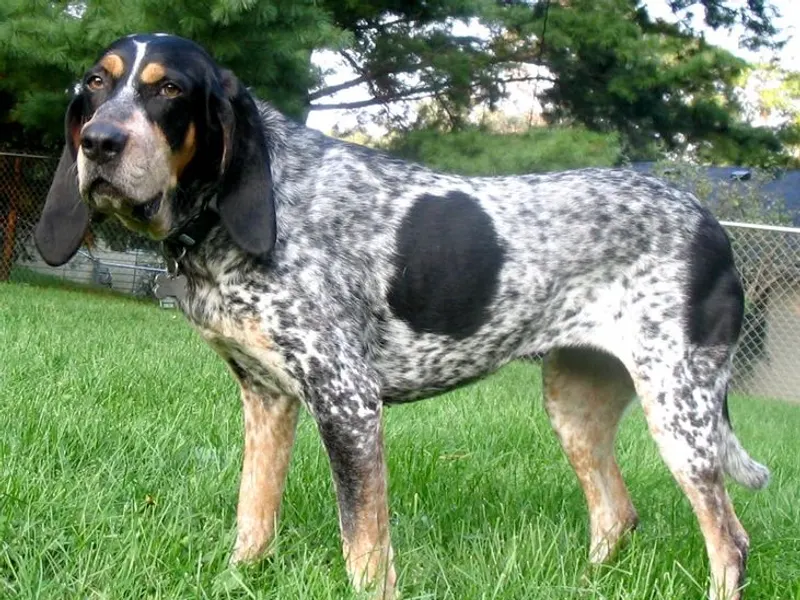
Distinctive mottled blue-and-black ticking gives the Bluetick Coonhound its name and its most recognizable feature, a coat pattern developed through American breeding programs in the 19th and early 20th centuries that crossed English Foxhound lines, French hound breeds including the Grand Bleu de Gascogne, and earlier American coonhound stock to produce a dog specialized for treeing raccoon during nighttime hunts. That night-hunting specialization shaped the breed's entire working design: a loud, distinctive bawl-and-chop bark pattern that carries across long distances so hunters following on foot or by vehicle can track the dog's location in the dark, plus real cold-weather endurance for hunts that often ran through late-night hours in difficult terrain. AKC recognition arrived comparatively recently, in 2009, well after the breed's regional following among American hunters was already firmly established, particularly across the South, where coonhound field trials and competitive treeing events remain a genuinely active part of rural sporting culture. The character Old Blue, associated with 19th-century American folk-hero Jim Bowie in some regional legends, is sometimes cited by breed enthusiasts as an early cultural touchstone for the Bluetick specifically, though the historical accuracy of that particular association is genuinely difficult to verify.
Common health predispositions
- Hip dysplasia
- Ear infections
- Gastric dilatation-volvulus (bloat)
Temperament
Determined and genuinely single-minded once it picks up a scent trail, the Bluetick Coonhound channels real hunting drive into a distinctive, loud vocal style that hunters relied on for locating the dog across long distances in the dark. At home, most individuals are notably laid-back and affectionate, a real contrast to the intensity the breed shows once actually on a trail, and this dual nature — mellow house dog, relentless working hound — is something prospective owners should genuinely expect going in. Kids tend to do well with a properly socialized Bluetick, though the breed's real prey drive toward smaller animals and its famously vocal nature both deserve honest consideration before bringing one into a household.
Living with a Bluetick Coonhound
A short leash walk barely registers with this breed — figure on 75 minutes of real exertion daily, considerably more for a dog actually doing hunting work, before a Bluetick settles. Grooming, thankfully, is the easy part: the short, dense, glossy coat needs only an occasional brush to stay in good shape. Gastric dilatation-volvulus, better known as bloat, is the standout concern given this breed's deep chest and size, worth managing through slower feeding and watching the dog closely after meals, and routine hip and ear-infection screening round out the rest. A rural or semi-rural household with real tolerance for a loud, distinctively vocal hunting breed, and genuine appreciation for a dog that's mellow indoors but relentless once on a scent, suits the Bluetick well; noise-sensitive close-quarters living is a difficult match. Breed-specific rescue is reasonably available in the US, and Southern regional networks in particular stay active given how popular the breed remains there. Food is where the real ongoing expense sits for a dog this size and this active — grooming costs, by comparison, are close to negligible.
FAQ
Why is the Bluetick Coonhound so loud?
Its distinctive bawl-and-chop bark pattern was deliberately valued by American hunters because it carries across long distances, letting them track the dog's location during nighttime raccoon hunts through difficult, often heavily wooded terrain.
Is a Bluetick Coonhound good with kids?
Generally yes with proper socialization, and most individuals are notably laid-back and affectionate at home despite their intensity while actually on a scent trail — though real prey drive toward smaller animals is worth honest consideration first.
How much exercise does a Bluetick Coonhound need?
Plan on real exertion — roughly 75 minutes a day covers the minimum for this athletic working hound, and a dog actually put to hunting work needs noticeably more than that.
Is the Bluetick Coonhound a good apartment dog?
Not really — the breed's naturally loud, far-carrying bark, bred specifically to be heard across long distances during nighttime hunts, makes it a poor match for noise-sensitive close-quarters living.
What breeds contributed to the Bluetick Coonhound?
English Foxhound lines, French hound breeds including the Grand Bleu de Gascogne, and earlier American coonhound stock were all crossed through 19th- and early 20th-century American breeding programs to produce the modern Bluetick's distinctive coloring and night-hunting ability.
Is the Bluetick Coonhound recognized by UKC as well as AKC?
Yes, and the United Kennel Club recognized the breed decades earlier, in 1946, reflecting how central UKC-sanctioned 'Nite Hunt' field trials have always been to the breed's working identity — dogs there are scored on trailing speed, treeing accuracy, and voice quality under real timed hunting conditions, a very different measure of the dog than AKC conformation judging looks for.
Related on FetchBreed
Lists this breed appears in
Whichever breed fits your life, consider adoption or breed-specific rescue first — many purebred and mixed-breed dogs and cats are already waiting for homes.
General breed information, not veterinary advice — consult a vet for your pet's specific health, diet, and behavior needs.