Hound Group
Azawakh
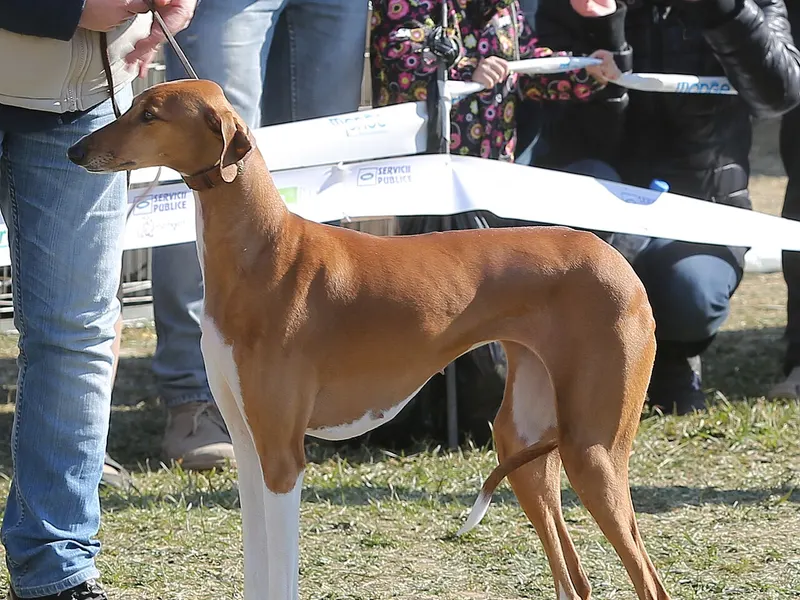
Nomadic Tuareg communities across the West African Sahel — spanning parts of modern Mali, Niger, and Burkina Faso — have kept and bred this extraordinarily lean sighthound for centuries, valuing it not primarily as a pet but as a functional hunting and guarding companion capable of running down hare and gazelle across brutal desert heat that would exhaust most other breeds. The Azawakh's strikingly angular, almost skeletal build, with visible ribs and hip bones considered correct rather than a sign of poor condition, reflects genuine adaptation to an unforgiving climate rather than any deliberate cosmetic exaggeration by Western show breeders. Traditional Tuareg culture treated the Azawakh with a level of social standing distinct from how many Western cultures historically regarded working dogs, with the breed sometimes sleeping inside family tents and holding a position closer to a valued family member than a purely utilitarian animal. French colonial officers and, later, European breed enthusiasts brought the first Azawakhs to the West in the mid-20th century, though the breed remained genuinely rare outside West Africa for decades afterward. AKC recognition didn't arrive until 2019, remarkably recent given the breed's genuinely ancient African lineage, reflecting how long it took Western kennel clubs to formally engage with a breed developed entirely outside the European show-dog tradition that shaped most AKC breeds.
Common health predispositions
- Hypothyroidism
- Autoimmune thyroiditis
- Anesthesia sensitivity (sighthound)
Temperament
Fiercely loyal to its own family and genuinely reserved, sometimes outright aloof, with strangers, the Azawakh carries a real intensity shaped by its history as both a hunting companion and a watchful guardian across Sahel encampments. Most individuals form intensely close bonds with a small circle of familiar people rather than greeting the world with universal friendliness, a temperament trait consistent with the breed's traditional role protecting a specific family or camp rather than serving as a general-purpose companion. Real independence runs deep too, and an Azawakh often shows a cat-like self-possession that surprises owners expecting a more conventionally eager-to-please dog, though the bond with its own people, once earned, runs genuinely deep.
Living with a Azawakh
This is a true sighthound built for real speed over real distance — 60 minutes of vigorous daily activity, ideally including secure off-leash sprinting given the breed's genuine athletic capability, suits the Azawakh well, though it's equally content lounging indoors between bursts of activity like most sighthounds are. The very short, fine coat needs minimal brushing, but its owner should plan for real cold sensitivity — this dog simply doesn't carry the insulation to handle winter walks bare, making a coat or sweater a practical necessity rather than an affectation. Hypothyroidism and autoimmune thyroiditis are both documented in the breed at a notable rate, and like most sighthounds, an Azawakh carries a real sensitivity to certain anesthesia protocols that any vet treating the dog should be made aware of directly. A household genuinely prepared for a reserved, independent-minded sighthound — one that bonds deeply but selectively, and needs secure fencing given real prey drive toward small animals — will find a uniquely striking and devoted companion in the Azawakh. Dedicated US rescue is essentially nonexistent given how small and recent the breed's American population still is, so nearly all prospective owners connect directly with the limited number of established breeders. Ongoing monthly costs run moderate for a lean, short-coated breed — it's the puppy price itself, driven up by genuine rarity, that tends to catch new owners off guard rather than the day-to-day upkeep.
FAQ
Is it normal for an Azawakh to look so thin?
Yes — visible ribs and hip bones are considered correct for the breed standard, reflecting genuine adaptation to the brutal heat of the West African Sahel rather than poor condition or an exaggerated Western show-ring trend.
Where does the Azawakh come from?
The breed's name comes directly from the Azawagh Valley, a semi-arid region spanning the Mali-Niger border that today is mostly dry riverbed rather than an active waterway, reflecting how tightly the dog's identity is tied to one specific stretch of Sahelian geography rather than a broader ethnic or national label. Within Tuareg tradition, individual bloodlines were historically associated with specific families or encampments rather than treated as one interchangeable regional type, a level of lineage-consciousness closer to how Western kennel clubs track pedigree than most informally kept regional dogs ever received.
Is an Azawakh friendly with strangers?
Not typically — real reserve, sometimes outright aloofness, toward unfamiliar people is common in this breed, a trait consistent with its traditional role guarding a specific family or camp rather than serving as a universally friendly companion.
Does an Azawakh need a coat in cold weather?
Often yes, genuinely — a lean, desert-built physique with almost no fat reserve for insulation struggles in the cold, and a coat or sweater during winter walks is a practical necessity rather than an affectation for most Azawakhs living outside a warm climate.
When was the Azawakh recognized by the AKC?
That 2019 date followed years in the AKC's Foundation Stock Service, the holding category new breeds pass through while building a large enough, genetically documented population to qualify for full recognition. The Azawakh's stay there ran longer than many breeds partly because so few individuals existed in the West at all, with the breed's import into Europe and the US only beginning in earnest during the 1970s and 80s.
Related on FetchBreed
Lists this breed appears in
Care equipment for a Azawakh
As an Amazon Associate we earn from qualifying purchases made through these links, at no extra cost to you.
- Winter dog coat
This dog simply does not carry the insulation to handle winter walks bare, the page says, making a coat a practical necessity rather than an affectation.
Whichever breed fits your life, consider adoption or breed-specific rescue first — many purebred and mixed-breed dogs and cats are already waiting for homes.
General breed information, not veterinary advice — consult a vet for your pet's specific health, diet, and behavior needs.