Herding Group
Australian Stumpy Tail Cattle Dog
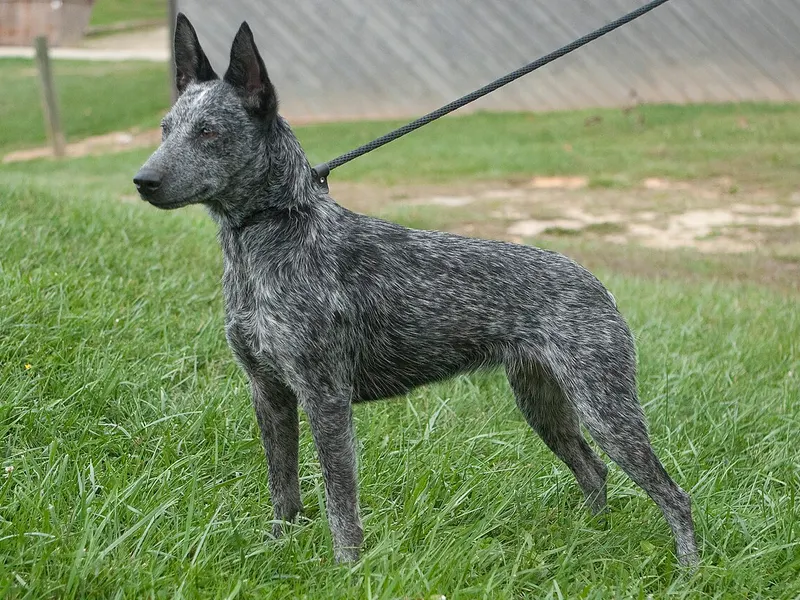
Australian cattlemen developed this breed in the 19th century alongside the more internationally famous Australian Cattle Dog, both descending from crosses between Dingoes and imported drover's dogs brought by British settlers, though the two breeds eventually diverged into genuinely distinct types rather than remaining size or coat variants of one another. Where the Australian Cattle Dog gained a longer tail through later Dalmatian and Kelpie influence added to its breeding, the Stumpy Tail retained the naturally short or entirely absent tail inherited more directly from its original Dingo and drover's-dog foundation stock, a real structural difference that gives the breed its name and sets it apart at a glance from its more famous cousin. Australian breeders worked through the 20th century to keep the Stumpy Tail as a genuinely distinct, separately bred working type rather than letting it merge back into the broader Cattle Dog population, and it remains recognized as its own breed in Australia today. Full AKC group status has never followed for the Stumpy Tail — it sits on the Foundation Stock Service list instead — and in the US it stays a genuine rarity, known mainly to working-ranch owners specifically seeking an alternative to the more common Australian Cattle Dog.
Common health predispositions
- Hip dysplasia (uncommon)
- Progressive retinal atrophy
- Deafness
Temperament
Tough, genuinely tireless, and notably intense, the Australian Stumpy Tail Cattle Dog carries real cattle-droving instincts inherited from its Dingo-influenced foundation stock, a working drive that shows up as constant readiness to control movement and a real willingness to nip at heels when herding, exactly the trait Australian cattlemen originally bred for. Its own family and working partner get real, deep loyalty in return, but strangers and unfamiliar dogs are a different story — that wariness suited its traditional guarding role on isolated cattle stations, yet it demands deliberate, consistent socialization once the dog moves into an ordinary household. That same intensity means the breed isn't automatically a good fit around small children, since genuine herding instinct can translate into nipping behavior without careful management and training. Australian working-dog trial organizations continue actively testing the Stumpy Tail against real cattle-work standards, treating that ongoing working validation as central to preserving the breed's authentic character.
Living with a Australian Stumpy Tail Cattle Dog
Ninety minutes of genuinely vigorous daily activity is close to a floor for this demanding working breed, and it does noticeably poorly without an actual job or serious outlet for its cattle-droving drive. Coat upkeep, thankfully, asks very little — an occasional brush handles the short, weather-resistant fur just fine. Deafness and progressive retinal atrophy are worth screening for, alongside hip dysplasia, though uncommon in this breed, and getting straight answers from the breeder on all three matters before committing to a puppy. Real intensity and genuine wariness toward strangers mean this breed suits an experienced, active owner with genuine work for it to do, ideally actual livestock, rather than a family wanting a mellow companion or a household with very young children. US breeders remain genuinely few, so most interested owners work through working-ranch networks or the small number of dedicated domestic breeders. Everyday spending stays unremarkable for a medium working dog, routine health screening aside.
FAQ
What's the difference between an Australian Stumpy Tail Cattle Dog and an Australian Cattle Dog?
Both descend from the same 19th-century Dingo and drover's-dog crosses, but the Australian Cattle Dog gained a longer tail through later Dalmatian and Kelpie influence, while the Stumpy Tail retained the naturally short or absent tail from the original foundation stock, and the two eventually diverged into genuinely distinct breeds.
Is the Australian Stumpy Tail Cattle Dog good with kids?
Not automatically — real herding instinct can translate into nipping behavior without careful management, so this breed isn't a natural fit around very young children without deliberate training and supervision.
How much exercise does an Australian Stumpy Tail Cattle Dog need?
A serious amount — treat 90 vigorous minutes as the floor rather than a target, since this breed does noticeably poorly without an actual job or working outlet befitting its tireless cattle-droving origins.
Is the Australian Stumpy Tail Cattle Dog AKC recognized?
It has Foundation Stock Service status rather than a full breed-group spot, and domestically it remains a genuine rarity known mainly to working-ranch owners looking for an alternative to the more common Australian Cattle Dog.
How big does an Australian Stumpy Tail Cattle Dog get?
Weight generally falls between 33 and 55 pounds on a compact, muscular frame close in build to its longer-tailed cousin, though many owners note the Stumpy Tail as slightly more streamlined through the body, a subtle structural difference from generations of separate breeding programs.
Why does the Australian Stumpy Tail Cattle Dog have a short tail?
It inherited the naturally short or entirely absent tail directly from its Dingo and original drover's-dog foundation stock, a structural trait the more famous Australian Cattle Dog lost through later crossbreeding that lengthened its own tail.
Related on FetchBreed
Lists this breed appears in
Whichever breed fits your life, consider adoption or breed-specific rescue first — many purebred and mixed-breed dogs and cats are already waiting for homes.
General breed information, not veterinary advice — consult a vet for your pet's specific health, diet, and behavior needs.