Herding Group
Australian Shepherd
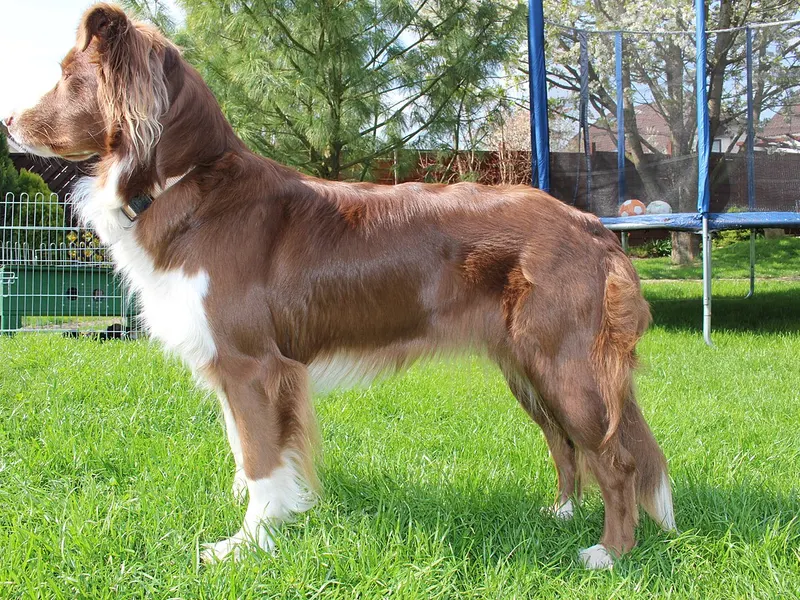
Despite the name, the Australian Shepherd was developed in the American West during the 1800s and early 1900s, most likely from Basque shepherd dogs that arrived in California and the Pacific Northwest alongside Basque sheepherders who had emigrated by way of Australia — American ranchers associated the dogs with the Australian sheep imports they accompanied, and the misleading name stuck despite the breed having no real Australian origin. The breed became indispensable on American ranches working Merino sheep and later cattle, prized for working closely with a handler in open range conditions. The AKC recognized the breed relatively recently, in 1993, reflecting the same working-breeder resistance to conformation-focused registration seen in the Border Collie, and the United States Australian Shepherd Association, founded in 1957, remains a major independent registry alongside AKC recognition.
Common health predispositions
- Hip dysplasia
- Collie eye anomaly
- MDR1 drug sensitivity
Temperament
The Australian Shepherd's working drive closely mirrors the Border Collie's — maxed-out trainability and energy — but the breed's additional history guarding livestock and property against predators gives it a somewhat more territorial, reserved-with-strangers edge than the more purely herding-focused Border Collie. Aussies are generally good with children they're raised with, though the herding instinct to nip at moving legs is common and worth training around, and they tend to be more watchful and less immediately outgoing with unfamiliar people and dogs. Like the Border Collie, the Aussie benefits enormously from a structured outlet beyond walks — herding trials, agility, or advanced obedience — and breed-experienced trainers consistently note that an Aussie given a real job is a fundamentally easier, calmer dog to live with than one left to invent its own entertainment.
Living with a Australian Shepherd
Plan on roughly 90 minutes daily of genuine activity for an Aussie — herding trials, dog sports, or structured training suit this breed far better than an unstructured walk around the block ever will. Grooming and shedding are moderate to heavy for the medium double coat. The single most important breed-specific health issue is the MDR1 gene mutation, which occurs at a meaningfully higher frequency in Australian Shepherds than in most breeds and causes dangerous sensitivity to certain common drugs, including some dewormers, anti-diarrheal medications, and anesthetics — a simple, inexpensive genetic test before any new medication is standard advice from herding-breed veterinarians. Hip dysplasia and collie eye anomaly are also documented in the breed. Because the MDR1 mutation is a genuine anesthesia and medication risk, Aussie owners are advised to keep a copy of any genetic test results on hand for emergency vet visits, since a vet unfamiliar with the dog's history may otherwise administer a standard, but for this dog risky, drug. The breed also comes in a naturally-occurring 'mini' size variety (sometimes bred and registered separately as the Miniature American Shepherd) that shares the same working temperament in a smaller body.
FAQ
What is the MDR1 mutation in Australian Shepherds?
A genetic mutation, notably more common in herding breeds including the Aussie, that impairs the body's ability to clear certain drugs from the brain, making the dog dangerously sensitive to specific medications. A cheap DNA test can identify carriers, and vets who know the result can avoid risky drugs entirely.
Are Australian Shepherds actually from Australia?
No — despite the name, the breed was developed in the American West, most likely from Basque sheepdogs that arrived via Australia with immigrant shepherds; the 'Australian' label reflects that indirect association rather than true origin.
How much exercise does an Australian Shepherd need?
A substantial commitment — close to 90 minutes daily of real herding-style work or structured activity is typical, and the breed clearly does better with an actual job than with unstructured yard time.
Is a Miniature Australian Shepherd a different breed?
The 'Mini Aussie' is generally recognized today as a separate breed, the Miniature American Shepherd, developed by selectively breeding down in size from Australian Shepherd stock — it shares the same working temperament, MDR1 risk, and general care needs as its larger relative in a smaller body.
Is the Australian Shepherd actually from Australia?
No — despite the name, the breed developed in the American West during the 19th and 20th centuries among Basque shepherds who had passed through Australia en route from Europe, and American ranchers refined the dog for herding sheep and cattle across California and other western states, which is why the breed's working history and registry base are overwhelmingly American rather than Australian.
Related on FetchBreed
Comparisons
- Australian Shepherd vs Australian Cattle Dog
- Australian Shepherd vs Basset Hound
- Australian Shepherd vs Belgian Malinois
- Australian Shepherd vs Border Collie
- Australian Shepherd vs Brittany
- Australian Shepherd vs Bulldog
- Australian Shepherd vs Collie
- Australian Shepherd vs English Springer Spaniel
- Australian Shepherd vs German Shepherd Dog
- Australian Shepherd vs Pembroke Welsh Corgi
- Australian Shepherd vs Samoyed
- Australian Shepherd vs Shetland Sheepdog
Care equipment for a Australian Shepherd
As an Amazon Associate we earn from qualifying purchases made through these links, at no extra cost to you.
- De-shedding tool
Shedding is described as moderate to heavy for the medium double coat.
- Puzzle feeder
A herding breed at the top of this database's energy scale needs real mental work, not just distance covered.
Whichever breed fits your life, consider adoption or breed-specific rescue first — many purebred and mixed-breed dogs and cats are already waiting for homes.
General breed information, not veterinary advice — consult a vet for your pet's specific health, diet, and behavior needs.