Sporting Group
American Water Spaniel
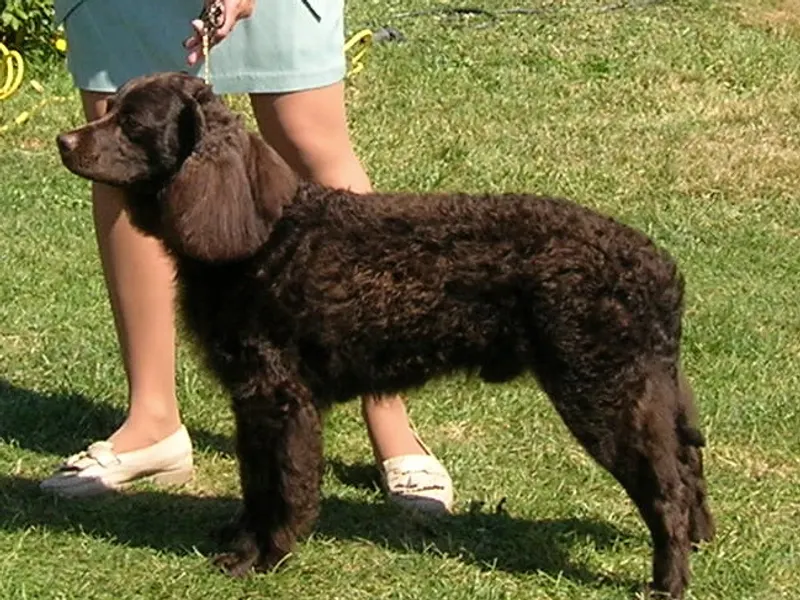
Wisconsin's official state dog, the American Water Spaniel developed in the upper Mississippi River valley region during the 19th century, bred by local hunters who needed a versatile, all-around gundog small enough to work from a small skiff or canoe while retrieving waterfowl across the region's marshes and rivers. Its likely ancestry runs through the Irish Water Spaniel, the Curly-Coated Retriever, and various field spaniels, crossed and refined by regional hunters into a genuinely distinct American type rather than an import of any single European breed. AKC recognition came in 1940, making the American Water Spaniel one of the relatively few sporting breeds actually developed within the United States rather than imported from Britain or continental Europe. Despite its long American pedigree, the breed's population has remained consistently modest, and it's often cited among conservation-minded breed historians as a genuinely endangered native American dog breed, its numbers overshadowed for the better part of a century by the more widely marketed Labrador and Golden Retrievers that came to dominate American waterfowl hunting. The breed's dense, curly-to-wavy liver coat and compact, muscular build reflect its original working purpose directly — built for cold-water retrieving from a small boat rather than the open-field work more typical of pointing breeds.
Common health predispositions
- Hip dysplasia
- Progressive retinal atrophy
- Follicular dysplasia
Temperament
Alert and genuinely intelligent, the American Water Spaniel carries real working drive shaped by its history as an all-purpose Midwestern hunting companion capable of both flushing upland game and retrieving from water. New people tend to get a watchful, somewhat businesslike reception at first, a holdover from decades spent as a practical farm-and-marsh worker rather than a breed refined purely for social charm. Given proper early exposure, kids and other pets generally fit in fine, and the breed's genuine intelligence and problem-solving ability — useful for a dog once expected to work varied terrain and game types without much specialized handling — make it a responsive training subject for an owner who keeps sessions engaging.
Living with a American Water Spaniel
An hour of real daily activity, with a swim worked in whenever the opportunity comes up, keeps this versatile sporting dog content. The dense, curly-to-wavy liver coat needs consistent brushing to avoid matting, and it holds up reasonably well to wet, muddy working conditions without excessive maintenance beyond that regular routine. Progressive retinal atrophy is worth screening for alongside routine hip evaluation, and follicular dysplasia, a documented coat-and-skin condition in the breed, is a third item worth raising directly with a breeder. A household genuinely interested in a versatile, moderately independent sporting dog — one with real regional American history behind it — and willing to provide consistent exercise and the occasional pond or lake trip will find a capable, loyal companion here. Given the breed's small and historically endangered population, dedicated US rescue is uncommon, and prospective owners typically work through the limited number of breeders concentrated in its native Midwest region. Regular grooming plus what an active mid-sized dog eats make up the bulk of the ongoing budget, which runs fairly typical for the Sporting Group overall.
FAQ
Is the American Water Spaniel actually rare?
Yes, genuinely — despite its long history as one of the few sporting breeds actually developed in the United States, the breed's population has stayed consistently modest, and conservation-minded breed historians often cite it among endangered native American dog breeds.
Where was the American Water Spaniel developed?
The upper Mississippi River valley region, likely Wisconsin, during the 19th century, bred by local hunters who needed a versatile gundog compact enough to work from a small skiff while retrieving waterfowl across the region's marshes and rivers.
Is the American Water Spaniel good with families?
Generally yes with proper socialization — most individuals bond closely with their household and do well with children and other pets, though a moderate reserve toward strangers is common, a trait tied to the breed's working farm-and-marsh dog history rather than a purely social companion role.
How much grooming does an American Water Spaniel need?
A consistent but manageable routine — the dense, curly-to-wavy liver coat needs regular brushing to avoid matting, and it holds up reasonably well to wet, muddy working conditions without excessive additional maintenance.
Why is Wisconsin's state dog a spaniel?
The American Water Spaniel was developed by hunters in the upper Mississippi River valley region, with Wisconsin as its most likely point of origin, and the state formally recognized the breed with official state-dog status reflecting that regional history.
Is the American Water Spaniel the state dog of any U.S. state?
Yes — Wisconsin designated it the official state dog in 1985, honoring the breed's development in the Midwest during the 1800s as a compact, all-purpose retriever suited to small hunting boats and the region's marshes and lakes, and it remains one of relatively few AKC breeds developed and standardized entirely within the United States.
Related on FetchBreed
Whichever breed fits your life, consider adoption or breed-specific rescue first — many purebred and mixed-breed dogs and cats are already waiting for homes.
General breed information, not veterinary advice — consult a vet for your pet's specific health, diet, and behavior needs.