Hound Group
American Foxhound
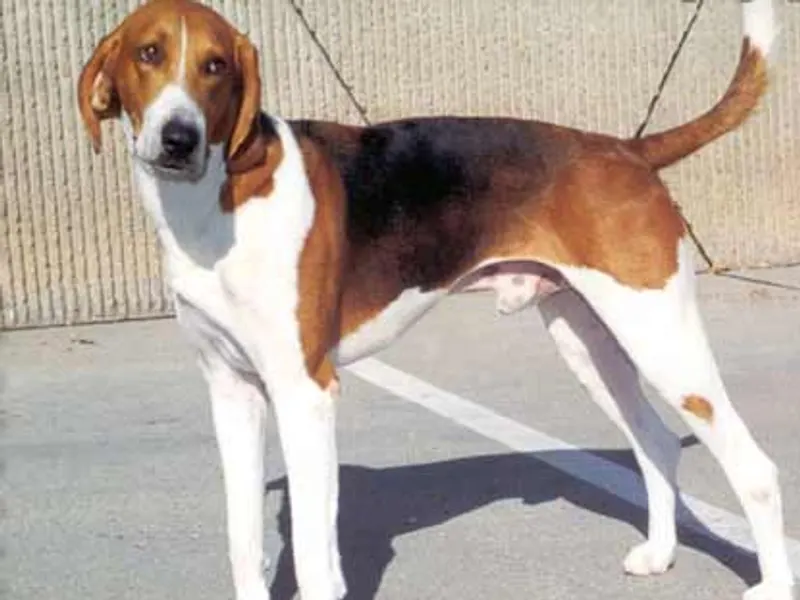
George Washington himself is credited by breed historians as an early and enthusiastic developer of American Foxhound type, importing English Foxhounds to his Mount Vernon estate in the 1770s and crossing them with French hounds gifted by the Marquis de Lafayette to build a faster, leaner pack hound suited to American terrain and hunting style. That founding-father connection makes the American Foxhound one of relatively few purebred dogs with a documented direct link to the earliest era of US history, a genuinely notable pedigree distinct from most breeds' origin stories. Washington's own diary and correspondence reportedly documented details of his hound-breeding efforts at Mount Vernon, giving historians an unusually direct written record of one American breed's founding period rather than the oral tradition or reconstructed guesswork that shapes most older breeds' origin stories. AKC recognition came in 1886. Bred almost exclusively for pack hunting rather than as a companion animal, the American Foxhound remains today one of the AKC's least commonly kept breeds as a household pet despite its historical significance, with most working individuals still living and hunting in organized hound packs rather than as solo family dogs — a real gap between the breed's cultural prominence (it's the official state dog of both Virginia and Kentucky) and its actual presence in American homes.
Common health predispositions
- Hip dysplasia
- Chronic ear infections
- Thrombocytopathy
Temperament
Centuries of pack breeding, rather than selection for single-owner bonding, shaped the American Foxhound into a friendly, even-keeled dog with people generally rather than the intense one-family devotion some other breeds show. The breed's nose-driven instinct runs extremely strong, and an American Foxhound that catches an interesting scent trail will often follow it with single-minded focus that overrides recall entirely — this is a hardwired trait from centuries of scent-trailing work, not a training failure. Most individuals do best with canine companionship given the breed's deep pack orientation. Left as a genuine solo pet without another dog for company, an American Foxhound can develop real loneliness-driven habits like excessive howling, a behavioral consequence directly traceable to how thoroughly the breed's temperament was shaped by generations of pack living rather than solitary companionship.
Living with a American Foxhound
Seventy-five minutes of real activity, and ideally a securely fenced area given how completely scent can override this breed's recall, suits the American Foxhound's genuine stamina. The short, hard coat needs minimal grooming, just occasional brushing. Hip dysplasia shows up at a meaningful rate, chronic ear infections are common enough to plan around, and thrombocytopathy, a platelet function disorder documented in the breed, is the third item to bring up directly with a breeder. A household that either hunts with an organized pack or can provide genuine canine companionship alongside secure containment tends to suit this breed best, given its strong pack orientation and less intense one-owner bonding than many companion-bred breeds show; a solo apartment dweller without secure outdoor space will likely struggle with both the breed's exercise needs and its powerful nose-driven wandering instinct. Because most American Foxhounds still work in organized hunting packs rather than as household pets, breed-specific rescue is uncommon, and prospective adopters more often encounter the breed through hound rescue groups or general shelters in rural hunting regions. Monthly costs stay relatively modest for a large hound breed given the minimal grooming and generally hardy constitution, though secure fencing is a real upfront expense worth budgeting for given how completely a strong scent trail can override this breed's attention.
FAQ
Did George Washington really help develop the American Foxhound?
Breed historians widely credit him with importing English Foxhounds to Mount Vernon in the 1770s and crossing them with French hounds gifted by the Marquis de Lafayette, aiming for a hound with more speed and less bulk than the English original.
Is the American Foxhound a good family pet?
Less commonly kept as a solo household pet than as a pack-hunting dog historically — the breed's genuine pack orientation, powerful nose-driven wandering instinct, and need for real daily exercise mean it fits a hunting or very active outdoor-oriented household better than a typical urban companion role.
Why does the American Foxhound sometimes ignore recall commands?
The breed's nose-driven scent-trailing instinct is extremely strong and essentially hardwired from centuries of pack-hunting work — once an interesting trail is picked up, following it can genuinely override the dog's usual responsiveness, which is why secure fencing matters more than recall training alone.
What states have the American Foxhound as their official dog?
Both Virginia and Kentucky recognize the American Foxhound as their official state dog, reflecting the breed's deep historical roots in American hunting culture dating back to the colonial era.
Is American Foxhound rescue common?
Not especially — most American Foxhounds still live and work in organized hunting packs rather than as household pets, so breed-specific rescue is uncommon, and interested adopters more often find the breed through hound rescue groups in rural hunting regions.
Related on FetchBreed
Lists this breed appears in
Whichever breed fits your life, consider adoption or breed-specific rescue first — many purebred and mixed-breed dogs and cats are already waiting for homes.
General breed information, not veterinary advice — consult a vet for your pet's specific health, diet, and behavior needs.