Hound Group
American English Coonhound
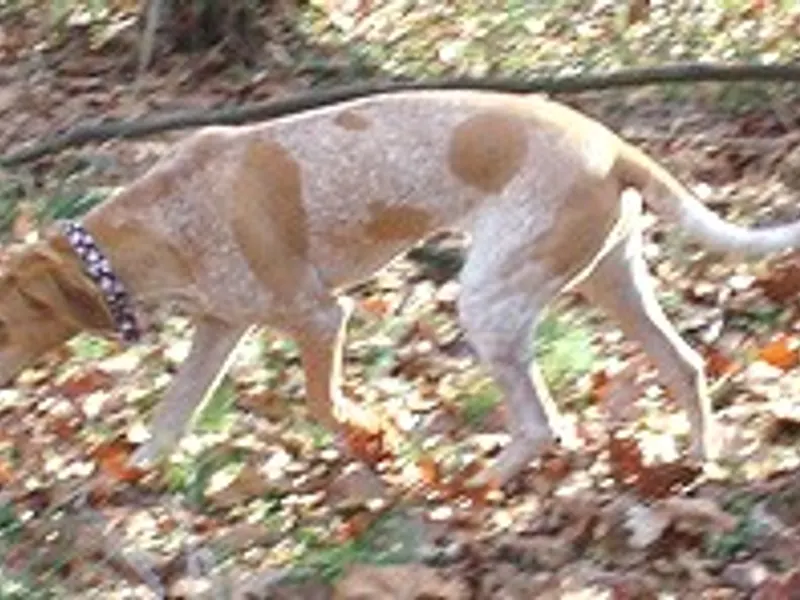
Colonial-era English settlers brought Foxhound stock to the American South in the 17th and 18th centuries, and generations of local hunters gradually adapted those imported dogs to American game and terrain, eventually producing a distinct type suited to treeing raccoon and other game rather than the open-country fox-chasing its English Foxhound ancestors were originally bred for. The breed carried the simpler name "English Coonhound" for most of its history, and the "American" was formally added to its AKC name specifically to avoid confusion with the actual English Foxhound, a genuinely separate breed with which it shares ancestry but has diverged from considerably over centuries of independent American development. Two color-pattern varieties, redtick and the more traditional tricolor, both fall under the same breed standard, reflecting the somewhat looser regional variation typical among American coonhound breeds compared with the more tightly standardized appearance requirements of many European hound breeds. AKC recognition came in 2011, moving the breed from the Foundation Stock Service, where it had sat for years, into full Hound Group status, a transition that took considerably longer than for some other American coonhounds given the breed's relatively lower national profile outside its traditional Southern hunting strongholds.
Common health predispositions
- Hip dysplasia
- Ear infections
- Gastric dilatation-volvulus (bloat)
Temperament
Sweet-natured at home and genuinely relentless on a trail, the American English Coonhound carries a real split personality between its working drive and its household demeanor, a combination coonhound owners generally come to appreciate once they understand it isn't a contradiction but two sides of the same working breed. Most individuals are affectionate with family and do well with children, and a long-standing habit of hunting in loosely cooperative groups translates into a dog that generally shares the household well with other dogs too. That relentless trailing drive means recall around an interesting scent can be genuinely unreliable, a trait new owners should plan around with secure fencing rather than treat as a training failure.
Living with a American English Coonhound
This dog was bred to work a full day in the field, and a short walk won't come close to meeting that — figure on 75 minutes as a baseline, more for one actually put to hunting work. Whether the individual carries the redtick or tricolor pattern, the short, dense coat needs only occasional brushing either way. This breed's deep chest brings a genuine bloat risk, so slower feeding and watching the dog after meals are worthwhile precautions, and standard hip and ear checks round out the rest. A rural or spacious household with secure fencing and real tolerance for a loud, expressive scent hound suits the American English Coonhound well; close-quarters apartment living is a difficult match given both the exercise needs and the breed's naturally vocal nature. Rescue availability concentrates in the South, where the breed's hunting-culture roots run deepest, though dedicated coonhound rescue networks operate more broadly across the country too. The grooming bill stays negligible; feeding an active hound this size is what actually drives the monthly budget.
FAQ
Why is it called the American English Coonhound?
The breed descends from English Foxhound stock brought to the American South by colonial settlers and was long known simply as the 'English Coonhound' — the AKC added 'American' specifically to distinguish it clearly from the actual English Foxhound, a separate breed it shares ancestry with.
What's the difference between redtick and tricolor American English Coonhounds?
Both are recognized color-pattern varieties under the same single breed standard, reflecting the somewhat looser regional variation typical among American coonhound breeds compared with the tighter appearance standards common in many European hound breeds.
When did the American English Coonhound gain full AKC recognition?
In 2011, when it moved from the Foundation Stock Service into full Hound Group status, a transition that took longer for this breed than for some other American coonhounds given its comparatively lower national profile outside traditional Southern hunting regions.
Is the American English Coonhound easy to recall off-leash?
Not reliably — its genuinely relentless trailing drive means an interesting scent can override recall fast, so secure fencing rather than off-leash trust is the more realistic approach for most households.
Is the American English Coonhound good with other dogs?
Usually — decades spent hunting in loosely cooperative groups shaped a breed that tends to fit into a multi-dog home without excessive friction, though as always, individual temperament varies.
How is the American English Coonhound different from other coonhound breeds?
It descends most directly from English Foxhound stock brought to colonial Virginia, adapted over generations for raccoon and fox hunting rather than the fox-only pursuit its English ancestors were bred for, and it tends to run and bay with a distinctive higher-pitched voice compared with the deeper bawl of breeds like the Bluetick or Black and Tan Coonhound.
Related on FetchBreed
Lists this breed appears in
Whichever breed fits your life, consider adoption or breed-specific rescue first — many purebred and mixed-breed dogs and cats are already waiting for homes.
General breed information, not veterinary advice — consult a vet for your pet's specific health, diet, and behavior needs.