Working Group
Tibetan Mastiff
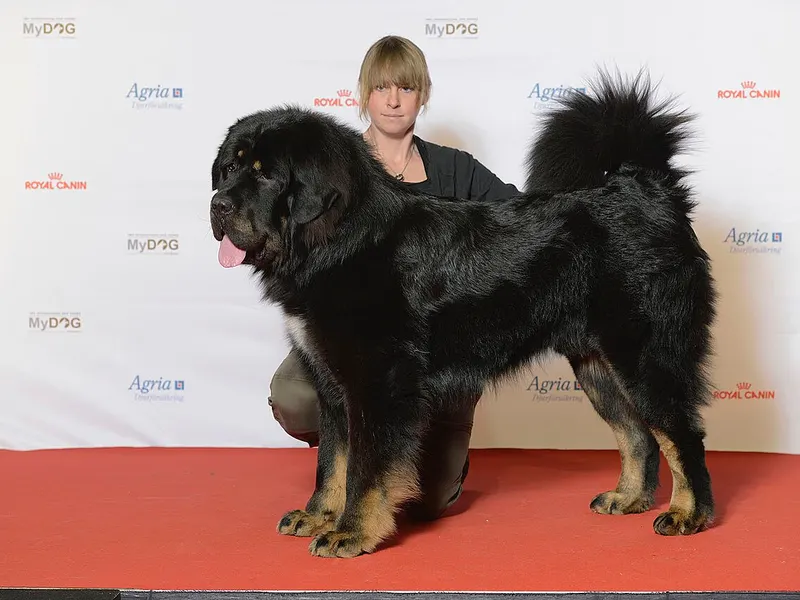
Nomadic communities across the Himalayan region, spanning Tibet and neighboring areas, developed the Tibetan Mastiff over many centuries as a livestock and monastery guardian, traditionally kept chained during the day and released at night specifically to confront wolves, leopards, and other predators under cover of darkness. The breed's massive size, thick mane-like coat, and deep, resonant bark all served that nighttime guardian role directly rather than any decorative purpose. In the early 2010s, a speculative luxury-pet market in China drove Tibetan Mastiff prices to extraordinary heights, with some individual dogs reportedly selling for well over a million dollars at the peak of that bubble before demand collapsed sharply within a few years, leaving many breeders and shelters dealing with a wave of abandoned dogs once prices crashed. The AKC recognized the breed in 2006.
Common health predispositions
- Hip dysplasia
- Hypothyroidism
- Entropion
Temperament
Nighttime guardian work against serious predators shaped a temperament that's protective and territorial to its core, and neither goodWithOtherPets nor goodWithKids scores especially high as a result — this is a large, powerful guardian breed that takes its watchdog role seriously rather than defaulting to the easy friendliness of a companion-bred dog. Deferring to a handler was never really the job, so trainability lands on the lower end, and the breed's booming, deep bark is a genuine, deliberately preserved trait meant to carry and deter intruders from a real distance. Early socialization matters considerably given the breed's substantial size and natural wariness toward unfamiliar people and animals.
Living with a Tibetan Mastiff
Forty-five minutes of daily exercise suits the breed reasonably well; Tibetan Mastiffs are not high-energy dogs in the way many working breeds are, conserving their energy for nighttime alertness rather than daytime activity, a pattern consistent with their traditional guarding schedule. The heavy double coat and thick mane genuinely need regular brushing, and the effort ramps up considerably when the seasonal blowouts hit. Hip dysplasia, hypothyroidism, and entropion round out the conditions most worth screening for in this breed. Because of the breed's serious size, strength, and independent guardian temperament, this is not typically recommended for first-time owners, and secure fencing plus early boundary and socialization training matter considerably. The breed's dramatic mid-2010s price bubble in China is now a well-documented cautionary tale in the breed's own history, one breed clubs sometimes reference when discussing the risks of demand outpacing responsible, health-focused breeding practices.
FAQ
Why did Tibetan Mastiffs become so expensive in China?
A speculative luxury-pet market emerged in China in the early 2010s, driving prices for some individual Tibetan Mastiffs to reportedly well over a million dollars at the peak, before demand collapsed sharply within a few years, leaving a documented wave of abandoned dogs and struggling breeders once the bubble burst.
Are Tibetan Mastiffs good guard dogs?
Yes, genuinely — the breed was developed specifically as a nighttime livestock and monastery guardian against wolves and leopards, and it retains a strong protective, territorial temperament along with a deep, deliberately preserved bark meant to deter intruders from a distance.
Is a Tibetan Mastiff good for a first-time owner?
Rarely a good match — an independent guardian temperament, real wariness toward strangers, and the sheer scale the dog reaches as an adult all call for handling experience most newcomers simply don't have yet.
How much exercise does a Tibetan Mastiff need?
Moderate — around 45 minutes daily is typical, since the breed isn't a high-energy working dog in the conventional sense; it traditionally conserved energy for nighttime alertness rather than daytime activity, a pattern that still shows up in the modern breed's temperament.
How much grooming does a Tibetan Mastiff need?
A real, ongoing commitment — the heavy double coat and thick mane hold onto loose fur between brushings, and the twice-yearly seasonal shed turns that into a much bigger job for a few weeks at a stretch.
How big does a Tibetan Mastiff get?
Genuinely giant — commonly 70 to 150 pounds and 24 to 26 inches at the shoulder, with a heavy mane and imposing bulk that made the breed a credible deterrent against wolves and leopards in its native Himalayan range.
How long do Tibetan Mastiffs live?
Ten to 12 years counts as a reasonable run for a giant breed of this scale, and routine veterinary care that includes proactive hip and thyroid screening helps the odds of reaching it.
Are Tibetan Mastiffs good with children?
Only moderately, and mainly with their own family's kids — the breed's territorial, independent guardian temperament means it isn't the outgoing, universally friendly companion some other large breeds are.
Do Tibetan Mastiffs bark a lot?
Yes, particularly at night — the breed's traditional guarding schedule involved nighttime alertness, and that heritage shows up clearly in a deep, resonant bark that carries and is triggered readily by anything unfamiliar after dark.
Are Tibetan Mastiffs restricted by breed-specific legislation?
Some municipal restricted-breed lists and homeowner's insurance policies do name the Tibetan Mastiff directly, a consequence of its size and guardian temperament, so a local-rules check is worth doing before signing anything.
Do Tibetan Mastiffs shed a lot?
Substantially, especially during the twice-yearly coat blowouts — the heavy double coat and thick mane hold onto loose fur between brushings, making regular grooming sessions a real necessity rather than a nice-to-have.
Are Tibetan Mastiffs good with other dogs?
Not always reliably — the breed's territorial guardian instincts can extend to unfamiliar dogs, and early, thorough socialization matters considerably for a Tibetan Mastiff expected to live in a multi-dog household.
Related on FetchBreed
Lists this breed appears in
Whichever breed fits your life, consider adoption or breed-specific rescue first — many purebred and mixed-breed dogs and cats are already waiting for homes.
General breed information, not veterinary advice — consult a vet for your pet's specific health, diet, and behavior needs.