Sporting Group
Sussex Spaniel
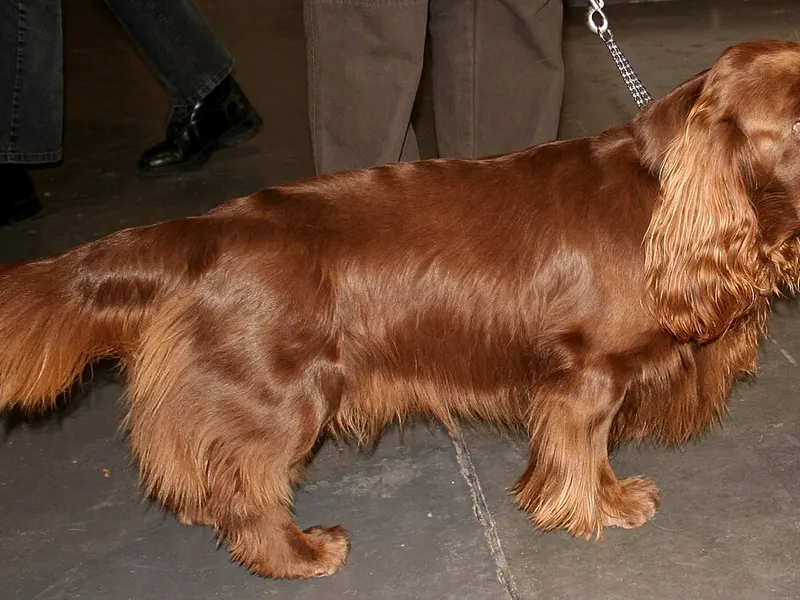
One of the original nine AKC-recognized breeds from 1884, the Sussex Spaniel takes its name directly from Sussex, England, where it was developed in the late 18th and early 19th centuries specifically for hunting in dense, thorny hedgerow terrain that demanded a low, sturdy build and real persistence rather than speed. Unlike most spaniels bred to work silently, the Sussex Spaniel was deliberately selected to bay or give tongue while working a scent trail, a distinctive, almost hound-like vocal habit that let hunters track the dog's location by ear through thick cover they couldn't see into — a genuinely unusual trait among spaniel breeds generally bred for quiet, controlled flushing work. The breed nearly went extinct twice in its history, once during World War I and again during World War II, when British wartime conditions made maintaining hunting-dog breeding programs extremely difficult, and both times a small number of committed breeders rebuilt the population from a genuinely narrow founding stock. Its distinctive golden-liver coat color is unique among AKC spaniel breeds and was specifically selected for, historians believe, partly because the warm color made the dog easier to spot against dark hedgerow cover during a hunt.
Common health predispositions
- Hip dysplasia
- Intervertebral disc disease
- Pulmonic stenosis
- Otitis externa
Temperament
Calm, steady, and a bit more serious than most spaniels, the Sussex Spaniel carries a genuinely mellow disposition that traces back to its deliberately slow, methodical hedgerow-hunting style rather than a speed-and-flash working approach. This breed bonds tightly with its household, kids included, though its independent streak — a legacy of working somewhat autonomously through dense cover where a handler couldn't always see the dog directly — means training benefits from patience over repetition. That distinctive baying voice, once a working tool for hunters tracking the dog by ear, still shows up readily in the household as genuine vocal expressiveness, a trait new owners should expect going in rather than be surprised by later.
Living with a Sussex Spaniel
Roughly 45 minutes of daily activity suits this low-slung, moderately paced breed well, without the higher-intensity exercise demands of faster spaniel types. Matting is the real threat with the abundant, flat-to-wavy golden-liver coat, so a firm brushing habit focused on the ears and legs — where the feathering runs thickest — keeps it under control. This low-slung, elongated build carries a real risk of intervertebral disc disease, and pulmonic stenosis, a congenital heart defect, along with chronic ear infections tied to the breed's heavy ear structure, round out what's worth discussing directly with a breeder. A household drawn to a calm, distinctive, genuinely vocal spaniel — and one that understands the breed's real baying tendency going in rather than treating it as a training failure — tends to do well with a Sussex Spaniel. Given the breed's historically small population and two near-extinction events, dedicated US rescue is limited, and most prospective owners connect directly with the small number of committed breeders. Coat care and attentive ear maintenance are the main recurring time commitments here, on top of a fairly ordinary food and veterinary budget for a dog this size.
FAQ
Why does the Sussex Spaniel bark or bay while hunting?
That baying voice is a genetically embedded trait rather than a trained behavior, which is why it can't really be bred or trained out of the line — modern breed-standard judges actually list a robust bark or bay as a correct trait to reward at shows, the opposite of nearly every other spaniel breed, where handlers train dogs toward total silence in the field. In the home, this often comes out as a lower, more hound-like sound than the sharper yip typical of most spaniels, something a prospective owner with noise-sensitive neighbors should weigh before committing to the breed.
Has the Sussex Spaniel ever nearly gone extinct?
Both wartime bottlenecks left a lasting genetic mark: breed geneticists studying rare AKC populations point to the Sussex Spaniel as carrying one of the narrower gene pools of any recognized spaniel today, a legacy that responsible breeders now actively manage through careful pairing and health testing rather than something the population has simply outgrown with time. Annual AKC litter registrations for the breed still number only in the dozens nationwide, keeping it a genuine rare-breed proposition even a century after the second bottleneck.
Is the Sussex Spaniel a calm dog?
Generally yes — the breed's deliberately slow, methodical hedgerow-hunting style produced a genuinely mellow, steady disposition, though real independence and that distinctive vocal habit both remain part of the package.
What health issues affect the Sussex Spaniel?
Intervertebral disc disease is a real concern given the breed's long, low body, and pulmonic stenosis, a congenital heart defect, along with chronic ear infections, round out the main conditions worth discussing directly with a breeder.
Why is the Sussex Spaniel's coat a different color than other spaniels?
Its distinctive golden-liver color is unique among AKC spaniel breeds, and historians generally believe the warm coloring was specifically selected because it made the dog easier for hunters to spot against dark hedgerow cover.
Is the Sussex Spaniel one of the rarer AKC sporting breeds?
Yes — the breed nearly went extinct twice, once in the late 1800s and again during World War II when British breeding programs were devastated, and it remains among the AKC's least-registered sporting breeds today, known for a distinctively slow, methodical hunting pace and low, mournful bark unlike the faster working style of most spaniels.
Related on FetchBreed
Lists this breed appears in
Whichever breed fits your life, consider adoption or breed-specific rescue first — many purebred and mixed-breed dogs and cats are already waiting for homes.
General breed information, not veterinary advice — consult a vet for your pet's specific health, diet, and behavior needs.