Toy Group
Silky Terrier
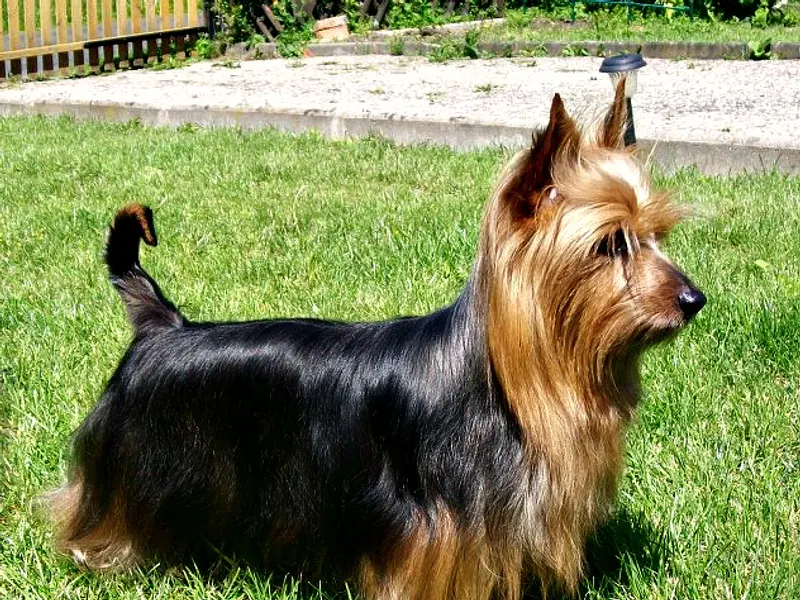
Australian breeders in the early 1900s crossed Yorkshire Terriers with Australian Terriers, aiming for a dog with the Yorkie's silky, glamorous coat but a sturdier, more workmanlike build suited to actual vermin control on Australian farms and homesteads rather than pure companionship. The result, originally called the Sydney Silky, kept genuine ratting ability alongside its show-worthy coat for decades before shifting almost entirely to companion status. The AKC recognized the breed, by then renamed the Silky Terrier, in 1959. Early breed development happened somewhat haphazardly across several Australian states simultaneously, with different regional clubs promoting slightly different standards until a unified Australian standard was agreed upon in 1926. American breeders who imported the breed after World War II pushed for a distinct US standard emphasizing a slightly different structure than the Australian original, a divergence that persists in subtle ways between the two countries' breed standards today.
Common health predispositions
- Patellar luxation
- Tracheal collapse
- Diabetes mellitus
Temperament
Don't mistake the elegant coat for a fragile temperament — Silky Terriers retain real terrier grit underneath, quick to investigate, quick to bark at anything unusual, and generally more assertive than their small size might suggest. They're intelligent and often quite trainable when motivated, though the same independent streak common across terrier breeds means sessions go better with patience than with pure repetition. Most individuals bond closely with their people and stay alert to household happenings, functioning as capable little watchdogs despite their size. Despite the toy classification, Silky Terriers retain real digging and burrowing instincts from their working Australian Terrier ancestry, and owners with garden beds often find a designated digging spot works better than trying to train the behavior away completely, since it's a genuinely hardwired trait rather than boredom-driven mischief.
Living with a Silky Terrier
This breed carries plenty of energy for its size but not the marathon stamina of a working terrier bred for the field, and 45 minutes split across a couple of sessions generally covers it. Regular brushing, at least a few times weekly, keeps the signature silky coat from tangling, and many owners either pick up a simple trim routine or lean on a groomer periodically to manage length. Shedding itself stays genuinely minimal, part of the coat's appeal to allergy-sensitive households — though a visit with the individual dog beforehand remains the safer way to confirm it. Patellar luxation, tracheal collapse, and diabetes mellitus round out the breed's documented veterinary concerns. This breed suits an owner who wants toy-breed portability with genuine terrier personality and is willing to keep up a real brushing routine — it's a reasonable choice for apartment living given modest exercise needs. Silky Terrier-specific rescue tends to be limited given the breed's smaller population outside Australia, with most US adoptions happening through small-breed or terrier-focused rescue networks.
FAQ
Is a Silky Terrier the same as a Yorkshire Terrier?
No, though they're closely related — the Silky Terrier was developed by crossing Yorkshire Terriers with the sturdier Australian Terrier, resulting in a slightly larger, more workmanlike dog than the purebred Yorkie despite a similarly silky coat.
Do Silky Terriers bark a lot?
Often yes — this is a genuinely alert breed that tends to vocalize at anything unusual, a trait rooted in its watchdog and ratting background rather than nervousness.
How much grooming does a Silky Terrier coat need?
Brushing several times a week is necessary to prevent the fine, silky coat from tangling, and periodic trims help keep length manageable, though the coat sheds only lightly compared to many breeds.
Is the Silky Terrier standard the same in the US and Australia?
Not exactly — American breeders who imported the breed after World War II pushed for a somewhat different structural standard than the original Australian one, and subtle differences between the two countries' breed standards persist today.
Do Silky Terriers make good apartment dogs?
Reasonably well, given their small size and moderate exercise needs, though their alert, sometimes vocal watchdog tendencies are worth considering in noise-sensitive buildings.
How does a Silky Terrier's temperament compare to a Yorkshire Terrier's?
Generally a bit sturdier and more assertive — the Australian Terrier influence gives the Silky somewhat more working-dog grit than the purely companion-bred Yorkshire Terrier, even though the two breeds share a similar silky coat texture and comparable size.
How is the Silky Terrier different from the Yorkshire Terrier?
Both share Australian and British terrier ancestry and a similarly fine, silky blue-and-tan coat, but the Silky Terrier is a distinct AKC breed developed in Australia specifically by crossing Yorkshire Terriers with the native Australian Terrier, producing a slightly larger, more terrier-sturdy dog than the Yorkie, with a standard weight around 8-10 pounds versus the Yorkshire Terrier's typical 7-pound cap.
Related on FetchBreed
Lists this breed appears in
Whichever breed fits your life, consider adoption or breed-specific rescue first — many purebred and mixed-breed dogs and cats are already waiting for homes.
General breed information, not veterinary advice — consult a vet for your pet's specific health, diet, and behavior needs.