Foundation Stock Group
Shikoku
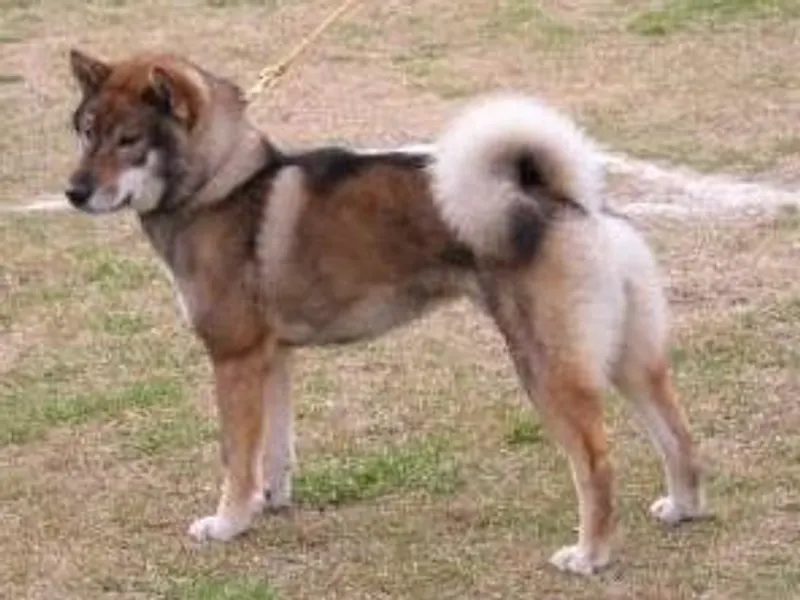
Hunters on the island of Shikoku in Japan's mountainous Kochi Prefecture developed this breed over centuries specifically for hunting deer and wild boar across genuinely rugged terrain, a working history closely paralleling several of Japan's other native spitz-type hunting breeds while remaining a distinct regional type shaped by Shikoku's particular mountain landscape. Local hunters in the breed's home region originally recognized three regional bloodlines — commonly referred to by the district names Hongawa, Hata, and Awa — that were eventually consolidated into the single unified Shikoku standard recognized today, a real regional-to-national standardization process that several Japanese breeds went through during the 20th century. Formal natural-monument protection arrived for the Shikoku in the 1930s, part of a broader wave of native-breed heritage designations that decade, and the breed's characteristic sesame or black-and-tan coloring, along with its notably fox-like facial expression, remain hallmarks specifically bred for and preserved through that protected status. The Shikoku remains genuinely rare outside Japan, with its US introduction and AKC Foundation Stock Service listing coming only in recent decades.
Common health predispositions
- Generally healthy primitive breed
- Hip dysplasia (uncommon)
- Allergies
Temperament
Alert, genuinely loyal, and notably independent, the Shikoku carries real mountain-hunting instincts shaped by centuries of working deer and boar across rugged Japanese terrain with minimal close human direction. Devotion to its own family runs deep once trust is established, though genuine reserve with strangers and other dogs is common, and the breed's real prey drive means small-animal households need to think carefully about introductions. That same independence and sharp intelligence make the Shikoku a genuinely capable problem-solver, a trait that serves it well in the field but sometimes translates into real stubbornness during basic obedience work at home. Japanese breed preservation societies continue actively monitoring the Shikoku's regional bloodlines specifically to keep the historical Hongawa, Hata, and Awa lineages represented within the modern unified standard.
Living with a Shikoku
Real athletic stamina defines this mountain-hunting breed's exercise needs — around 75 daily minutes, and it does noticeably better with an actual outlet for its hunting drive than with plain exercise alone. Shedding runs moderate on the medium-length double coat, and a regular but unhurried brushing routine keeps it manageable. Widely regarded as a hardy primitive breed, the Shikoku's main health considerations are hip dysplasia, though uncommon, and a general tendency toward skin allergies in some individuals, rather than any long list of serious breed-specific conditions. Real independence and genuine athleticism suit an experienced, active owner rather than someone hoping for an easily biddable first dog. Domestic breeders are genuinely thin on the ground, and prospective owners commonly end up going through Japanese breed contacts when a US litter simply isn't available. The ownership budget itself stays modest thanks to the breed's overall hardiness — patience in the actual search is the harder part.
FAQ
What were the original Shikoku bloodlines?
Local hunters on the island of Shikoku originally recognized three regional bloodlines, commonly known by the district names Hongawa, Hata, and Awa, which were eventually consolidated into the single unified Shikoku breed standard recognized today.
Is the Shikoku a natural monument in Japan?
Yes — it received that formal heritage designation in the 1930s as part of a broader wave protecting several native spitz-type breeds, support that helped standardize the Shikoku's regional bloodlines through the mid-20th century.
What was the Shikoku bred to hunt?
Deer and wild boar specifically, across the genuinely rugged mountainous terrain of Japan's Kochi Prefecture, a demanding working history closely paralleling several of Japan's other native spitz-type hunting breeds.
Is a Shikoku good with cats or small pets?
Not automatically — real prey drive is a genuine part of this hunting breed's makeup, so households with cats or small animals need careful, deliberate introduction rather than assuming compatibility.
Is the Shikoku easy to train?
Only somewhat — real independence and sharp intelligence inherited from centuries of mountain hunting with minimal close human direction sometimes translate into genuine stubbornness during basic obedience work, so consistency matters more than repetition.
How big does a Shikoku get?
A mid-sized, well-muscled dog, typically 35 to 55 pounds and 17 to 21.5 inches at the shoulder, built lean and athletic rather than bulky — proportions that suited the breed's traditional job covering steep, forested Kochi Prefecture terrain at speed while trailing deer or boar.
What's the difference between a Shikoku and a Kai Ken?
Both are native Japanese mountain-hunting spitz breeds with similarly independent temperaments, but the Shikoku typically carries sesame or black-and-tan coloring and hails from the island of Shikoku, while the Kai Ken is best known for its brindle coat and developed specifically in the mountains of Yamanashi Prefecture on Honshu.
Does the Shikoku's fox-like face serve any real function?
Breed historians generally treat it as a byproduct of the same lean, alert head structure common across Japan's native spitz-type hunting breeds rather than a deliberately selected cosmetic trait, though the sharp, forward-set expression does correlate with the keen sight and hearing hunters relied on when tracking deer and boar through dense mountain brush.
Related on FetchBreed
Lists this breed appears in
Whichever breed fits your life, consider adoption or breed-specific rescue first — many purebred and mixed-breed dogs and cats are already waiting for homes.
General breed information, not veterinary advice — consult a vet for your pet's specific health, diet, and behavior needs.