Hound Group
Segugio Italiano
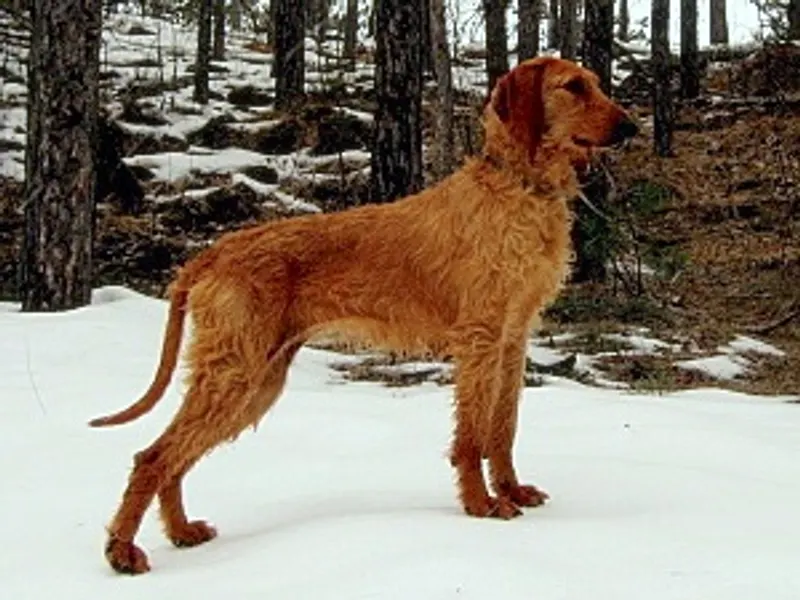
This ancient Italian scenthound's roots likely trace back well over two thousand years, with some breed historians pointing to depictions in ancient Egyptian art and artifacts as possible early evidence of the type, later believed to have reached the Italian peninsula through Phoenician or Roman-era Mediterranean trade before developing into the distinct breed recognized in Italy today. Two coat varieties, smooth and wirehaired, fall under a single unified breed standard, both developed to hunt hare and, more recently, wild boar across varied Italian terrain, from open hillside to dense forest. Unlike many scenthounds bred to work in large coordinated packs, Italian hunters historically favored the Segugio Italiano for solo or small-group hunting, tracking game largely by scent at a steady, methodical pace rather than the high-speed pursuit style of sighthound breeds. The breed remains deeply tied to regional Italian hunting culture even today, with regional variations in build and temperament still recognizable to experienced Italian breed enthusiasts across different parts of the country. AKC status for the Segugio Italiano has developed more recently than for many other Italian breeds, and prospective American owners should expect a genuinely small domestic population and correspondingly limited access to established breeders compared with more mainstream hound breeds.
Common health predispositions
- Hip dysplasia
- Ear infections
- Generally hardy
Temperament
Calm, steady, and genuinely methodical, the Segugio Italiano carries a working temperament shaped by centuries of patient, scent-driven tracking rather than high-speed chase, giving it a notably even keel compared with faster, more excitable hound breeds. Regional Italian hunting clubs still field-test working Segugio lines today, and breeders active in that testing circuit generally prize exactly this even, unhurried temperament as much as raw scenting ability when selecting which dogs to breed forward. Gentleness with its own household comes naturally, a real patience breed fanciers often attribute to the Segugio's history working methodically rather than frantically. That same patient, workmanlike disposition extends to training, where the breed tends to respond well to consistent, unhurried instruction rather than high-intensity drilling.
Living with a Segugio Italiano
A solid 75 minutes of daily activity suits this scent-driven hound's real stamina, and the breed genuinely appreciates the chance to work an actual trail whenever that's possible. Depending on whether an individual carries the smooth or wirehaired coat variety, grooming needs run from minimal to moderate, though neither variety demands intensive upkeep. Standard hip and ear-infection screening still apply, though the Segugio Italiano is broadly considered a hardy, genuinely healthy breed by the veterinary sources available, without the long list of breed-specific concerns some more heavily inbred hound breeds carry. A household genuinely drawn to a calm, methodical, moderately active hound with deep Italian hunting roots will find the Segugio Italiano a rewarding, even-tempered companion. US rescue is essentially nonexistent given the breed's still-small domestic population, so prospective owners typically need to work with the limited number of breeders, some of whom import directly from established Italian lines. Monthly costs run fairly typical for a mid-to-large hound, with the coat-dependent grooming variation being the main factor separating individual ownership costs.
FAQ
How old is the Segugio Italiano breed?
Genuinely ancient by most accounts — some breed historians trace possible roots back well over two thousand years, pointing to depictions in ancient Egyptian art as early evidence of the type before it reached Italy through Mediterranean trade.
What's the difference between the smooth and wirehaired Segugio Italiano?
Both fall under a single unified breed standard and share the same general temperament and working history, differing mainly in coat type and the resulting grooming needs, with the wirehaired variety requiring somewhat more upkeep.
Is the Segugio Italiano a healthy breed?
Generally yes — available veterinary sources describe it as a hardy breed without the long list of breed-specific concerns some more heavily inbred hound breeds carry, though standard hip and ear screening are still worthwhile.
Does the Segugio Italiano hunt alone or in packs?
Historically more often alone or in small groups than in the large coordinated packs typical of some other scenthound traditions, tracking game at a steady, methodical pace by scent rather than through high-speed pursuit.
Is a Segugio Italiano easy to find in the US?
Not particularly — the American population stays genuinely small, so most people end up going through one of a limited number of dedicated breeders, several of whom import their lines straight from Italy.
What does 'Segugio' mean in Italian?
It translates roughly to 'scenthound' or 'tracker,' a fitting name for a breed with roots tracing back over two thousand years on the Italian peninsula, where it was developed primarily to trail wild boar and hare across rugged terrain, historically working both by sight and scent depending on the specific hunting conditions and regional tradition.
Related on FetchBreed
Lists this breed appears in
Whichever breed fits your life, consider adoption or breed-specific rescue first — many purebred and mixed-breed dogs and cats are already waiting for homes.
General breed information, not veterinary advice — consult a vet for your pet's specific health, diet, and behavior needs.