Non-Sporting Group
Schipperke
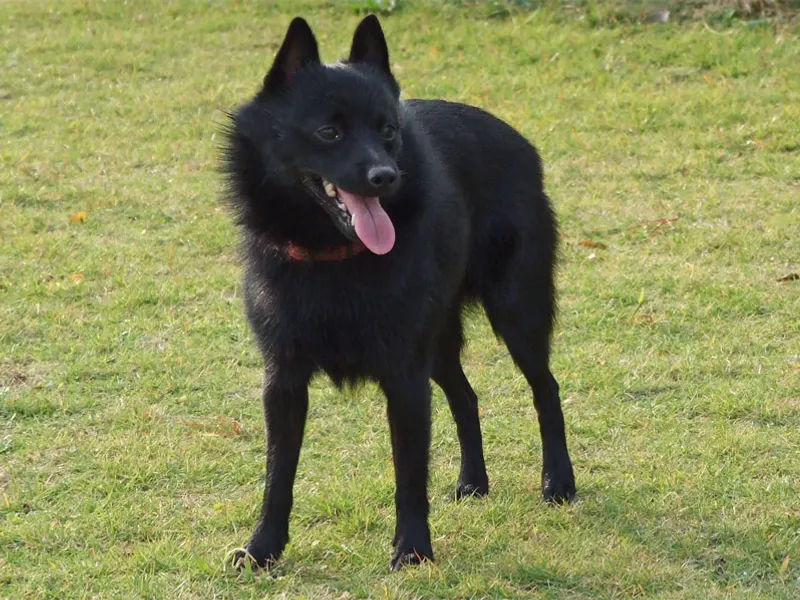
The Schipperke developed in Belgium as a working ratter and watchdog aboard the canal barges that once carried freight through the country's extensive waterway network, and its name is generally translated from Flemish as "little captain" or "little skipper," a direct reference to that barge-dog job. The breed's tailless or naturally very short tail is a genuine, longstanding physical trait, though modern breed standards in most countries now accept a natural tail rather than requiring docking, a practice increasingly restricted or banned in parts of Europe. The AKC recognized the Schipperke in the early 20th century, and the breed's foxy face, dense black coat, and alert, compact build have made it a recognizable, if less common, presence in the Non-Sporting group ever since.
Common health predispositions
- Patellar luxation
- Legg-Calve-Perthes disease
- MPS IIIB (mucopolysaccharidosis)
Temperament
Bred to work independently on a barge, alert to rats and unfamiliar people alike, the Schipperke is bold, curious, and packs a startling amount of energy into a genuinely small frame. Kids generally get along well with a Schipperke, and the breed is playful and affectionate once it trusts you, though its watchdog instincts mean genuine wariness toward strangers and a tendency to bark at anything unfamiliar. Training goes fine but not effortlessly — like many small working breeds bred to operate without constant direct supervision, the Schipperke doesn't always prioritize obedience over its own curiosity.
Living with a Schipperke
Forty-five minutes of daily activity works well for this breed as long as real mental engagement is part of the mix — an understimulated Schipperke tends toward persistent barking and general mischief. The dense double coat, complete with a distinctive ruff around the neck and shoulders, sheds moderately and needs regular brushing, with heavier shedding during seasonal coat blowouts. Patellar luxation and Legg-Calve-Perthes disease are both documented in the breed, and MPS IIIB, a rare inherited metabolic disorder affecting the body's ability to break down certain complex sugars, has been specifically identified and studied in Schipperke lines closely enough that DNA testing for carrier status exists. The breed's compact size and genuine watchfulness make it a surprisingly effective small-scale watchdog despite lacking any real size to back up an alert bark, and many owners find the Schipperke's alertness is a feature worth working with through training rather than trying to eliminate outright.
FAQ
What does the name Schipperke mean?
It's generally translated from Flemish as 'little captain' or 'little skipper,' a direct reference to the breed's original job working as a ratter and watchdog aboard Belgian canal barges.
Do Schipperkes have tails?
The breed is historically associated with a tailless or very short tail, traditionally achieved through docking, though most modern breed standards outside the U.S. now accept a natural tail as docking has become restricted or banned in parts of Europe.
Are Schipperkes good watchdogs?
Yes — the breed's history working as an alert ratter and watchdog on Belgian canal barges shows up clearly in its modern temperament, and Schipperkes remain genuinely watchful, ready to bark at anything unfamiliar despite their small size.
What is MPS IIIB in Schipperkes?
A rare inherited metabolic disorder affecting the body's ability to break down certain complex sugars, specifically identified and studied in Schipperke lines closely enough that a DNA test for carrier status now lets breeders screen it out of their lines entirely.
How much exercise does a Schipperke need?
About 45 minutes daily, including real mental engagement — this is a genuinely energetic, intelligent small breed, and an understimulated Schipperke tends toward persistent barking and general mischief rather than settling quietly.
Are Schipperkes good with kids?
Generally yes — the breed is playful and affectionate with its own family once trust is established, though its watchdog instincts mean it may take some time to warm up to unfamiliar children.
How long do Schipperkes live?
Twelve to 14 years is typical for this small breed, and responsible breeding that screens early for the documented orthopedic and metabolic conditions tends to produce dogs that age well through that span.
Is a Schipperke a good first dog?
Genuine intelligence paired with real independence means this breed isn't automatically obedient, so it works best for a first-time owner willing to commit to consistent training rather than expecting it to come naturally.
How big does a Schipperke get?
Small, typically 10 to 16 pounds and 10 to 13 inches at the shoulder, a compact size well-suited to working aboard the tight quarters of a Belgian canal barge.
Do Schipperkes shed a lot?
Moderately, with heavier shedding during seasonal coat changes — the dense double coat and distinctive ruff need regular brushing to manage loose fur, particularly around those twice-yearly transitions.
How big does a Schipperke puppy grow relative to its adult size?
Fairly quickly for a small breed — most Schipperkes reach close to their adult height by around 8 months, though they may continue filling out in weight and coat density for several months after that.
Do Schipperkes get along with other pets?
Reasonably, though the breed's ratting heritage means genuine caution is warranted around small animals like rodents or birds, while cats and other dogs are generally a fine match with proper introduction.
What is the Schipperke's connection to Belgian royalty?
Queen Marie Henriette of Belgium reportedly kept and showed Schipperkes in the late 19th century, a royal association that helped raise the breed's profile beyond its working-class barge-dog origins and into wider European fancier circles.
Is the Schipperke a good watchdog for an apartment?
Yes, with training — the breed's compact size fits apartment living well, and its genuine alertness makes it a capable small-scale watchdog, though barking at every unfamiliar sound needs some management in shared housing.
Related on FetchBreed
Lists this breed appears in
Whichever breed fits your life, consider adoption or breed-specific rescue first — many purebred and mixed-breed dogs and cats are already waiting for homes.
General breed information, not veterinary advice — consult a vet for your pet's specific health, diet, and behavior needs.