Hound Group
Saluki
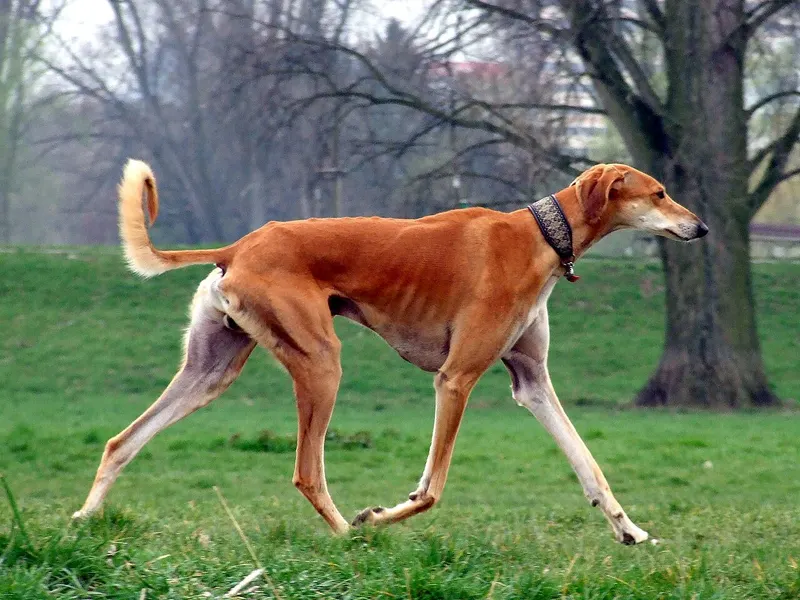
Considered one of the oldest known dog breeds still recognizable in something close to its ancient form, the Saluki appears in artwork and artifacts from the Middle East dating back several thousand years, bred by nomadic Bedouin tribes for coursing gazelle and other fast game across open desert terrain where raw speed and stamina mattered more than any other trait. Unlike many working breeds kept purely as tools, Salukis were often treated with genuine reverence in Bedouin culture, sometimes allowed inside tents rather than kept as outdoor working animals, a status uncommon for dogs in the region historically. The AKC recognized the Saluki in 1927. The breed's association with Bedouin culture went well beyond simple ownership — Salukis were traditionally considered a gift from Allah rather than an unclean animal the way most dogs were regarded in Islamic tradition, a religious and cultural distinction that afforded them house privileges and a status closer to a family member than livestock or a working tool. Archaeological evidence, including carvings and artifacts from ancient Mesopotamia and Egypt dating back several thousand years, depicts sighthounds closely resembling the modern Saluki, making it one of the strongest candidates among AKC breeds for genuinely ancient, minimally altered lineage.
Common health predispositions
- Hypothyroidism
- Cardiomyopathy
- Anesthesia sensitivity (sighthound trait)
Temperament
Reserved and dignified rather than overtly demonstrative, the Saluki tends to form deep but quiet attachments to its family, a temperament that reads as aloof to owners expecting the enthusiasm of a retriever breed. As a genuine sighthound, the prey drive runs extremely strong, and Salukis will chase anything that moves quickly, including cats and small dogs, regardless of how much training has been done — this instinct is essentially hardwired rather than a behavior that fully extinguishes. With familiar people, most individuals are gentle and sensitive, responding poorly to harsh training methods. Bedouin breeding practices historically emphasized function over uniform appearance, selecting primarily for coursing speed and endurance rather than a tightly standardized look, which is part of why Salukis today show more visible regional variation in build and coat than many Western-developed breeds shaped by stricter show-ring standards.
Living with a Saluki
Seventy-five minutes of daily exercise, including genuine off-leash sprinting in a securely fenced or otherwise safely enclosed area, matters more for a Saluki than for almost any other breed given its built-for-speed physiology — a securely fenced yard is close to essential rather than optional. The smooth or lightly feathered coat needs minimal grooming, just occasional brushing. Sighthounds including the Saluki are known to process certain anesthetics differently than other breeds due to low body fat, and it's worth confirming any vet treating the dog is aware of sighthound-specific anesthesia protocols; hypothyroidism and cardiomyopathy are also documented in the breed. This breed suits an experienced sighthound owner with secure fencing and realistic expectations about the breed's independent, reserved temperament — it's a poor fit for anyone wanting an eager-to-please companion or a household with small pets given the intense prey drive. A dedicated network of sighthound-focused rescues in the US does place Salukis periodically, though the breed's modest overall population means genuine availability stays limited rather than reliable.
FAQ
Can Salukis live with cats?
Rarely reliably without extensive supervision — as a purebred sighthound developed specifically to chase fast-moving game, the instinct to pursue anything that runs is extremely strong and generally doesn't fully train out, even in dogs raised alongside a household cat.
Why do Salukis need a fenced yard?
The breed's coursing background means it's built for genuine speed and has an intense prey drive; an open yard or unfenced area presents real escape and chase risk that a securely fenced space substantially reduces.
Are Salukis good with anesthesia?
Sighthounds including the Saluki process certain anesthetics differently than other breeds because of their characteristically low body fat, so it's worth confirming any treating veterinarian is familiar with sighthound-specific anesthesia protocols before a procedure.
Why were Salukis treated differently from other dogs in Bedouin culture?
Islamic tradition generally regarded dogs as unclean, but the Saluki was a notable exception, traditionally considered a gift from Allah rather than an ordinary dog — a religious and cultural distinction that afforded it house privileges and a status closer to family than working animal.
How old is the Saluki breed?
Some ancient Egyptian tombs contain mummified sighthounds displaying the Saluki's distinctive build, and geneticists studying the breed place it among a small handful of dog lineages — alongside the Basenji and a few other primitive types — that show notably less genetic admixture with the more recently developed European breeds that reshaped most of the modern dog world. That relative isolation is part of why researchers treat the Saluki as a genuinely useful reference point when studying how much selective Western breeding has altered dog genetics more broadly.
Is a Saluki easy to train?
Not in the conventional sense — the breed's independent sighthound temperament tends to shut down under repetitive drilling or harsh correction, and a patient, reward-based approach that works with the dog's natural aloofness gets far further than trying to override it.
Related on FetchBreed
Lists this breed appears in
Care equipment for a Saluki
As an Amazon Associate we earn from qualifying purchases made through these links, at no extra cost to you.
- Long training line
Genuine off-leash sprinting in a securely enclosed area matters more for a Saluki than for almost any other breed, this page says — and the coat needs minimal grooming.
Whichever breed fits your life, consider adoption or breed-specific rescue first — many purebred and mixed-breed dogs and cats are already waiting for homes.
General breed information, not veterinary advice — consult a vet for your pet's specific health, diet, and behavior needs.