Toy Group
Russian Toy
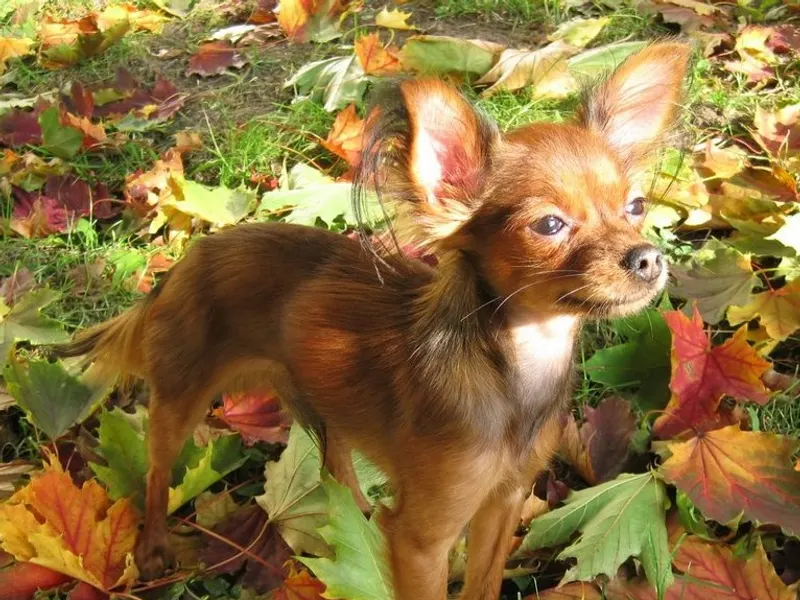
Russian breeders developed this genuinely tiny companion breed from English Toy Terrier stock imported into Russia during the 19th and early 20th centuries, and the breed's development took a real detour during the Soviet era, when Western dog imports largely stopped and Russian breeders worked from an isolated existing population for decades, a genuinely distinct development path from most European toy breeds that continued exchanging bloodlines internationally throughout the same period. That Soviet-era isolation produced two coat varieties within the same breed — smooth-haired and long-haired — the long-haired variety emerging later in the 20th century from a spontaneous mutation that Russian breeders deliberately selected for and stabilized as a recognized variation. Formerly known as the Russian Toy Terrier before a 2006 name change dropped "Terrier" from the official designation, reflecting the breed's purely companion role rather than any working terrier heritage, the Russian Toy remains one of the smallest recognized dog breeds by weight. AKC recognition came only in 2022, making it a genuinely recent addition to the American Toy Group despite over a century of real Russian breeding history.
Common health predispositions
- Patellar luxation
- Dental crowding
- Fragile bones (toy-breed risk)
Temperament
Lively, genuinely affectionate, and notably alert for such a tiny dog, the Russian Toy carries real companion-breed devotion shaped by its purely decorative and emotional-support role in Russian and Soviet-era households rather than any working heritage. Bonds with its own family run deep, often intensely so, and the breed tends toward genuine wariness with strangers, a natural byproduct of its small size and close human-focused breeding history. That same alertness makes the Russian Toy a surprisingly vocal little watchdog, quick to bark at anything unfamiliar despite its genuinely diminutive stature. Russian and growing international breed clubs continue actively promoting the Russian Toy following its relatively recent emergence from decades of Soviet-era isolation, treating renewed global interest as a genuine opportunity to broaden the breed's gene pool.
Living with a Russian Toy
Formal exercise stays minimal for this tiny companion breed — half an hour a day is genuinely sufficient, given its purely companion-bred background rather than any working history. Coat care depends on variety: the smooth-haired type needs minimal brushing, while the long-haired variety requires more regular attention to prevent matting. Given the breed's genuinely small size, patellar luxation and dental crowding both belong on the health checklist, along with real fragility risk — the Russian Toy's tiny bone structure means falls or rough handling carry genuine injury risk that larger toy breeds don't face to the same degree. Real alertness and intense family devotion make this a genuinely engaging small companion, best matched with an owner ready for the careful handling a dog this fragile actually needs. Given the breed's recent 2022 AKC recognition and decades of Soviet-era isolation from Western breeding networks, domestic litters are genuinely hard to come by, so patience is part of the deal. Ongoing costs stay fairly modest for a toy breed, though veterinary visits sometimes carry a higher per-visit consideration given the breed's small size and fragility.
FAQ
Was the Russian Toy always called that?
No — it was formerly known as the Russian Toy Terrier until a 2006 name change dropped 'Terrier' from the official designation, reflecting the breed's purely companion role in Russian households rather than any actual working terrier heritage.
Why does the Russian Toy have two coat types?
Decades of Soviet-era isolation from Western breeding networks let Russian breeders work from a distinct existing population, and the long-haired variety emerged later in the 20th century from a spontaneous mutation that breeders deliberately selected for and stabilized.
Is the Russian Toy the smallest AKC-recognized dog breed?
It's among the smallest, though the Chihuahua is generally considered the smallest by weight standard, with the Russian Toy running close behind — the exact ranking depends on which specific weight or height figures a given comparison uses, since both breeds allow for meaningful size variation between individual dogs. What sets the Russian Toy apart from the Chihuahua is its two distinct coat varieties and its much more recent, and much more geographically isolated, development history.
Is the Russian Toy a fragile breed?
Yes, genuinely — the breed's tiny bone structure, among the smallest of any recognized dog breed, means falls or rough handling carry real injury risk, so careful handling and supervision around young children matters considerably.
Is a Russian Toy a good watchdog?
Surprisingly alert for its size, yes — real wariness toward strangers and a genuine tendency to bark at anything unfamiliar come standard, a natural byproduct of the breed's small size and close human-focused companion breeding history.
How big does a Russian Toy get?
Among the smallest recognized dog breeds by weight, typically only 3 to 6 pounds with a shoulder height around 8 to 11 inches — a size that developed specifically for indoor Russian companion life rather than any working role, and one that demands genuinely careful handling around children and larger pets alike.
Are long-haired and smooth-haired Russian Toys treated as different breeds?
No — a single Russian Toy standard covers both coat varieties rather than treating them as separate breeds, and it isn't unusual for one litter to produce a mix of smooth- and long-haired puppies, since both trace back to the same original Soviet-era bloodlines.
Related on FetchBreed
Lists this breed appears in
Whichever breed fits your life, consider adoption or breed-specific rescue first — many purebred and mixed-breed dogs and cats are already waiting for homes.
General breed information, not veterinary advice — consult a vet for your pet's specific health, diet, and behavior needs.