Working Group
Rottweiler
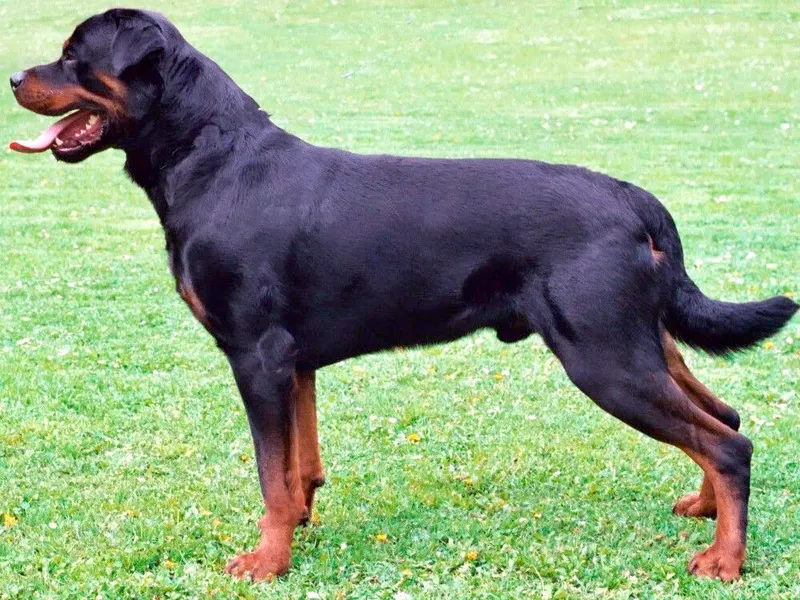
The Rottweiler's ancestors are believed to be Roman drover dogs that accompanied the legions into Germany to herd cattle for the marching army; the dogs settled around the town of Rottweil, where local butchers used them to drive cattle to market and pull meat-laden carts, earning the name 'Rottweiler Metzgerhund' (Rottweil butcher's dog). The breed nearly went extinct in the late 1800s as railroads replaced cattle droving and made the butcher's cart obsolete, and was deliberately revived in the early 20th century as a police and personal-protection breed once its working utility was recognized again. The AKC recognized the Rottweiler in 1931, and the breed remains one of the most consistently used in police, military, and personal-protection service work worldwide, a direct continuation of the driving/guarding utility that saved it from near-extinction a century ago.
Common health predispositions
- Hip/elbow dysplasia
- Osteosarcoma
- Bloat
Temperament
Rottweilers carry a calm, self-assured confidence rather than the reactive alertness of some guarding breeds — the trait profile shows strong trainability alongside real reserve toward strangers, a combination that made the breed a natural fit for police and protection work. They bond deeply and loyally with their family, but their size and protective instinct mean structured socialization from puppyhood is genuinely important rather than optional, particularly around unfamiliar children and other dogs. Consistent, confident, reward-based training from an early age produces the calm, stable temperament the breed is capable of, and many Rottweiler owners pursue formal obedience or working trials specifically because the breed's intelligence and drive respond so well to structured, purposeful training relative to unstructured free time.
Living with a Rottweiler
An hour of exercise daily suits the breed well, and the short, dense coat sheds moderately but needs only a weekly brush to stay tidy. The bigger considerations are health and size: Rottweilers are documented at notably elevated risk for osteosarcoma (bone cancer) compared with dogs generally, a serious concern breed researchers have studied specifically in this breed, alongside hip and elbow dysplasia common to large working breeds and bloat risk from a deep chest. Lifespan runs on the shorter end at 8 to 10 years, consistent with the general size-longevity tradeoff seen across large and giant breeds. Rottweiler puppies benefit especially from early, structured socialization across a wide range of people, dogs, and environments — breed clubs are explicit that a poorly socialized Rottweiler is far more likely to develop the fear-based reactivity that fuels the breed's outdated aggressive reputation than a genetic predisposition is. Many jurisdictions and insurance policies include the Rottweiler on breed-specific restriction lists, which is worth researching before committing, independent of the individual dog's actual temperament. A thorough, in-person meeting with a puppy's parents — checking both temperament and any available health clearances — is especially worthwhile advice specific to this breed given its size and strength as an adult. Puppy socialization classes specifically focused on confident, positive exposure are widely recommended by breed clubs as a foundational first step.
FAQ
Are Rottweilers naturally aggressive?
No — temperament in the breed is more accurately described as reserved and protective rather than aggressive; well-bred, well-socialized Rottweilers are typically calm and loyal, and aggression problems in the breed are more strongly linked to poor breeding, inadequate socialization, or mistreatment than to an inherent breed trait.
What cancer risk do Rottweilers carry?
The breed shows a documented elevated incidence of osteosarcoma, a bone cancer, compared with dogs generally — it's one of the more serious breed-specific health concerns and part of why regular vet checkups and prompt investigation of unexplained limping matter in Rottweiler ownership.
How much exercise does a Rottweiler need?
About an hour a day of real activity is typical for the breed; Rottweilers are strong, moderately high-energy working dogs that do best with structured exercise and training rather than being left to self-entertain in a yard.
Are Rottweilers restricted by breed-specific legislation or insurance?
In some jurisdictions and by some home insurance policies, yes — the Rottweiler is commonly included on breed-restriction lists alongside a handful of other large breeds, so it's worth checking local ordinances and insurance policy terms before bringing one home, separate from the question of the individual dog's temperament.
What does the name 'Rottweiler' actually refer to?
It refers to Rottweil, a town in southern Germany where the breed's ancestors worked as cattle-driving and cart-pulling dogs for local butchers, who reportedly tied their money pouches around the dogs' necks for safekeeping on trips to market, a detail often cited as an early sign of the breed's natural guarding instinct.
Related on FetchBreed
Comparisons
- Rottweiler vs Akita
- Rottweiler vs Alaskan Malamute
- Rottweiler vs Bernese Mountain Dog
- Rottweiler vs Boxer
- Rottweiler vs Cane Corso
- Rottweiler vs Doberman Pinscher
- Rottweiler vs Great Dane
- Rottweiler vs Great Pyrenees
- Rottweiler vs Mastiff
- Rottweiler vs Newfoundland
- Rottweiler vs Portuguese Water Dog
- Rottweiler vs Saint Bernard
Lists this breed appears in
Whichever breed fits your life, consider adoption or breed-specific rescue first — many purebred and mixed-breed dogs and cats are already waiting for homes.
General breed information, not veterinary advice — consult a vet for your pet's specific health, diet, and behavior needs.