Non-Sporting Group
Norwegian Lundehund
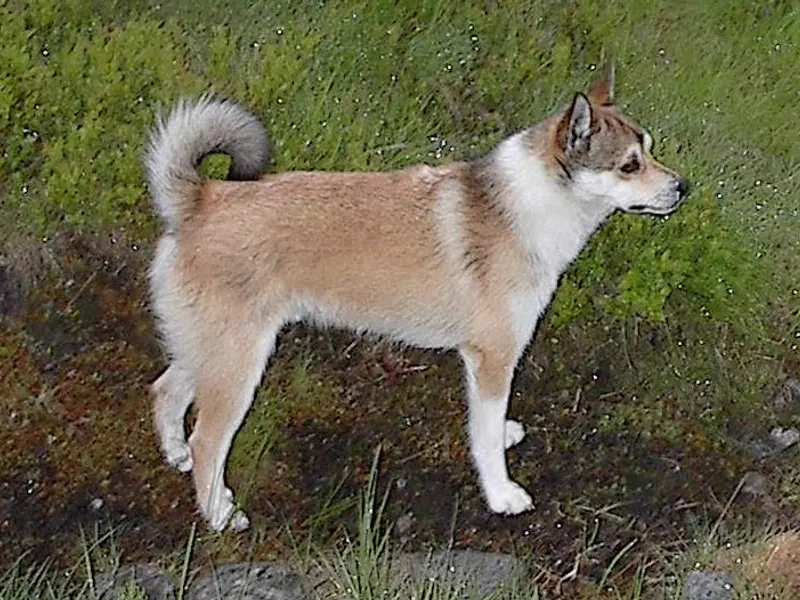
Norwegian hunters on the remote island of Værøy developed this genuinely unique breed over centuries specifically to hunt Atlantic puffins nesting in narrow cliffside crevices, and the Lundehund's body evolved several distinctive physical adaptations found in no other dog breed to make that extreme climbing work possible, most famously a minimum of six fully functional toes on each foot, compared with the standard four or five most dogs carry. Beyond the extra toes, the breed's shoulder joints rotate to an unusual degree, its neck bends backward far enough to touch its own spine, and its ears can fold shut on command to keep out dirt and moisture while squeezing through tight rock crevices — a genuinely remarkable set of adaptations that collectively let the Lundehund navigate terrain and spaces no other breed could manage. When commercial puffin netting techniques replaced traditional dog-assisted hunting in the early 20th century, the Lundehund's original working purpose largely disappeared, and the breed came dangerously close to complete extinction, with a later distemper outbreak on Værøy in the 1960s reducing the population to just a handful of surviving dogs before dedicated Norwegian breeders worked to rebuild it. AKC recognition came in 2011, and the Norwegian Lundehund remains one of the rarest dog breeds in the world today, with the entire global population still measured in the low thousands.
Common health predispositions
- Lundehund gastroenteropathy (breed-specific protein-losing intestinal disease)
- Patellar luxation
Temperament
Alert and genuinely energetic, the Norwegian Lundehund carries real climbing and problem-solving instincts inherited from its remarkable cliff-hunting history, an athleticism and physical flexibility unlike almost any other breed on the planet. Playfulness with its own people comes naturally, though a genuinely mischievous, independent streak means obedience often loses out to whatever has caught this breed's curiosity at the moment. The same flexibility and agility that once let it squeeze through rock crevices makes for a genuinely accomplished escape artist today, and containment needs to be more deliberately secure here than for most similarly sized dogs.
Living with a Norwegian Lundehund
Structured agility work is a genuinely good outlet for this breed's real climbing and problem-solving instincts, on top of roughly an hour of daily activity overall. Shedding runs substantial on the dense, harsh double coat, so a consistent brushing routine matters here too. Nothing on this breed's health checklist matters more than Lundehund gastroenteropathy, a serious, genuinely breed-specific protein-losing intestinal disease with essentially no equivalent elsewhere in the dog world — thoroughly discussing it with a breeder isn't optional, and patellar luxation deserves a mention too. This is a fascinating companion for a household that finds the evolutionary backstory genuinely compelling and is equally prepared for real ongoing digestive-health monitoring and escape-proof containment. Being among the rarest breeds on Earth means dedicated US rescue essentially doesn't exist, so most interested owners end up reaching out to one of the handful of dedicated North American breeders and simply waiting. Specialized veterinary monitoring for the breed's unique digestive condition, combined with real scarcity, pushes the ongoing budget toward the higher end.
FAQ
Why does a Norwegian Lundehund have six toes?
Norwegian hunters on the island of Værøy needed a dog capable of navigating narrow, treacherous cliffside crevices to hunt puffins, and the breed evolved a minimum of six fully functional toes per foot, along with several other unique physical adaptations, to make that extreme climbing work possible.
What is Lundehund gastroenteropathy?
A serious, genuinely breed-specific protein-losing intestinal disease with no real equivalent in most other breeds, and it's the single most important health topic to discuss thoroughly with any Norwegian Lundehund breeder before committing to a puppy.
Is the Norwegian Lundehund an escape artist?
Often, yes — the same remarkable physical flexibility and agility that once let the breed squeeze through rock crevices while hunting puffins shows up today as real skill at escaping enclosures, so secure containment matters more than for most similarly sized dogs.
How rare is the Norwegian Lundehund?
Norwegian breed authorities have taken the unusual step of experimentally outcrossing a small number of Lundehunds with other Nordic spitz breeds like the Norrbottenspets and Buhund in recent years, a genuinely controversial but deliberate effort to widen the gene pool beyond what survived the 1960s distemper outbreak. Most established breeds never need a measure like this, but breed geneticists consider it necessary given how narrow the Lundehund's surviving bloodlines still are.
Can a Norwegian Lundehund fold its ears shut?
Yes, genuinely — it's one of several unique physical adaptations the breed evolved for cliffside puffin hunting, letting it keep dirt and moisture out of its ears while squeezing through tight rock crevices.
What makes the Norwegian Lundehund's body so physically unusual?
The breed has at least six toes on each foot along with unique joint flexibility that lets it bend its head backward along its own spine and fold its front legs out to the sides, adaptations that evolved specifically for climbing into and out of narrow, steep puffin-nesting crevices on Norwegian sea cliffs, a job no other breed was built for.
Related on FetchBreed
Lists this breed appears in
Whichever breed fits your life, consider adoption or breed-specific rescue first — many purebred and mixed-breed dogs and cats are already waiting for homes.
General breed information, not veterinary advice — consult a vet for your pet's specific health, diet, and behavior needs.