Terrier Group
Lakeland Terrier
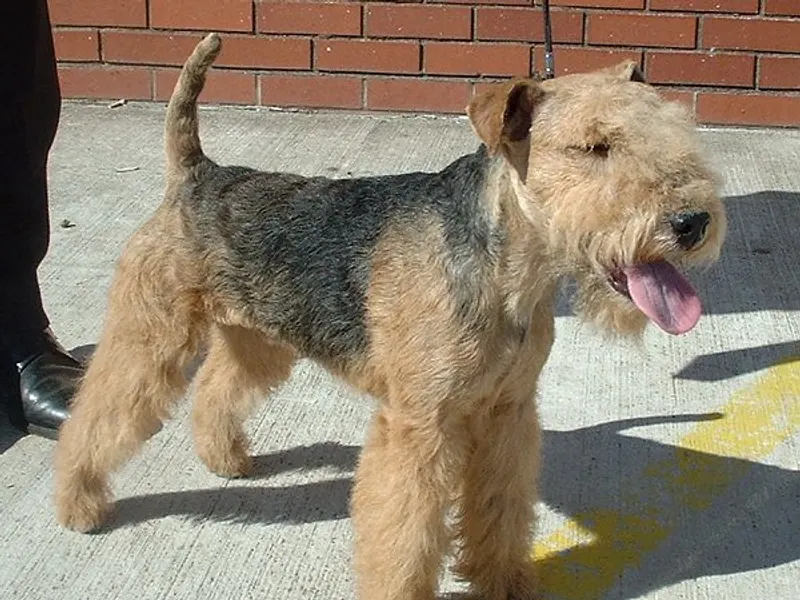
England's Lake District farmers bred the Lakeland Terrier to protect flocks from foxes in rugged, rocky terrain where larger hounds couldn't easily follow prey into dens — a job that demanded a small, tough, weatherproof dog willing to go to ground after an animal that could fight back. The breed's exact ancestry blends several old Northern English terrier types, and it remained primarily a working farm dog well into the 20th century before gaining AKC recognition in 1934 and slowly building a show and companion following in the following decades. Farmers in England's Lake District reportedly bred the Lakeland specifically to be small enough to follow a fox into rocky dens too tight for the larger Fell Terriers then in use, while still being tough enough to hold its ground against a cornered animal. The breed nearly went extinct in the early 20th century before a dedicated group of Lake District breeders standardized the type and pushed for Kennel Club recognition in 1921, with AKC recognition following in 1934.
Common health predispositions
- Hip dysplasia
- Lens luxation
- Von Willebrand's disease
Temperament
Bold to the point of fearless describes the Lakeland well — this is a breed literally selected for its willingness to confront foxes underground, and that same courage carries into daily life as confidence, independence, and a fair amount of stubbornness at training time. Lakelands bond closely with their families and can be genuinely affectionate, but they don't naturally defer to authority the way some breeds do, and inconsistent handling tends to produce a dog that tests boundaries constantly rather than settling into routine. Same-sex dog tension can surface in this breed as it does in several terrier types with a farm-guardian or vermin-hunting history, and introducing a second Lakeland of the same sex into an established household deserves careful, gradual management rather than an assumption that terriers naturally sort things out on their own.
Living with a Lakeland Terrier
A bored Lakeland is prone to digging, barking, or general mischief, so real exercise matters — 60 minutes daily split between walking and active play keeps both body and mind occupied. Grooming is a genuine ongoing commitment too: the wiry double coat needs hand-stripping roughly every couple of months plus regular brushing between sessions, and in exchange sheds very little, a workable trade for some allergy-sensitive households though worth confirming with the specific dog. Hip dysplasia, lens luxation, and Von Willebrand's disease, a blood-clotting disorder, all turn up in the breed's veterinary records and are worth raising directly with a breeder. An owner who genuinely enjoys an assertive, independent-minded dog and won't be discouraged by a stubborn streak during training is the right match here — automatic obedience simply isn't this breed's default setting, which rules it out for a first-timer expecting otherwise. Because the breed's numbers stay modest, most Lakeland Terrier rescue happens through breed-club coordination, and adopters should plan for the same grooming and socialization work a puppy would demand.
FAQ
Are Lakeland Terriers easy to train?
Not particularly — this breed's independent, self-directed nature from its working history means training tends to go better with short, engaging sessions and real consistency rather than repetition alone.
Do Lakeland Terriers get along with other pets?
Not reliably with small animals, given their history hunting foxes and vermin, and same-sex dog tension can also surface — a harder-working socialization plan pays off more here than it would with a naturally easygoing breed.
How much does Lakeland Terrier grooming cost?
Professional hand-stripping every couple of months adds up over a dog's lifetime, and most owners budget it as a recurring cost similar to other wire-coated terrier breeds rather than a one-time expense.
Why was the Lakeland Terrier bred to be so small?
Lake District farmers needed a terrier compact enough to follow a fox into narrow rocky dens that larger terrier breeds couldn't fit into, while still being tough enough to confront the animal once it caught up — a genuinely functional size requirement rather than a cosmetic one.
Did the Lakeland Terrier almost go extinct?
Yes — the breed's population dropped low enough in the early 20th century to raise real concern before a group of dedicated Lake District breeders standardized the type and secured Kennel Club recognition in 1921, stabilizing numbers.
Does a Lakeland Terrier need a big yard?
Not strictly, given its small-to-medium size, though secure fencing matters more than square footage — the breed's digging and escape-artist tendencies mean a determined Lakeland can find gaps in less secure boundaries that a calmer breed wouldn't bother testing.
What was the Lakeland Terrier originally bred to hunt?
Farmers in England's Lake District developed the breed specifically to protect lambs from foxes, sending the dog underground into rocky dens and crevices where larger hounds couldn't follow, and its compact, wiry build and fearless temperament both trace directly to that narrow, physically demanding working job in rugged fell country.
Related on FetchBreed
Lists this breed appears in
Whichever breed fits your life, consider adoption or breed-specific rescue first — many purebred and mixed-breed dogs and cats are already waiting for homes.
General breed information, not veterinary advice — consult a vet for your pet's specific health, diet, and behavior needs.