Working Group
Komondor
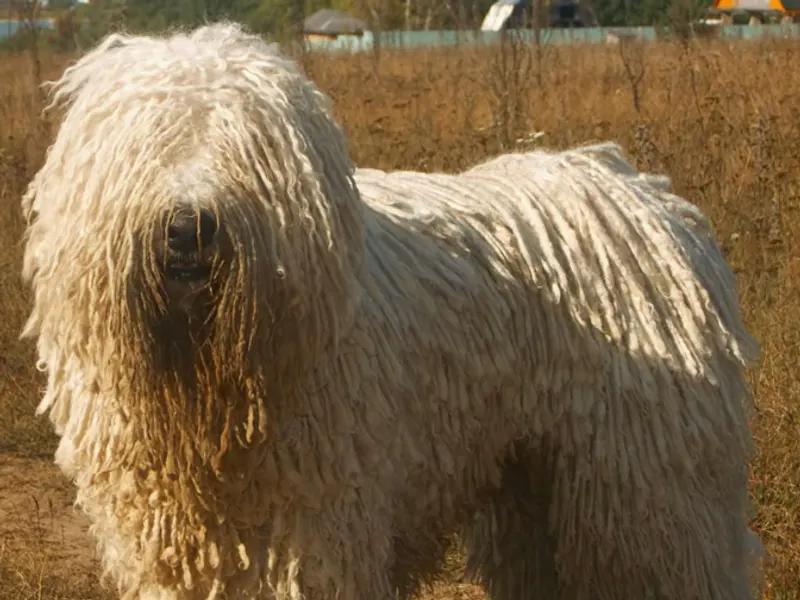
The Komondor's corded white coat is arguably its most defining feature, and Hungarian shepherds bred the dog that way deliberately — the dense cords helped the dog blend visually with the sheep flocks it guarded while also providing real protection against wolf bites during confrontations with predators. Historical records place Komondor-type dogs in Hungary for centuries, with some tracing possible ancestry to guardian dogs brought by Magyar tribes migrating from Central Asia. The breed served as a full-time flock guardian, living outdoors with sheep year-round with minimal human contact, which shaped a temperament built for independent decision-making rather than close handler direction. AKC recognition came in 1937. Some breed historians trace Komondor-type dogs to guardian breeds used by the Cumans, a nomadic people who migrated into Hungary in the 13th century fleeing the Mongol invasion, though the exact lineage remains genuinely uncertain given the lack of detailed records from that period. The breed nearly disappeared during and after World War II along with several other Hungarian breeds, and postwar reconstruction of the population relied heavily on a small number of surviving dogs plus careful, documented breeding through Hungarian state kennels.
Common health predispositions
- Hip dysplasia
- Bloat
- Entropion
Temperament
Calm and watchful rather than energetic describes most Komondorok at home, a byproduct of a working role that rewarded patience and steady vigilance over constant activity. That calm exterior sits alongside serious protective instincts, though — a Komondor left to guard a flock alone for days needed to make its own judgment calls about threats, and that independence carries directly into the modern dog's tendency to think for itself rather than defer automatically to commands. With their own family, most are gentle and tolerant, but strangers approaching territory the dog considers its own can meet real suspicion.
Living with a Komondor
Sustained, purposeful movement suits this breed better than anything high-intensity — 45 minutes of daily activity is generally plenty. The corded coat is the genuine headline commitment here: cords must be separated by hand periodically to prevent matting into one solid mass, bathing takes considerably longer than with a brushed coat because the cords need to dry thoroughly to avoid mildew, and most owners either commit seriously to the routine or work with a groomer experienced specifically with corded breeds. Loose shedding is minimal since the coat cords rather than falls out normally, which is a genuine practical upside despite the labor involved elsewhere. Hip dysplasia, bloat, and entropion, an eyelid condition, are documented health concerns in the breed. This breed suits an owner who is specifically drawn to the corded-coat commitment and wants a calm, independent livestock-guardian temperament rather than an interactive companion dog — it's a poor fit for anyone unprepared for the grooming demands or hoping for a highly biddable dog. Given how small the breed's overall population stays, rescue placements are genuinely uncommon, typically handled through the national breed club, and prospective adopters should expect a real wait.
FAQ
How do you groom a Komondor's corded coat?
The cords need to be periodically separated by hand to prevent them from matting together into one solid mass, and bathing takes much longer than with a brushed coat because thorough drying is essential to prevent mildew forming inside the cords.
Are Komondorok good with small children?
Many are gentle and tolerant with their own family's children, consistent with a guardian breed's protective instincts, but their size and natural wariness toward unfamiliar people or situations mean supervision and early socialization both matter.
Do Komondor puppies have corded coats from birth?
No — puppies are born with a soft, curly coat, and the distinctive cords develop gradually over roughly the first year or two as the coat naturally mats and is worked into cords by the owner.
Where does the Komondor breed originally come from?
Most breed historians trace it to Hungary, with some connecting its ancestry to guardian dogs brought by the Cumans, a nomadic people who settled in the region in the 13th century, though the precise lineage remains genuinely uncertain given sparse historical records.
How long does it take a Komondor's coat to fully cord?
Roughly one to two years — puppies are born with a soft, curly coat that gradually mats into the breed's signature cords as it's worked by hand during that period, and the process requires real, hands-on owner involvement rather than happening automatically.
How long does it take a Komondor's corded coat to fully form?
Roughly two years of deliberate hand-separation of the coat into cords, starting around the puppy's first shedding of its soft undercoat at eight to twelve months, and the finished cords keep growing and lengthening throughout the dog's life, requiring ongoing separation by hand to prevent them from matting into one solid felted mass.
Related on FetchBreed
Lists this breed appears in
Care equipment for a Komondor
As an Amazon Associate we earn from qualifying purchases made through these links, at no extra cost to you.
- High-velocity pet dryer
The page says bathing takes considerably longer than with a brushed coat because the cords need to dry thoroughly to avoid mildew. And because cords must be separated by hand, there is deliberately no brush in this block.
Whichever breed fits your life, consider adoption or breed-specific rescue first — many purebred and mixed-breed dogs and cats are already waiting for homes.
General breed information, not veterinary advice — consult a vet for your pet's specific health, diet, and behavior needs.