Foundation Stock Group
Hokkaido
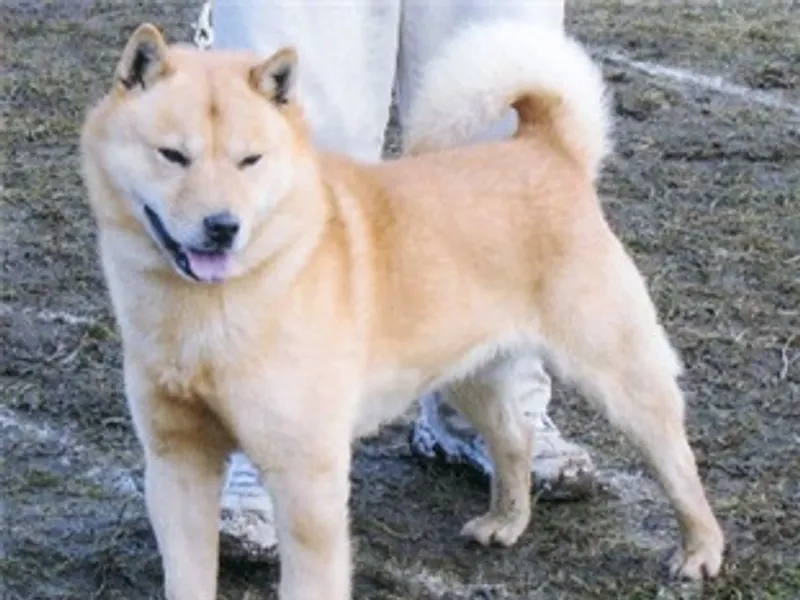
The indigenous Ainu people of Japan's northernmost island of Hokkaido developed and worked this breed for centuries as an all-purpose hunting dog capable of tracking and holding brown bear, a genuinely demanding job given how large and dangerous Hokkaido's bear population actually is, and the breed's dense, harsh, cold-weather double coat reflects real adaptation to the island's genuinely harsh northern winters. Sometimes still referred to by its older name, the Ainu-ken, in reference to the indigenous people who developed it, the Hokkaido is widely considered one of the oldest and most primitive of Japan's native spitz-type breeds, with genetic studies of Japanese dog breeds generally placing it among the more ancient lineages. Formal government protection came in the 1930s, when the Hokkaido joined the roster of natural-monument breeds, preserving its working type and relative genetic isolation through the disruptive decades that followed. Rural parts of the island still actively hunt with the breed, while its footprint beyond Japan stays vanishingly small — American interest, where it exists at all, tends to come from people already deep into the wider world of primitive Japanese hunting dogs rather than casual pet-seekers.
Common health predispositions
- Generally healthy primitive breed
- Hip dysplasia (uncommon)
- Collie eye anomaly (reported in the breed)
Temperament
Courageous and genuinely tough, the Hokkaido descends from generations of Ainu dogs asked to track and physically hold brown bear, and that history still shows up as a sturdy, cold-hardy dog that doesn't rattle easily. Loyalty to its own family runs deep, and the breed is often noted for real emotional sensitivity to its handler's mood despite its tough working history. Strangers and unfamiliar dogs get a much cooler reception, a trait bred deliberately alongside the hunting drive, and the breed's real physical toughness means it isn't a dog that backs down easily from confrontation. Hokkaido hunters and Japanese preservation societies alike keep the breed actively working precisely so its natural-monument character stays a living thing rather than fading into a show-ring memory.
Living with a Hokkaido
Real cold-climate hunting stamina means this breed wants a genuine 75 minutes of daily activity at minimum, and it does noticeably better with real mental and physical challenge than with a purely sedentary routine. That dense, harsh coat built for northern winters blows out heavily at each seasonal change, demanding more frequent brushing sessions than several of Japan's other native breeds need. Widely considered a hardy primitive breed, the Hokkaido's main health items worth discussing with a breeder are hip dysplasia, though uncommon, and collie eye anomaly, which has been documented in the breed despite the name suggesting otherwise. This is a serious working-type dog at heart, tough and naturally cool toward strangers, and it fits an experienced handler far better than someone hoping for an easygoing companion. Very few dedicated domestic breeders work with this breed, so a direct line to Japanese sources is often how US owners end up finding a puppy at all. The seasonal coat blow is really the standout expense here; otherwise the breed's hardiness keeps day-to-day costs unremarkable.
FAQ
What is the Ainu-ken?
An older name for the Hokkaido breed, referencing the indigenous Ainu people of Japan's northernmost island who developed and worked the breed for centuries as an all-purpose hunting dog capable of tracking and holding brown bear.
Did the Hokkaido really hunt bears?
Yes, genuinely — Ainu hunters used the breed specifically to track and hold brown bear, a demanding job given how large and dangerous Hokkaido's bear population is, and that working history directly shaped the breed's toughness and courage.
Is the Hokkaido one of the oldest Japanese breeds?
Widely considered so — genetic studies of Japanese dog breeds generally place the Hokkaido among the more ancient and primitive lineages, alongside the breed's own status as a formally designated natural monument since the 1930s.
How much grooming does a Hokkaido need?
A fair bit at certain times of year — this cold-climate coat blows its undercoat hard during seasonal transitions, and daily brushing through those stretches keeps the shedding from getting out of hand.
Is the Hokkaido still used for hunting today?
Yes, genuinely — rural areas of the island still actively hunt with the breed, and Japanese preservation groups view that continued fieldwork as essential to keeping its natural-monument character from becoming purely ceremonial.
How big does a Hokkaido get?
A medium, densely built dog, typically 45 to 65 pounds and 18 to 20 inches tall, with a notably thick bone structure and heavy musculature for its height, physical traits that let it physically grapple with brown bear far larger than itself when a hunt called for it.
Do Hokkaido dogs get along with other pets?
Not reliably without careful management — a breed selected for centuries to hold large, dangerous game exhibits real prey drive toward smaller animals, so introducing a Hokkaido to cats or other small pets calls for the same deliberate, gradual approach experienced owners use with any serious primitive hunting breed.
Related on FetchBreed
Lists this breed appears in
Whichever breed fits your life, consider adoption or breed-specific rescue first — many purebred and mixed-breed dogs and cats are already waiting for homes.
General breed information, not veterinary advice — consult a vet for your pet's specific health, diet, and behavior needs.