Hound Group
Griffon Nivernais
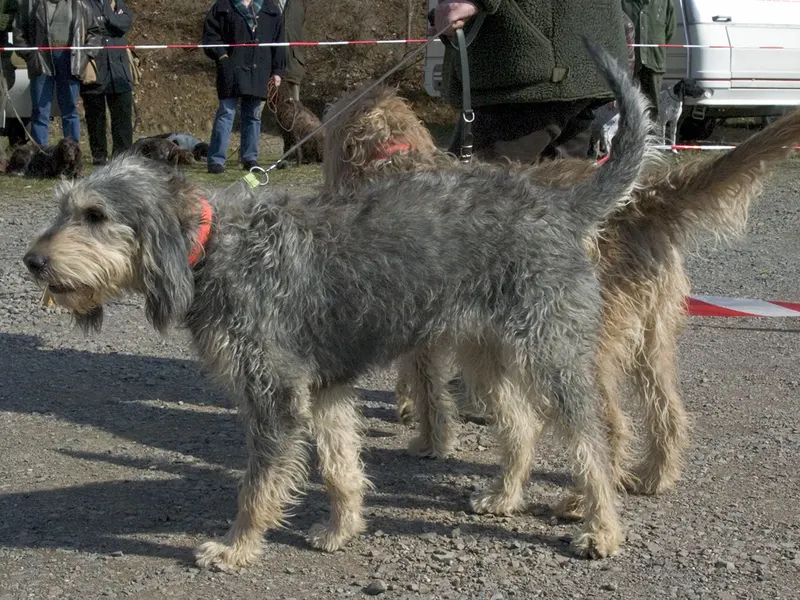
French hunters in the Nièvre region developed this rough-coated scenthound over many centuries, tracing its ancestry to medieval Griffon-type hunting dogs used for wolf and wild boar pursuit that were among the oldest documented hound types in France, giving the Griffon Nivernais a genuinely deep historical lineage even by the standards of France's rich scenthound tradition. Like several other old French hunting breeds, the Griffon Nivernais suffered a genuinely severe population decline through the 19th and early 20th centuries as traditional wolf hunting became less relevant and as the French Revolution's broader social disruption hit aristocratic hunting-kennel culture hard, and the breed came close enough to disappearing that dedicated 20th-century French breeders had to work from a genuinely narrow surviving base to rebuild it. That rough, harsh, distinctly grey wiry coat, giving the breed its 'griffon' designation shared with several unrelated French breeds, remains a defining and carefully preserved feature today. Even in rural France the Griffon Nivernais stays genuinely rare, still living almost exclusively as a working pack hound rather than a companion dog, and it's essentially unheard of in the US.
Common health predispositions
- Ear infections
- Hip dysplasia (uncommon)
- Generally hardy pack-hound breed
Temperament
Independent, genuinely tenacious, and built for demanding pack work, the Griffon Nivernais carries real big-game hunting instincts inherited from its medieval wolf and boar-hunting ancestry, a working drive that shows up as intense scent-focus in the field and comparatively modest interest in conventional household companionship. Bonds within its working pack run deep, reflecting the breed's traditional cooperative hunting role, and most individuals today still function primarily as working pack members within active French hunting kennels rather than as single-household pets. Real toughness and genuine independence mean the Griffon Nivernais isn't a breed that took easily to the more companion-oriented direction some other French hounds have moved toward in recent decades. French hunting clubs maintaining what remains a genuinely small population continue treating the breed explicitly as a working hound, prioritizing field capability over any broader companion-breed development.
Living with a Griffon Nivernais
Centuries spent pursuing large, dangerous game across demanding terrain left this breed with real stamina requirements — figure on 90 vigorous minutes daily as a floor, and count on a genuinely unhappy dog without a real hunting or extensive field outlet to match. Managing the long, harsh, wiry grey coat takes noticeably more brushing than most hound breeds need, simply to keep the coarse texture from matting. Those long, drop ears need routine checking to head off infections, and hip dysplasia, though uncommon, rounds out what limited formal health data exists for this small-population working breed. Between real independence and intense hunting drive, the Griffon Nivernais just isn't built for ordinary single-family pet life, and in practice it lives almost exclusively within active French hunting kennels rather than households. Sourcing one means going straight to a French hunting organization that maintains the breed; there's no conventional pet-market path here at all, in the US or, frankly, in most of France either.
FAQ
How old is the Griffon Nivernais breed?
Genuinely ancient by French scenthound standards — its ancestry traces to medieval Griffon-type hunting dogs used for wolf and wild boar pursuit, among the oldest documented hound types in France, giving the breed a deep historical lineage even within France's rich hunting-dog tradition.
Did the Griffon Nivernais nearly go extinct?
Yes, genuinely — the breed suffered a severe population decline through the 19th and early 20th centuries as traditional wolf hunting became less relevant and aristocratic hunting-kennel culture was disrupted, coming close enough to disappearing that 20th-century breeders worked from a genuinely narrow surviving base.
What does griffon mean in this breed's name?
It refers to the rough, harsh, distinctly wiry grey coat texture the breed shares in name only with several other unrelated French 'griffon' breeds, each of which independently developed a similarly coarse, weather-resistant coat for hunting work.
Is the Griffon Nivernais a good pet?
Not really, for an ordinary household — intense hunting drive and real independence keep this breed tied to working pack life, and outside active French hunting kennels it's genuinely hard to place in a typical home.
Can you find a Griffon Nivernais outside France?
Practically speaking, no — even within France the population stays genuinely small, and beyond a narrow circle of scenthound historians and specialists, this breed simply isn't part of the wider companion-dog market anywhere, the US included.
How big does a Griffon Nivernais get?
Typically 44 to 55 pounds on a lean, rugged frame roughly 22 to 23.5 inches tall at the withers, built for sustained work over rough, wooded terrain rather than the bulkier structure some other French pack-hunting breeds carry.
Are there other Griffon-type hound breeds in France besides the Griffon Nivernais?
Yes, several — the Griffon Fauve de Bretagne and Basset Griffon Vendéen breeds share the same rough, wiry 'griffon' coat texture and general purpose, but each developed independently in a different French region for somewhat different game, and none of them are closely related to the Griffon Nivernais beyond that shared coat characteristic.
Related on FetchBreed
Lists this breed appears in
Whichever breed fits your life, consider adoption or breed-specific rescue first — many purebred and mixed-breed dogs and cats are already waiting for homes.
General breed information, not veterinary advice — consult a vet for your pet's specific health, diet, and behavior needs.