Herding Group
Entlebucher Mountain Dog
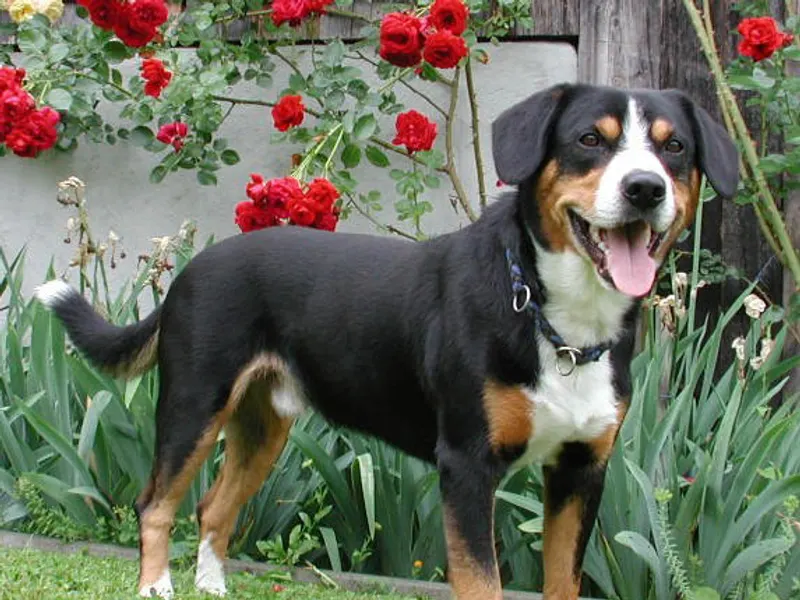
The smallest of Switzerland's four Sennenhund mountain dog breeds, the Entlebucher takes its name from the Entlebuch valley region, where farmers used it for herding cattle and pulling small carts, a role that demanded agility and quickness rather than the sheer size of its larger cousin the Greater Swiss Mountain Dog. The breed nearly vanished by the early 20th century, and Swiss veterinarian Albert Heim, who played a major role in documenting and reviving several of the Sennenhund breeds, is credited with helping rediscover surviving Entlebucher-type dogs in the 1910s. AKC recognition came notably late, in 2011, making it among the more recently recognized of the four Swiss mountain breeds. Albert Heim's rediscovery work in the early 1900s wasn't limited to the Entlebucher — he's credited with helping document and revive all four Sennenhund breeds during a period when Swiss mountain dog types generally faced serious decline, though the Entlebucher proved the most elusive to relocate, with surviving examples found only in the more remote farming valleys of the Entlebuch region. The breed didn't reach the US until the 1970s, and AKC recognition lagged even further behind, not arriving until 2011.
Common health predispositions
- Hip dysplasia
- Entlebucher deafness/patent ductus arteriosus syndrome
- Patellar luxation
Temperament
Compact but genuinely high-drive, the Entlebucher Mountain Dog carries real herding intensity in a smaller package than its Sennenhund relatives, quick, agile, and often more assertive than its size suggests. The breed's farm-dog history working closely alongside families shows up as genuine loyalty and affection toward its own household, plus solid compatibility ratings with children. Independent-minded and occasionally stubborn, the breed benefits from consistent, early training more than a purely passive approach. The breed's compact size relative to its larger Sennenhund cousins required genuine agility and quickness to herd cattle effectively in the Entlebuch valley's varied terrain, and that same energetic, reactive temperament makes the modern Entlebucher notably quick to respond to changes in its environment, sometimes more so than owners accustomed to calmer giant-breed cousins expect.
Living with a Entlebucher Mountain Dog
This breed's working intensity doesn't switch off just because it's living as a companion dog — call it 75 minutes of vigorous daily activity as the number that heads off the restless, difficult behavior an under-exercised Entlebucher tends toward. Coat care, by contrast, stays refreshingly simple — the short double coat needs little beyond regular brushing. One breed-specific condition worth knowing about is a form of congenital deafness that can occur alongside patent ductus arteriosus, a heart defect, in some lines, so asking a breeder about hearing and cardiac testing in the parent dogs is worthwhile; hip dysplasia and patellar luxation are the other conditions most worth flagging. A compact, high-drive herding dog with genuine versatility is what this breed offers an active family — a sedentary household, or one unable to provide daily structured activity, is a genuine mismatch. Given how few Entlebuchers exist in the US, dedicated rescue placements are uncommon, and most adopters instead work through the national breed club's network or reach out to one of the handful of established US breeders.
FAQ
Is the Entlebucher Mountain Dog the smallest Swiss mountain breed?
Yes — of the four related Sennenhund breeds, the Entlebucher is the smallest, standing roughly 16-21 inches, considerably more compact than the Greater Swiss Mountain Dog or Bernese Mountain Dog.
Are Entlebucher Mountain Dogs good with kids?
Generally yes, consistent with the breed's history as a versatile farm dog working closely with families, though its herding instincts mean it may nip at heels during play, a behavior worth addressing early through training.
How much exercise does an Entlebucher need?
A genuine 75 minutes of vigorous daily activity suits this compact, high-drive breed well; skip it and that same drive tends to resurface as chewing, pacing, or other behavior nobody in the house asked for.
Who rediscovered the Entlebucher Mountain Dog?
Swiss veterinarian Albert Heim, who is credited with documenting and helping revive all four Sennenhund breeds in the early 1900s during a period of serious decline for Swiss mountain dog types generally, though the Entlebucher proved the most difficult to relocate given how few surviving examples remained.
When did the Entlebucher Mountain Dog gain AKC recognition?
Not until 2011, making it among the more recently AKC-recognized breeds despite dogs of this general type having worked Swiss farms for centuries, reflecting both the breed's small population and its late arrival in the US during the 1970s.
Is the Entlebucher Mountain Dog good with other pets?
Generally yes with proper socialization, though its herding instincts can show up as nipping at heels during play with other household animals, a behavior worth redirecting early through consistent training rather than assuming it will resolve on its own.
Related on FetchBreed
Lists this breed appears in
Whichever breed fits your life, consider adoption or breed-specific rescue first — many purebred and mixed-breed dogs and cats are already waiting for homes.
General breed information, not veterinary advice — consult a vet for your pet's specific health, diet, and behavior needs.