Terrier Group
Bull Terrier
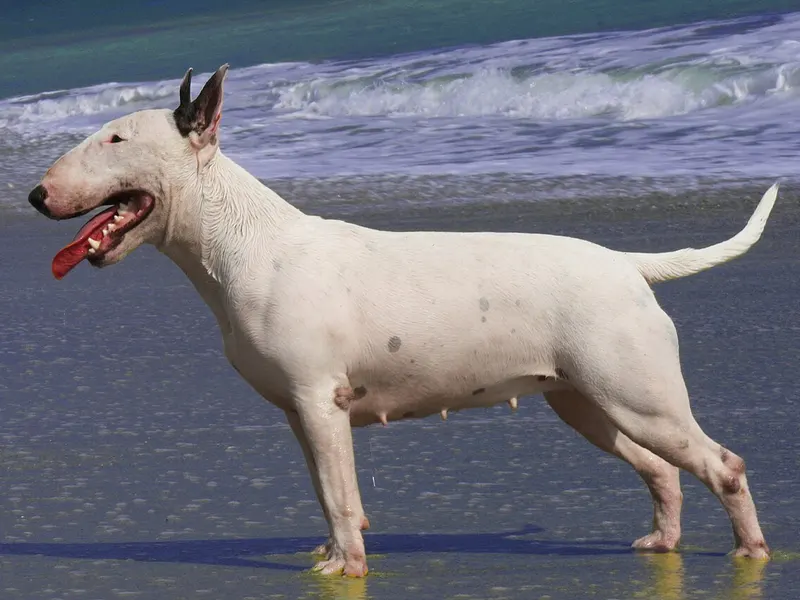
The Bull Terrier was developed in 19th-century England by crossing Bulldogs with the now-extinct Old English Terrier and later Dalmatian blood, aiming initially for a fighting-pit dog before breeder James Hinks refined the type in the mid-1800s into the all-white 'English Gentleman's companion,' deliberately softening the breed's temperament even as its distinctive egg-shaped head — a trait unique among dog breeds — became its defining physical feature through continued selective breeding. A colored variety was later developed alongside the original white type, and today the AKC recognizes both the White and Colored Bull Terrier as a single breed shown in two color divisions rather than as separate breeds. There's also a Miniature Bull Terrier, recognized as its own separate breed, carrying the same egg-shaped head and personality into a size that fits smaller homes far more comfortably.
Common health predispositions
- Deafness
- Kidney disease
- Skin allergies
Temperament
Bull Terriers are famously clownish, energetic, and stubborn, a temperament often described by owners as puppyish well into adulthood — the breed's moderate trainability reflects genuine intelligence paired with real independence and a taste for mischief that makes consistent, engaging training more important than with a more naturally biddable breed. The breed's compatibility with children runs moderate rather than top-tier, reflecting the dog's boisterous, sometimes overly enthusiastic play style more than any aggression, and compatibility with other pets is on the lower side given real terrier-derived prey drive.
Living with a Bull Terrier
An hour of daily activity suits this energetic, muscular breed, and mental stimulation matters just as much given the Bull Terrier's documented tendency toward compulsive behaviors, including tail-chasing, when under-stimulated or anxious. Grooming is minimal for the short, flat coat. Deafness is a well-documented concern specific to the breed's white-coated lines, tied to the same pigment-related genetics responsible for the coat color, and it's common enough that responsible breeders run a hearing test on puppies before they're ever placed; kidney disease and skin allergies are also documented health concerns. Its history and powerful build also mean the Bull Terrier gets swept into the same municipal, landlord, and insurance restrictions that affect other bully-type breeds in some areas, worth a quick local check before committing. Despite the breed's history, modern Bull Terriers are typically not aggressive toward people, and the breed's boisterous, clownish reputation as a family companion is generally what current owners report day to day. Because the breed's egg-shaped head and small, triangular eyes are so distinctive, the Bull Terrier is one of the more instantly recognizable dog breeds even to non-dog-people, a visibility that's helped and occasionally hurt the breed depending on how it's portrayed in media.
FAQ
Why do some Bull Terriers go deaf?
The same pigment genetics behind the breed's signature all-white coat can interfere with normal inner-ear cell development, which is the documented root of the breed's elevated deafness rate — it's specific enough of a link that breeders routinely run a hearing test (BAER) on puppies before they're ever sold.
Are Bull Terriers prone to compulsive behaviors?
Yes, notably so — the breed has a well-documented tendency toward compulsive tail-chasing and spinning, particularly when under-stimulated, bored, or anxious, and genuine mental and physical enrichment is considered an important preventive measure by trainers and behaviorists familiar with the breed.
How did the Bull Terrier get its distinctive head shape?
Breeder James Hinks deliberately selected for the breed's now-signature egg-shaped, downward-sloping profile starting in the mid-1800s as he refined the original fighting-pit type into a show and companion dog — the head shape is unique among dog breeds and remains the breed's single most recognizable trait.
Are Bull Terriers good with kids?
Moderately — the breed's boisterous, high-energy play style means supervision matters more than with a calmer breed, not because of aggression but because an exuberant Bull Terrier can accidentally knock over or overwhelm a small child during normal play.
Are there colored Bull Terriers, not just white?
Yes — a colored variety, including brindle, fawn, red, and tricolor patterns, was developed alongside the original all-white type, and the AKC recognizes both as a single breed shown in two separate color divisions rather than treating them as distinct breeds.
Is there a smaller version of the Bull Terrier?
Yes — the Miniature Bull Terrier is a separately recognized breed, bred down for the same distinctive egg-shaped head and clownish temperament in a smaller package, generally a better fit for smaller homes than the standard-size Bull Terrier.
How rare is the Bull Terrier's egg-shaped head among dog breeds?
Genuinely unique — no other recognized dog breed shares the Bull Terrier's downward-sloping, egg-shaped profile, a look breeder James Hinks deliberately developed in the mid-1800s and one that remains the single most defining and instantly recognizable trait distinguishing the breed from every other terrier type.
Related on FetchBreed
Lists this breed appears in
Whichever breed fits your life, consider adoption or breed-specific rescue first — many purebred and mixed-breed dogs and cats are already waiting for homes.
General breed information, not veterinary advice — consult a vet for your pet's specific health, diet, and behavior needs.