Hound Group
Bloodhound
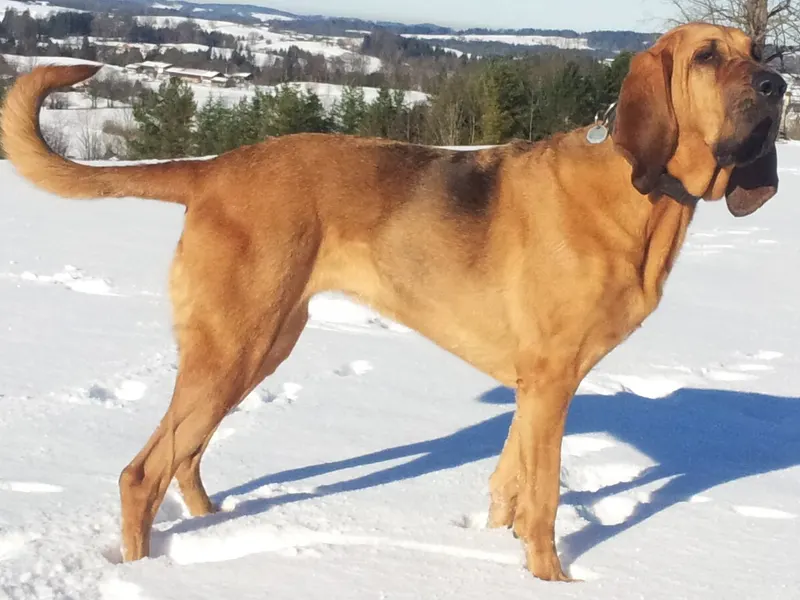
The Bloodhound's scenting lineage is documented back over a thousand years to monastery-bred scenthounds in medieval Europe, most famously the St. Hubert Hound kept by Belgian monks, whose bloodline is widely credited as the modern breed's direct ancestor — the name 'Bloodhound' likely refers to the breed's aristocratic 'blooded' or pure pedigree rather than any connection to tracking blood specifically. The breed's trailing ability is so precise and legally credible that Bloodhound scent evidence has been accepted in American courts, a distinction essentially no other breed's tracking work has achieved. The breed entered the AKC studbook in 1885, and today's Bloodhounds serve widely in law-enforcement and search-and-rescue tracking programs, a direct continuation of the same scenting role the breed's monastery-bred ancestors performed centuries ago, just applied to finding missing people rather than game.
Common health predispositions
- Bloat
- Ear infections
- Hip dysplasia
Temperament
Everything about the Bloodhound centers on its nose — widely considered the most sensitive scenting organ of any domestic dog breed — and that singular focus produces a dog that's famously difficult to distract from a trail once it locks onto one, a trait that makes recall and off-leash reliability genuinely poor even with training. Bloodhounds are gentle, patient, and good with children despite their imposing size, and their pack-hunting background makes them generally sociable with other dogs, though their sheer strength on a trail scent means a secure leash and harness matter more with this breed than almost any other.
Living with a Bloodhound
An hour of exercise suits the breed, though scent-tracking work or nose games matter just as much as physical activity for a dog whose brain is built entirely around smell. Coat care is trivially easy, but the ears are a genuine job: long, low, and heavy, they need regular cleaning to stave off infection, and the loose facial skin folds require the same kind of attention to avoid fold dermatitis. Bloat is a serious and well-documented risk given the breed's large size and deep chest, and ear infections and hip dysplasia round out the main health concerns; the breed's short lifespan of 10-12 years is typical for a dog of its size. Slow-feed bowls and avoiding vigorous exercise right around mealtimes are standard bloat-prevention advice specifically emphasized for this breed by veterinarians. The breed's deep facial wrinkles, part of what makes its scenting so effective by trapping and funneling ground-level scent toward the nose, also need regular cleaning to prevent skin infections from trapped moisture and debris.
FAQ
Is Bloodhound scent evidence really used in court?
Yes — the breed's trailing accuracy is well-documented enough that Bloodhound scent-tracking evidence has been accepted in American courts in some cases, a level of legal credibility no other dog breed's scent work has generally achieved.
Can Bloodhounds be trusted off-leash?
Rarely — the breed's tracking instinct is powerful enough to override recall almost completely once it picks up an interesting scent trail, and secure fencing plus a reliable leash and harness are standard, near-essential advice for Bloodhound owners.
Are Bloodhounds good with children?
Generally yes — despite their large size and strength, Bloodhounds are known for a gentle, patient temperament with kids, though their pulling power on a scent trail means supervision matters, and the dog's sheer size alone requires some caution around very young children during play.
Why do Bloodhounds have such short lifespans for their size?
At 10-12 years, the breed's lifespan is roughly typical for its large size — larger dog breeds generally live shorter lives than smaller ones, a well-documented pattern across canine biology, and the Bloodhound's substantial bulk places it toward the shorter end of that range.
Do Bloodhounds work in search and rescue today?
Yes, extensively — the breed's exceptional scenting ability and documented legal credibility make it a mainstay of law-enforcement and search-and-rescue tracking programs across the country, a direct modern continuation of the trailing work the breed's medieval monastery-bred ancestors were originally developed for.
Do Bloodhounds drool a lot?
Yes, considerably — the breed's loose lips and deep facial folds mean heavier drooling than most breeds, and owners generally keep a towel handy; it's a normal, expected trait rather than a sign of illness, though sudden increases in drooling still warrant a vet check.
Do Bloodhounds make good family pets outside of tracking work?
Generally yes — despite their imposing size and working reputation, most Bloodhounds are gentle, patient companions at home, though their size, strength on a leash, and drooling mean they suit a household prepared for a genuinely large, food- and scent-driven dog rather than a low-maintenance lap companion.
Is Bloodhound scent-tracking evidence accepted in courts?
Yes, in many U.S. jurisdictions, a trained Bloodhound's trailing results have been accepted as supporting evidence, reflecting the breed's scenting ability, considered among the most sensitive of any dog breed and refined over centuries of deliberate breeding purely for trailing accuracy.
Related on FetchBreed
Lists this breed appears in
Care equipment for a Bloodhound
As an Amazon Associate we earn from qualifying purchases made through these links, at no extra cost to you.
- Dog ear cleaner
Coat care is trivially easy here, the page says, but the long, low, heavy ears are a genuine job and need regular cleaning to stave off infection.
- Skin-fold wipes
The deep facial wrinkles that funnel scent also need regular cleaning to prevent skin infections from trapped moisture and debris.
Whichever breed fits your life, consider adoption or breed-specific rescue first — many purebred and mixed-breed dogs and cats are already waiting for homes.
General breed information, not veterinary advice — consult a vet for your pet's specific health, diet, and behavior needs.