Hound Group
Black and Tan Coonhound
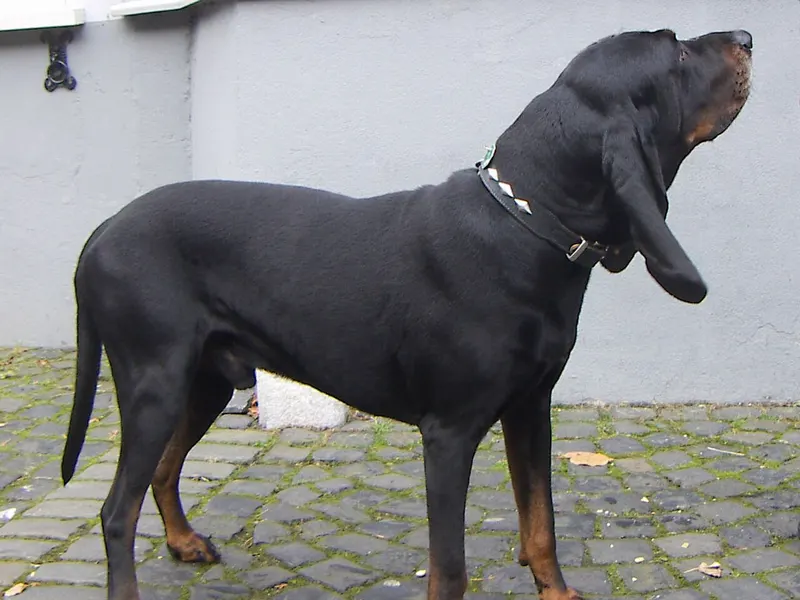
American breeders developed the Black and Tan Coonhound through the 18th and 19th centuries from a blend of Foxhound and Bloodhound stock, aiming for a scenthound capable of trailing raccoons at night across genuinely varied American terrain, a nocturnal hunting specialty that shaped the breed's development distinctly from most European scenthounds bred primarily for daytime work. The Bloodhound influence shows clearly in the breed's long, pendulous ears and exceptional trailing nose, while the Foxhound side contributes speed and stamina better suited to keeping pace with a hunter on foot through rough nighttime terrain than the more deliberate Bloodhound alone would provide. AKC recognition came in 1945, the first coonhound breed the club formally recognized, predating the other coonhound breeds that followed over subsequent decades. "Treeing" is the specific behavior this breed and other coonhounds are bred for — rather than simply flushing or pointing game, the dog trails a raccoon's scent until it climbs a tree, then bays loudly and continuously at the base to signal the hunter to its exact location, a genuinely distinct working method from most other scenthound traditions. Regional coon-hunting culture across the American South and Midwest developed organized night-hunting competitions judging dogs specifically on trailing accuracy and tree-baying quality, a living sport tradition that continues today and that the Black and Tan Coonhound helped originate as the first coonhound breed the AKC recognized.
Common health predispositions
- Hip dysplasia
- Chronic ear infections
- Ectropion/entropion (eyelid conditions)
Temperament
Even-tempered and generally friendly, the Black and Tan Coonhound tends to be less intensely one-owner-devoted than some companion breeds, a trait consistent with its working history as a hunting partner meant to cooperate readily with different handlers. The breed's baying voice carries considerable distance and volume, a functional trait bred specifically to alert hunters from far away once game is treed, and it's worth understanding this vocal tendency clearly before bringing one into a noise-sensitive living situation. The breed's cooperative hunting-pack heritage shows up as genuine gentleness with children and reasonably easy acceptance of other dogs. The breed's calm, patient demeanor around family stands in real contrast to its intensity once an actual scent trail is picked up, a duality common to many scenthounds but genuinely pronounced in this specific breed given how singularly focused its nose-driven work has always been.
Living with a Black and Tan Coonhound
This breed's powerful scent-driven tracking instinct makes secure fencing genuinely important, on top of an hour of daily activity that suits the Black and Tan Coonhound's real stamina. The short, dense coat sheds moderately and needs only occasional brushing. Hip dysplasia and chronic ear infections are the two most-cited concerns, common to any long, pendulous-eared breed, and it's worth raising ectropion and entropion — eyelid conditions affecting how the lids sit against the eye — directly with a breeder as well. A household with secure outdoor space, tolerance for a genuinely loud baying voice, and appreciation for a friendly, nose-driven working breed tends to do well with a Black and Tan Coonhound; noise-sensitive apartment living and this breed are a poor match given how central vocalization is to its working design. Coonhound-specific rescue groups operate across much of the rural South and Midwest US, a good resource given how often these dogs turn up in general shelters in hunting regions. Monthly costs run moderate for a large hound breed, and the minimal grooming needs help offset the food volume a dog of this size typically requires.
FAQ
Why does a Black and Tan Coonhound bark so much?
Baying loudly and continuously at the base of a tree is the breed's specific working purpose, developed to signal a hunter to a treed raccoon's exact location from a real distance — it's a functional trait bred deliberately into the dog, not a behavior problem.
What does 'treeing' mean for a coonhound?
It refers to the breed's specific hunting method of trailing a raccoon's scent until the animal climbs a tree, then baying at the base to alert the hunter, a genuinely distinct working style from breeds that flush or point game instead.
Is a Black and Tan Coonhound good with kids?
Most individuals are, thanks to an even, cooperative temperament shaped by centuries spent working alongside changing hunting partners rather than one fixed handler — that adaptability carries over into patience with kids.
How did the Black and Tan Coonhound develop its long ears and strong nose?
The breed descends partly from Bloodhound stock, which contributed the exceptional scenting ability and long, pendulous ears, crossed with Foxhound lines that added the speed and stamina needed to keep pace with a hunter on foot through rough nighttime terrain.
When was the Black and Tan Coonhound recognized by the AKC?
In 1945, making it the first coonhound breed the AKC formally recognized, ahead of the other coonhound breeds — including the Bluetick, Redbone, and Treeing Walker — that gained recognition in subsequent decades.
Related on FetchBreed
Lists this breed appears in
Whichever breed fits your life, consider adoption or breed-specific rescue first — many purebred and mixed-breed dogs and cats are already waiting for homes.
General breed information, not veterinary advice — consult a vet for your pet's specific health, diet, and behavior needs.