Herding Group
Belgian Sheepdog
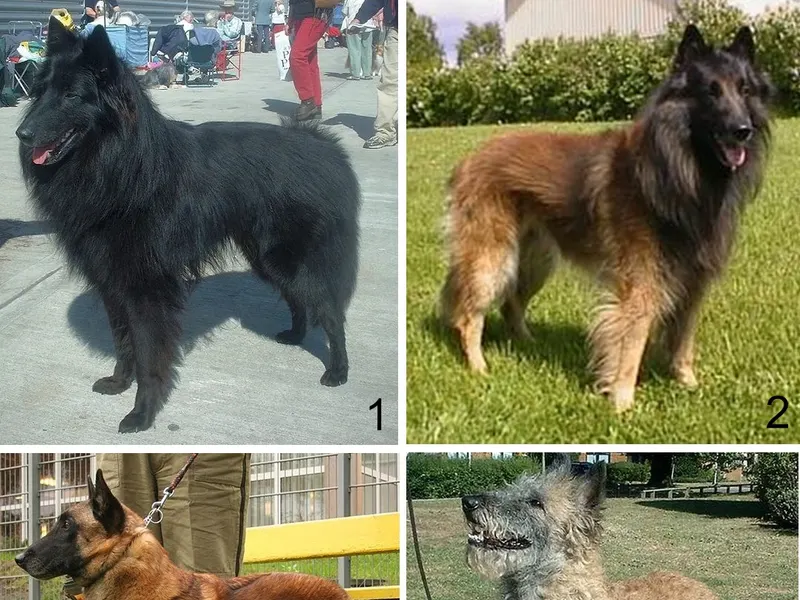
Known internationally as the Groenendael, the Belgian Sheepdog descends from the same late-19th-century cataloguing effort — veterinary professor Adolphe Reul's survey of regional Belgian herding-dog types — that produced all four recognized Belgian varieties, and this particular one takes its common international name from the Belgian village of Groenendael, where a restaurant owner named Nicolas Rose is credited with establishing the foundation kennel for the solid-black, long-coated type that became the breed's defining look. The AKC recognizes the Belgian Sheepdog as a fully separate breed from the closely related Tervuren, Malinois, and Laekenois, granting formal recognition considerably earlier than the Tervuren, in 1912, reflecting the Groenendael-type dog's early prominence among the four regional varieties.
Common health predispositions
- Hip dysplasia
- Epilepsy
- Elevated cancer incidence
Temperament
Watchfulness is really the defining trait here: the Belgian Sheepdog combines a farm-guardian's suspicion of strangers with a herder's razor focus, and while its energy and trainability are every bit as high as its Tervuren cousin's, the two breeds get discussed almost interchangeably by fanciers for good reason — same catalogued family, same drive, same handler-focused intensity. Kids and other pets are workable but not automatic, and a Belgian Sheepdog that isn't given a real job tends to invent one for itself, usually in the form of nipping at running children or pacing anxiously by the door.
Living with a Belgian Sheepdog
Skimp on this breed's exercise and training needs and the fallout shows up fast — anxious pacing, herding nips directed at whoever's moving, destructive chewing — so budget close to 75 minutes a day of activity with actual structure to it, not just a walk around the block. That solid black coat is dense and long enough to demand a real brushing routine, and it lets go of a noticeable amount of fur during the twice-yearly coat change. Breed health surveys flag hip dysplasia, epilepsy, and a somewhat elevated cancer rate as the conditions worth asking a breeder about directly. The coat itself has become the breed's calling card in the show ring — solid black, athletic, confident — and it photographs as strikingly in AKC herding and protection-sport competition as it does standing still. Litters occasionally throw an off-type puppy with different coat characteristics given how closely this breed's gene pool overlaps with the Tervuren, Malinois, and Laekenois, and conscientious breeders work to keep their lines true to the black Groenendael look.
FAQ
How is the Belgian Sheepdog different from a Belgian Tervuren?
The two are genetically close enough that they can sometimes appear in the same litter, but breed standards split them strictly by coat color: the Groenendael must be solid black, while the Tervuren carries a mahogany or fawn coat with a black overlay. Because of that shared ancestry, some kennel clubs outside the US treat all four Belgian varieties as coat-color variants of one breed rather than four separate breeds, a classification difference that occasionally complicates paperwork for owners moving between countries with their dog.
What's the difference between a Belgian Sheepdog and a Belgian Malinois?
Both trace to the same catalogued family of regional Belgian herding dogs, but the Belgian Sheepdog has a long, solid-black coat, while the Malinois has a short coat in fawn-mahogany with black overlay; the AKC treats them as separate breeds with distinct standards.
Are Belgian Sheepdogs good family pets?
Only with real caveats — a household that can give the breed structure, training, and enough to do tends to do fine, but its watchfulness toward strangers and demanding exercise needs make it a poor fit for anyone hoping for a laid-back companion dog.
How much exercise does a Belgian Sheepdog need?
Close to 75 minutes daily, and the quality matters as much as the quantity — structured training or working-style tasks channel the breed's built-in drive far better than idle time in a yard ever will.
Are Belgian Sheepdogs used in police work?
They can be, though the Malinois has largely taken over that role in recent decades — the Sheepdog's own trainability and protective instincts are just as real, and the breed still turns up in protection and herding-trial competition where those traits are put to use.
How long do Belgian Sheepdogs live?
Typically 12 to 14 years, in line with the closely related Tervuren, and proactive screening for hip issues and epilepsy is standard advice from responsible breeders of the breed.
How big does a Belgian Sheepdog get?
Weight and height track its Tervuren cousin almost exactly — call it 45 to 75 pounds on a frame reaching roughly 22 to 26 inches tall — with the athletic, powerful build hidden under a solid black coat instead of fawn-and-black.
Is a Belgian Sheepdog a good first dog?
Intensity, real watchfulness, and substantial training needs together suit experienced handlers far better than someone managing a working-type herding breed for the very first time.
How much grooming does a Belgian Sheepdog need?
The long, solid-black double coat needs a multi-times-weekly brushing routine as a baseline, and that routine gets noticeably busier once the seasonal coat change arrives.
Do Belgian Sheepdogs get along with other dogs?
Results vary with how much socialization the dog actually got — a watchful, somewhat reserved temperament means a Belgian Sheepdog that skipped early exposure to other dogs tends to struggle more in a multi-dog household than one that didn't.
What is the Belgian Sheepdog's coat texture like?
Long, straight, and abundant, with a dense undercoat and a notable mane-like ruff around the neck, a coat structure that gives the breed both weather protection and its striking, athletic show-ring silhouette.
Do Belgian Sheepdogs need a job to be happy?
Genuinely, yes — the breed's working-dog intelligence and drive need a real outlet, whether that's herding trials, protection sports, or consistent obedience training, or the dog tends to invent its own less convenient activities instead.
Related on FetchBreed
Lists this breed appears in
Whichever breed fits your life, consider adoption or breed-specific rescue first — many purebred and mixed-breed dogs and cats are already waiting for homes.
General breed information, not veterinary advice — consult a vet for your pet's specific health, diet, and behavior needs.