Hound Group
Basset Fauve de Bretagne
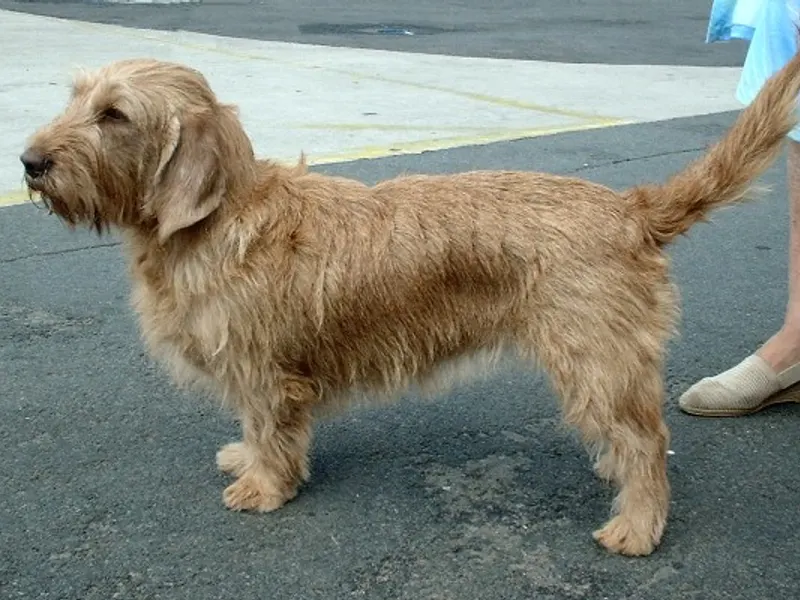
Developed in the Brittany region of northwestern France to hunt rabbit and small game through dense regional undergrowth, the Basset Fauve de Bretagne shares distant ancestry with several other French scenthound breeds but carries a genuinely distinct fawn-to-red wiry coat that gives the breed its name — "fauve" translating roughly to tawny or fawn-colored in French. The breed nearly disappeared entirely in the early 20th century as French hunting preferences shifted toward other breeds, and dedicated French fanciers spent the mid-1900s deliberately rebuilding numbers from what was left of the surviving stock, a recovery well documented in French breed-club records. Unlike its taller relative the Griffon Fauve de Bretagne, from which it was more formally separated as a distinct breed in the 20th century, the Basset variety's shorter legs suit it specifically to working the tangled, low undergrowth typical of the Breton countryside, where a taller dog would struggle to move efficiently. The breed remains genuinely rare even within France today, and its AKC recognition status reflects a still-developing American presence, with most current US dogs tracing back to relatively recent imports from established French and other European lines.
Common health predispositions
- Hip dysplasia
- Ear infections
- Patellar luxation
Temperament
A playful, almost bouncy energy sets the Basset Fauve de Bretagne apart from some of its more reserved French hound relatives, packed into a compact, low-slung frame that belies just how upbeat and extroverted this breed actually is day to day. Children generally get on well with an individual of this breed, whose serious rabbit-hunting working history hides behind a genuinely goofy, playful streak at home. That said, the same nose that made it an effective hunter comes with a real independent streak, and calling a Fauve back once it's caught an interesting scent doesn't always work without dedicated training behind it.
Living with a Basset Fauve de Bretagne
Compact size doesn't mean modest needs — this breed genuinely wants around 60 minutes of real activity daily, and fencing needs to be secure enough to actually hold a dog this determined to follow its nose off the property. Maintaining the rough, wiry, fawn-to-red coat's protective texture takes regular brushing plus the occasional hand-strip. Patellar luxation is the third item worth a breeder conversation, alongside routine hip and ear-infection checks that apply to most hounds this size. A yard that's actually secured, an owner who won't get frustrated by a nose-led mind of its own, and real fondness for a small hound with serious rabbit-hunting instincts and a genuinely cheerful streak — that combination suits the Basset Fauve de Bretagne well. French hunt clubs in Brittany still field the breed today for rabbit work, and dogs from those active working lines generally carry a noticeably stronger prey drive than pet-line individuals bred mainly for companionship. Given how rare the breed remains even in its native France, dedicated US rescue is essentially nonexistent, so prospective owners typically connect directly with the very small number of established breeders, some importing from Europe. Periodic hand-stripping appointments are the standout recurring cost beyond the usual food and veterinary basics.
FAQ
What does 'fauve' mean in Basset Fauve de Bretagne?
It translates roughly to tawny or fawn-colored in French, referring directly to the breed's distinctive fawn-to-red wiry coat, one of its most recognizable features.
What's the difference between a Basset Fauve de Bretagne and a Griffon Fauve de Bretagne?
They share ancestry and were more formally separated into distinct breeds in the 20th century — the Basset variety has notably shorter legs suited to working dense low undergrowth, while the Griffon variety stands taller and covers ground differently.
Did the Basset Fauve de Bretagne almost go extinct?
Yes — shifting French hunting preferences pushed numbers dangerously low in the early 20th century, and it took committed mid-century fanciers years of careful breeding from a very small surviving pool to bring the type back.
Is a Basset Fauve de Bretagne easy to recall off-leash?
Not reliably — genuine scent-hound independence, a legacy of working trails somewhat autonomously, means an interesting smell can override recall fast, so secure fencing matters more than off-leash trust for most households.
How much grooming does a Basset Fauve de Bretagne need?
A regular commitment — the rough, wiry coat needs consistent brushing plus an occasional hand-strip to maintain its proper protective texture and fawn-to-red color.
What does the name 'Fauve de Bretagne' actually mean?
The French name translates roughly to 'tawny dog of Brittany,' describing both the breed's characteristic reddish-wheaten coat and its regional origin in the Brittany area of northwestern France, where it was developed from larger Griffon Fauve de Bretagne stock bred down in size specifically for hunting rabbits in dense underbrush on foot.
Related on FetchBreed
Lists this breed appears in
Whichever breed fits your life, consider adoption or breed-specific rescue first — many purebred and mixed-breed dogs and cats are already waiting for homes.
General breed information, not veterinary advice — consult a vet for your pet's specific health, diet, and behavior needs.