Hound Group
Basset Bleu de Gascogne
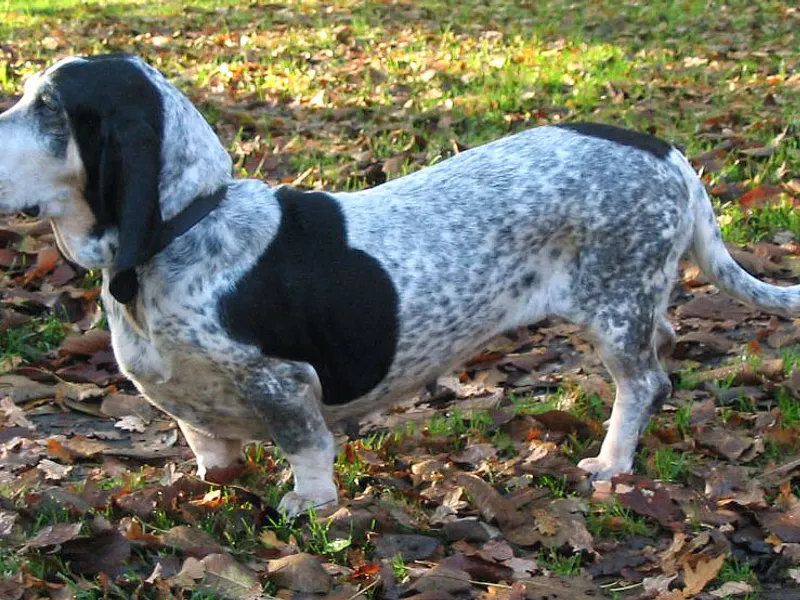
French hunters in the Gascony region developed this breed by deliberately shortening the legs of the larger Grand Bleu de Gascogne, a much older French scenthound, to produce a slower-moving but equally capable rabbit and hare hunter better suited to being followed on foot through dense French countryside rather than horseback. That deliberate miniaturization, a breeding approach several other French basset breeds also went through relative to their own taller scenthound ancestors, gives the Basset Bleu de Gascogne genuinely direct lineage to one of France's oldest documented hound families, with the Grand Bleu de Gascogne's own history tracing back several centuries. The breed's distinctive mottled blue-ticked coat pattern, which gives it both its French and English names, remains a defining, carefully preserved feature distinguishing it from France's several other basset breeds. The Basset Bleu de Gascogne remains considerably more common in France, where it's still actively worked as a pack hunting hound, than in the US, where it stays genuinely uncommon and known mainly to dedicated scenthound and French-breed enthusiasts.
Common health predispositions
- Ear infections
- Obesity
- Back problems (long-backed breed)
Temperament
Even-tempered, genuinely affectionate, and notably good-natured, the Basset Bleu de Gascogne carries real scenthound focus in the field balanced by a calm, sociable disposition at home, a combination widely shared among France's basset breeds descended from taller hound ancestors. Kids generally do well with this breed, particularly in households already comfortable managing a genuine hound's strong nose-driven distractibility. Real pack-hunting heritage means the breed also tends to do well with other dogs, a trait directly inherited from its traditional use hunting in groups across French countryside. France's hunting clubs still put the breed to work in that original pack role today, and keeping that field use alive is treated as central to preserving its authentic scenthound character rather than letting it drift purely toward companion-breed status.
Living with a Basset Bleu de Gascogne
A genuine hour of daily activity suits this scenthound well, and real nose-driven mental engagement, whether structured scent work or simply varied walking routes, matters just as much as physical exercise. The short, dense, mottled coat needs only regular, not intensive, brushing. Those long ears need routine checking and cleaning to prevent infections, a standard concern across drop-eared hound breeds, and obesity is worth watching given the breed's genuine food motivation and its long-backed structure, which also makes back problems a real concern to discuss with a breeder. Real scenthound focus and genuine good nature suit a household prepared for a strong-nosed dog that may wander off-scent if given the chance, ideally with secure fencing and patience for a dog that follows its nose first. US breeders remain genuinely few compared with France, so expect a real wait or the need to work with French import contacts. Costs stay fairly typical for a medium hound breed, with regular ear care the main recurring maintenance item.
FAQ
How is the Basset Bleu de Gascogne related to the Grand Bleu de Gascogne?
French hunters deliberately shortened the legs of the larger, older Grand Bleu de Gascogne to produce this breed, aiming for a slower-moving but equally capable rabbit and hare hunter better suited to being followed on foot rather than horseback.
Why does the Basset Bleu de Gascogne have a blue coat?
The distinctive mottled blue-ticked coat pattern, giving the breed both its French and English names, is a defining, carefully preserved feature that distinguishes it visually from France's several other basset breeds descended from different regional scenthound lines.
Is the Basset Bleu de Gascogne still used for hunting?
Yes, genuinely, particularly in France — hunting clubs there continue actively working the breed in its original pack-hunting role, treating that ongoing field use as central to preserving its authentic scenthound character.
Is a Basset Bleu de Gascogne good with other dogs?
Generally yes — real pack-hunting heritage means the breed tends to do well in multi-dog households, a trait directly inherited from its traditional use hunting rabbit and hare in coordinated groups across the French countryside.
What health problems affect the Basset Bleu de Gascogne?
Ear infections given the long, drop ears typical of hound breeds, obesity given genuine food motivation, and back problems tied to the breed's long-backed, short-legged structure are the main items worth discussing directly with a breeder.
How big does a Basset Bleu de Gascogne get?
Adults generally weigh 40 to 50 pounds, standing a bit taller in the leg than an American-style Basset Hound, though still built low and long enough to follow the deliberate, methodical scenthound pace French rabbit and hare hunters historically wanted.
Is the Basset Bleu de Gascogne good with children?
Its calm, sociable temperament at home makes it a comfortable family companion in most cases, though its genuine hound stubbornness and strong nose mean training benefits from patience, and any child interacting with it should understand that a scent trail can override the dog's attention in an instant outdoors.
Related on FetchBreed
Lists this breed appears in
Whichever breed fits your life, consider adoption or breed-specific rescue first — many purebred and mixed-breed dogs and cats are already waiting for homes.
General breed information, not veterinary advice — consult a vet for your pet's specific health, diet, and behavior needs.