Hound Group
Basenji
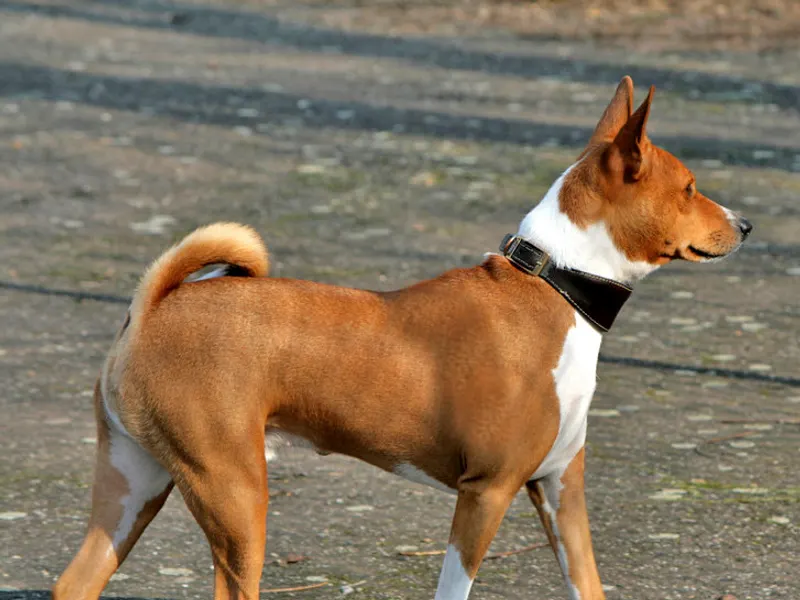
Central African hunters in the Congo basin bred the Basenji over many centuries to drive game into nets silently, valuing a dog that wouldn't bark and alert prey to the hunting party's presence — the breed's unusually shaped larynx makes true barking physically impossible, and Basenjis instead produce a distinctive yodel-like sound fanciers call a "baroo." European explorers and colonial administrators brought the breed to the West in the 20th century, and the AKC recognized it in 1943. Genetically, the Basenji is considered one of the more ancient dog breeds studied, retaining traits closer to primitive landrace dogs than most modern breeds shaped heavily by 19th-century European show breeding.
Common health predispositions
- Fanconi syndrome
- Progressive retinal atrophy
- Hypothyroidism
Temperament
One of the Basenji's more unusual biological traits shapes its temperament as much as any deliberate selection: the breed has only one estrus cycle per year, unlike the twice-yearly cycle typical of most dogs, a holdover from its landrace origins that breeders and vets working with the breed need to plan around. Basenjis are notably independent and cat-like in disposition, grooming themselves fastidiously and greeting strangers with a wary aloofness rather than the tail-wagging welcome most dog breeds default to. Trainability runs on the lower end for the breed not because Basenjis lack intelligence — they're quite smart — but because the same independence that made them effective solo hunters translates into a dog that doesn't naturally prioritize pleasing a handler the way more biddable working breeds do.
Living with a Basenji
An hour of real exercise most days works well for this breed, and Basenjis retain enough hunting instinct that secure fencing matters — an off-leash Basenji that spots something interesting will chase first and consider recall commands a distant second priority. Grooming is genuinely minimal thanks to the short, fine coat and the breed's cat-like self-cleaning habits, making the Basenji one of the lowest-grooming-maintenance breeds in this database. Fanconi syndrome, an inherited kidney disorder affecting the proximal tubules' ability to reabsorb nutrients, is specific and serious enough in this breed that a DNA test for carrier status is considered standard practice for reputable breeders, alongside screening for progressive retinal atrophy and hypothyroidism. Because Basenjis don't bark, some owners assume the breed is naturally quiet, but the breed's vocalization rating is low specifically because barking is absent — the yodel-like baroo and other vocalizations still happen, just not in the form most people associate with a talkative dog. The breed's short coat and lean build also mean genuine cold sensitivity, and Basenji owners in colder climates typically plan for a coat or indoor-only cold-weather routine.
FAQ
Why don't Basenjis bark?
The breed has an unusually shaped larynx that makes true barking physically impossible, a trait developed because Central African hunters who bred the Basenji specifically wanted a silent dog that wouldn't alert game during a hunt. Basenjis still vocalize, just through a distinctive yodel-like sound called a 'baroo' rather than a bark.
Are Basenjis easy to train?
Rarely straightforward — a Basenji is plenty smart, but its solo-hunting ancestry never selected for taking orders from a handler, so getting anywhere with training usually takes more creativity and food motivation than a straightforward obedience-class approach.
Do Basenjis shed a lot?
No — the short, fine coat combined with cat-like self-grooming habits makes the Basenji one of the lower-maintenance breeds for both shedding and general coat care.
What is Fanconi syndrome in Basenjis?
An inherited kidney disorder, documented specifically at elevated rates in this breed, in which the kidneys fail to properly reabsorb nutrients like glucose and amino acids. A DNA test for carrier status exists and is considered standard practice for responsible Basenji breeders.
Is a Basenji a good first dog?
More hands-on experience is genuinely needed here than with a naturally eager-to-please breed — the Basenji's independence, only-moderate trainability, and real prey drive add up to a poor match for most first-timers.
How often does a Basenji go into heat?
Once a year, unlike the twice-yearly cycle typical of most dogs — a genuinely unusual biological trait tied to the breed's landrace origins that owners and vets working with intact Basenjis need to plan breeding or spay timing around.
Are Basenjis good escape artists?
Yes, notoriously — the breed is an agile jumper and a determined explorer, and secure, tall fencing plus supervised outdoor time matter more for a Basenji than for many similarly sized breeds without the same hunting-honed athleticism.
What does the Basenji's 'baroo' sound like?
A yodel-like combination of a howl and a chortle, distinct from any bark, that most Basenjis use sparingly and selectively — often when excited, greeting a favorite person, or occasionally just entertaining themselves rather than as a routine alert sound.
How big does a Basenji get?
Adults land around 22 to 24 pounds and stand roughly 16 to 17 inches tall — a compact, efficient, athletic frame suited to the breed's original job driving game toward hunters' nets across the Congo basin.
How long do Basenjis live?
13 to 14 years is the commonly cited range, and dogs from lines actively screened for Fanconi syndrome and thyroid issues tend to hold up noticeably better across those years than ones from unscreened stock.
Are Basenjis good with cats?
Not reliably without careful, early introduction — the breed's genuine prey drive toward small, fast-moving animals means a Basenji raised without exposure to cats can pose a real risk to one introduced later in life.
Do Basenjis like water?
Generally not — unlike many hunting breeds, the Basenji has no notable history of water work and many individuals show real reluctance around swimming, a trait distinct from the water-loving retrievers and spaniels in the Sporting group.
Related on FetchBreed
Lists this breed appears in
Care equipment for a Basenji
As an Amazon Associate we earn from qualifying purchases made through these links, at no extra cost to you.
- Winter dog coat
The page notes genuine cold sensitivity from the short coat and lean build. Grooming is called genuinely minimal thanks to the breed's cat-like self-cleaning habits, so no brush appears here.
Whichever breed fits your life, consider adoption or breed-specific rescue first — many purebred and mixed-breed dogs and cats are already waiting for homes.
General breed information, not veterinary advice — consult a vet for your pet's specific health, diet, and behavior needs.